Think about what you ate for breakfast this morning.
Maybe it was Greek yogurt topped with berries and granola. Maybe eggs and coffee. Perhaps it was oatmeal, a piece of toast or a pastry grabbed on the way to work. To us, breakfast is simply breakfast. But to the trillions of microorganisms living throughout our digestive tract, the foods we eat provide very different kinds of fuel.
Scientists have known for years that diet can change the gut microbiome. What is becoming clearer is how specific foods create those changes and why they matter to our health. Recent studies examining coffee, fermented foods, dietary fiber and broader dietary interventions offer a useful way to understand the mechanisms.
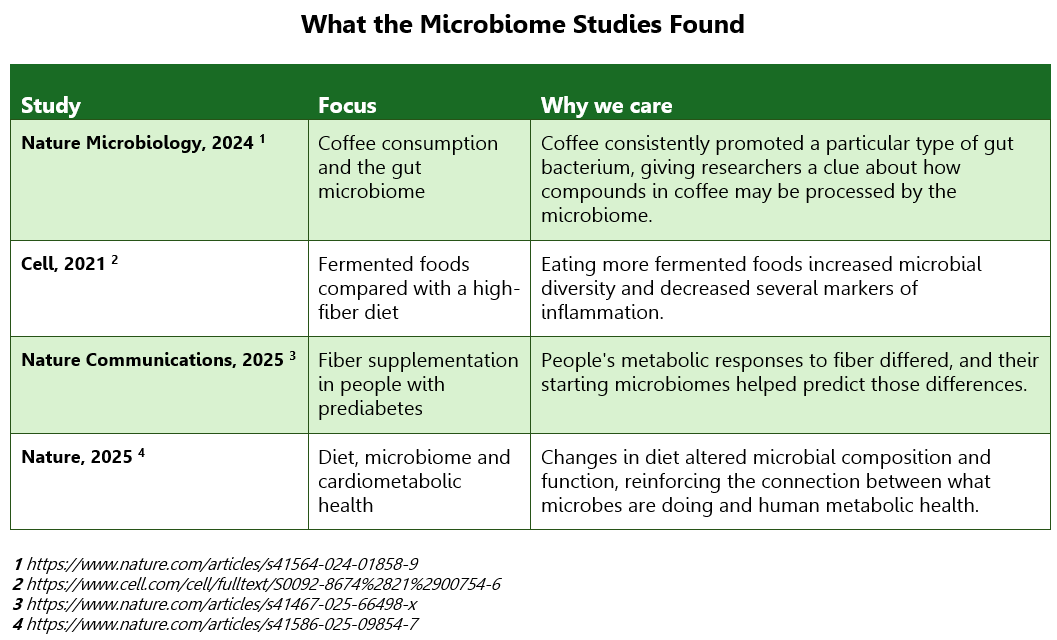
Together, the studies point toward a simple idea: Food does not influence the gut microbiome through one single pathway. Different foods change the microbial environment in different ways.
Here are a few helpful examples to understand how our diet alters our gut…
1. Coffee Feeds Specific Gut Bacteria
Coffee provides one of the clearest examples of a food acting almost like a targeted fertilizer for certain microbes.
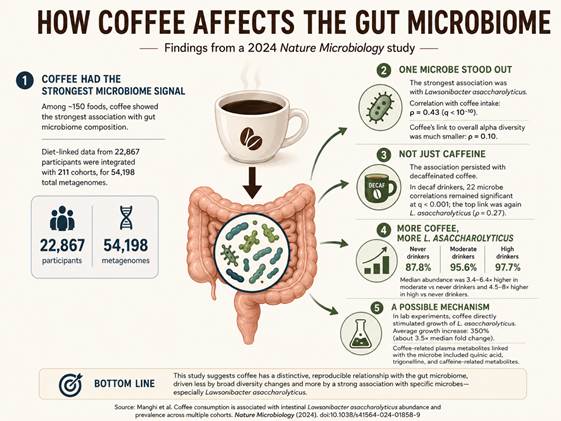
The 2024 Nature Microbiology study analyzed more than 50,000 microbiome samples and found an unusually strong and consistent relationship between drinking coffee and one particular type of gut bacterium. Researchers then tested the relationship in the laboratory. When they exposed the bacteria to coffee, the bacteria grew. Interestingly, decaffeinated coffee produced a similar effect, suggesting that caffeine itself was not responsible.
How does it work?
Coffee contains many bioactive plant compounds, including polyphenols, chlorogenic acids and compounds created during roasting. Our bodies do not completely absorb all of these compounds in the stomach or small intestine. Some continue into the colon.
Once they arrive there, bacteria that have the right enzymes can break down and use those coffee compounds. Think of it as a specialized food source. If one group of bacteria is especially good at using what coffee provides, those bacteria gain a competitive advantage and can become more abundant.
Why do we care?
Coffee consumption has repeatedly been associated with health benefits. It is almost a miracle drink. Caffeine has anticancer properties, is an anti-inflammatory, provides gut health, neurodegenerative disease protection, type 2 diabetes and cardiovascular disease prevention.
The discovery that coffee consistently feeds particular gut bacteria gives scientists a new way to investigate how coffee’s plant compounds are transformed once they enter the body and whether the metabolites created during that process influence human metabolism.
That does not mean a single bacterium is responsible for coffee’s health effects. Instead, it tells us something broader and potentially more important: Foods we have consumed for centuries may influence our health partly by feeding particular members of our gut microbiome. Your morning coffee may be feeding more than you know.
2. Fermented Foods Introduce Microbes
Yogurt, kefir, kimchi, sauerkraut and other fermented foods work differently.

Rather than simply feeding bacteria that already live in the intestine, fermented foods can bring microorganisms directly into the digestive system.
They also contain compounds produced by those microbes during fermentation. That creates a very different type of interaction. A randomized study published in Cell compared people eating a diet high in fermented foods with people eating a diet high in fiber.
The fermented-food group experienced two particularly interesting changes: Their microbiomes became more diverse, and several markers of inflammation decreased.
How does it work?
During fermentation, microorganisms transform components of the original food. In yogurt, for example, bacteria convert sugars in milk into acids and other compounds. Similar transformations occur when cabbage becomes sauerkraut or kimchi and when milk becomes kefir.
When we eat these foods, we may consume both the microorganisms associated with fermentation and the chemical compounds they produced. Many of those microorganisms do not permanently move into our intestines. They may simply pass through. But even temporary visitors can interact with microbes already living there. They can also change the chemical environment of the gut and produce compounds that interact with intestinal and immune cells.
Why do we care?
Microbial diversity is often considered one indicator of a more resilient gut ecosystem. And the reduction in inflammatory markers seen in the Cell study is particularly interesting because chronic inflammation is associated with numerous metabolic and cardiovascular diseases. This suggests fermented foods may influence health in a fundamentally different way from coffee.
Unlike coffee, fermented foods can introduce new microbes and fermentation products that temporarily change the environment in which the entire microbial community lives. There are still important limitations. Not every fermented food contains live microbes when we eat it. Some products are heated or processed after fermentation, eliminating living cultures. And simply consuming enormous quantities of probiotics does not automatically create a healthier microbiome.
But the study provides an important clue: regularly eating fermented foods may help create an intestinal environment that supports a more diverse microbial community while also influencing inflammatory activity elsewhere in the body.
3. Beans & Veggies Feed Your Colon
Fiber works differently than coffee and or fermented foods by providing fuel for entire communities of microorganisms already living in the colon.
Humans cannot completely digest many of the complex carbohydrates found in beans, lentils, vegetables, fruits and whole grains. That may sound like a nutritional disadvantage. For our gut bacteria, it is exactly the opposite.
How does it work?
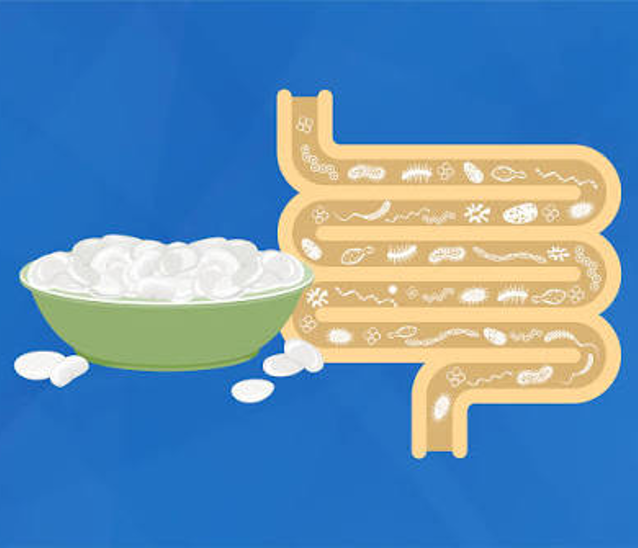
When these complex carbohydrates escape digestion in the small intestine, they continue into the colon. There, different groups of gut bacteria work together to break them down through fermentation.
Different bacteria are equipped to use different kinds of fiber. That is one reason eating a variety of plants may be important. The fibers found in oats are not identical to those in lentils. Lentils differ from apples. Apples differ from asparagus, nuts or beans.
As microbes ferment these carbohydrates, they produce substances known as short-chain fatty acids. One of the most important is butyrate.
Why do we care?
These compounds are not simply microbial waste products. They perform important jobs in our bodies. Butyrate is a primary source of energy for the cells lining the colon and helps maintain the intestinal barrier separating the contents of the gut from the rest of the body.
Other short-chain fatty acids participate in immune signaling and metabolic regulation. Researchers are also studying their connections with blood-sugar control. That brings us to the 2025 Nature Communications study involving more than 800 people with prediabetes. Participants received a dietary-fiber intervention for six months. Across the entire group, researchers did not find a significant improvement in the study’s primary glucose-control measure.
But when they looked at participants individually, an important pattern emerged. Some people responded much better to fiber than others. Those differences were associated partly with participants’ metabolic characteristics and the makeup of their gut microbiomes before the intervention began.
In other words: Fiber matters, but the microbes available to ferment that fiber may matter too.
The Same Food Affects Us Differently
This may be one of the most important developments in microbiome research. For decades, nutrition recommendations have understandably focused on averages. Eat more vegetables. Eat more fiber. Choose whole grains. Those recommendations remain supported by a large body of evidence.
But microbiome research is beginning to explain why two people can follow the same recommendation and experience somewhat different metabolic responses. Imagine two people both decide to add lentils to their diets. One person’s gut may contain a large community of microbes capable of efficiently fermenting the particular carbohydrates in lentils. Another person’s microbial community may be different.
The food is identical. The microbial processing is not. Researchers call the larger effort to understand these differences precision nutrition. The goal is not necessarily to replace broad healthy-eating advice, but eventually to make it more specific.
Instead of simply stating “Eat more fiber”, scientists may ask, “Which kinds of fiber are most useful for this particular person?”
We are not there yet. But studies like the Nature Communications trial show why researchers believe the microbiome could someday help answer that question.
Making Gut Bacteria Work for Us
There is another common theme connecting these studies. Early conversations about the microbiome often focused on identifying “good bacteria” and “bad bacteria.”
Scientists increasingly view that approach as too simplistic. What may matter just as much is what the microbial community is capable of doing. Can it break down complex carbohydrates? Can it transform compounds found in coffee and other plants? Can it produce short-chain fatty acids? How does it interact with the immune system? Can changes in diet restore or strengthen some of those functions?
A large 2025 study published in Nature examined diet, the microbiome and markers of cardiometabolic health in more than 34,000 people. The researchers found microbial patterns associated with both dietary habits and health characteristics. They also examined how those patterns changed during dietary interventions.
The results reinforced an important concept: Changing what people eat can change both which microbes are present and what those microbial communities are capable of doing. That functional change may ultimately be more meaningful than simply increasing or decreasing one type of bacterium. Our microbes operate as an ecosystem. They consume different nutrients, exchange compounds with one another and produce metabolites that can interact with human cells.
And food provides much of the raw material.
Why Variety Matters
These mechanisms also explain why dietary diversity repeatedly appears in conversations about gut health. Eating a variety of foods does more than increase the number of nutrients on our plates. It gives the microbiome a wider variety of materials to work with.
Coffee provides one collection of plant compounds. Oats provide another. Beans offer complex carbohydrates. Berries contribute fibers and polyphenols. Yogurt can introduce fermentation-associated microorganisms and compounds. Nuts, seeds, vegetables, whole grains and fruits each add something different. No single food can provide all of it.
Stop asking which food is best. Ask how many different kinds you’re handing over each week. No single food covers it.
What Should We Feed Our Gut?
For all of the complexity of microbiome research, the practical advice remains reassuringly simple. You do not need to memorize bacterial names or understand microbial metabolism to eat in a way that supports your gut.
Eat a variety of vegetables. Eat fruit. Include beans, lentils and other legumes. Choose whole grains. Add nuts and seeds. Include fermented foods such as yogurt, kefir, kimchi or traditionally fermented vegetables. And remember that foods such as coffee, tea, berries, herbs and other plants contribute more than just fiber. Their plant compounds also interact with the microbiome.
Perhaps most importantly, focus on dietary patterns rather than individual foods. A pastry is not going to destroy your microbiome. Birthday cake can still be birthday cake. But a diet in which those foods consistently replace beans, vegetables, fruits, whole grains, nuts and other fiber-rich foods provides the microbiome with a very different set of resources.
The microbiome is an ecosystem. And ecosystems generally benefit from variety.