The FDA Codes Keeping Your Meals Safe
The Dirt
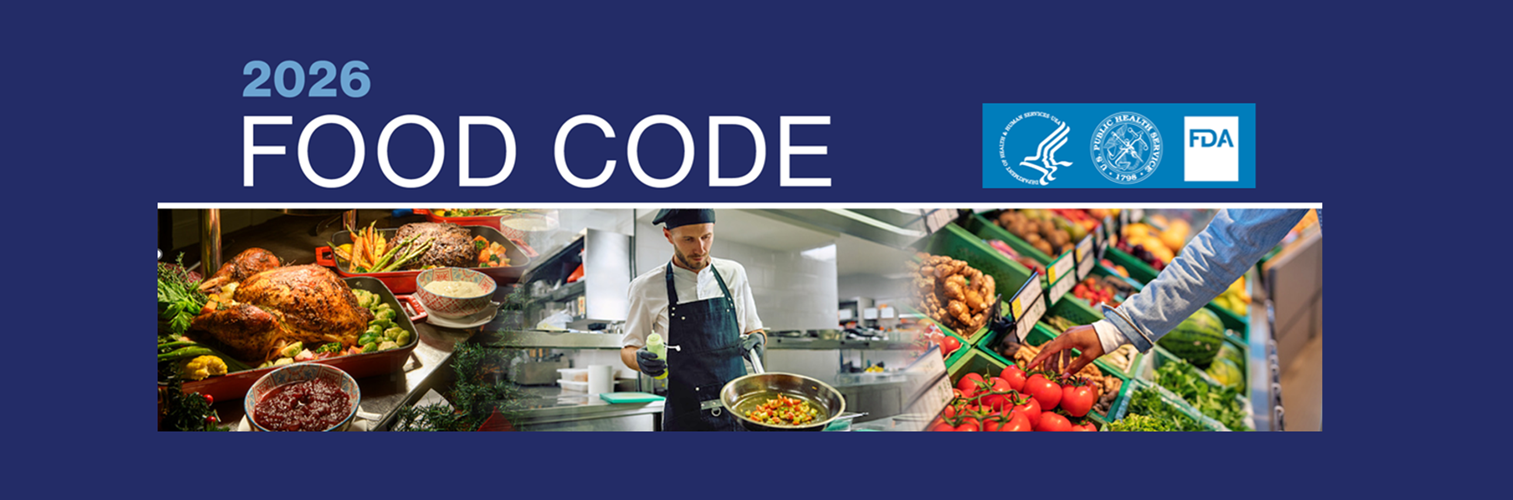
The FDA just updated the model food safety rulebook behind restaurants, delis, and cafeterias. It’s a reminder that America’s safe food system isn’t an accident, it’s designed to play defense.
Global Food
The FDA Codes Keeping Your Meals Safe
The Dirt
The FDA just updated the model food safety rulebook behind restaurants, delis, and cafeterias. It’s a reminder that America’s safe food system isn’t an accident, it’s designed to play defense.
I’ve stood at a deli counter plenty of times, watching someone slice turkey, wrap a sandwich, and hand it across with the same gloves he just used to slice the previous customer’s cheese. The case looks clean. The guy smiles. Meanwhile my daughter is tugging my sleeve asking for a pink cookie on display, and I’m mostly thinking about whether they’ll actually eat what I buy, not the temperature of the refrigerator behind him.
But that refrigerator temperature probably matters more than anything I can see.
What you see at a restaurant or deli is maybe 10% of food safety regulations in place to keep our food safe.
The other 90% happened before you walked in: was a sick employee sent home, was yesterday’s soup cooled fast enough, was the cutting board wiped down between an allergen and your kid’s sandwich? Food safety is a little like plumbing: when it works, you don’t think about it. You turn on the faucet and clean water comes out. You order lunch and assume it’s safe.
We play offense by playing defense
It’s easy to think of food regulation as reactive: a recall happens, then rules change.
The 2026 FDA Food Code works the opposite way, and that’s the most important thing to understand about it.
This isn’t a new rulebook. The FDA has updated the Food Code every few years since the 1990s.
The basics have been in place for decades: cook foods to the right temperature, keep hold hot foods hot and cold foods cold, wash hands, sanitize surfaces.
Those fundamentals are why America has one of the safest food supplies in the world.
Even with an estimated 800 foodborne illness outbreaks a year, the system works for more than a million restaurants, grocery stores, schools, hospitals, nursing homes, and childcare centers.
The 2026 edition doesn’t throw that foundation out. It asks a harder question:
What needs to be written down, systematized, and verified so safety doesn’t depend on a tired manager making a perfect call on a busy Saturday night?
Glenda Lewis, FDA’s director of Retail Food Protection, has described the Code as “practical science-based guidance for mitigating risk factors that are known to cause foodborne illness” and “an important part of strengthening the national food safety system.”
Think of it like football. The Food Code isn’t the highlight reel, it’s the offensive line. You only notice it when it fails. Releasing an update before the next crisis, rather than after it, is the government playing defense on purpose.
What’s new, in plain English
The Code is a model. States and localities adopt it jurisdiction by jurisdiction, so a new edition doesn’t become law everywhere overnight. But its direction matters. The 2026 changes boil down to three shifts:
1. From rules to systems
For the first time, the Code formally defines a Food Safety Management System (FSMS) and will require many establishments to have one in writing within four years of their state adopting it. It also adds “food defense,” protecting food from intentional contamination and makes the person in charge explicitly responsible for active managerial control.
Translation: the fridge gets checked because someone owns checking it, not because someone remembered.
2. From improvising to writing it down
New requirements for written employee illness policies, reorganized procedures for vomiting and diarrheal events, plus clarifications on glove use, sanitizer temperatures, and cooling.
Translation: Sanitation procedures look mundane on paper, but necessary in a kitchen.
3. Keeping up with how we eat now
Guidance for dehydration and freeze-drying in restaurants and retail, hazards for raw specialty mushrooms, clearer language on allergen cross-contact, new definitions for mobile food establishments, food trucks and provisions for food donations.
Translation: The pantry has changed; the rulebook is catching up.
The soup problem
Unlike the Thanksgiving turkey carcass left on the counter “to cool a bit” before refrigerating, a 20-gallon stockpot of soup in a restaurant walk-in has a very different cooling pattern. The outside cools first. The center can stay warm for hours, right in the zone where bacteria multiply, even though the soup was perfectly cooked earlier.
Food safety is a relay race. Cooking runs one leg well, then hands the baton to cooling, refrigeration, clean equipment, and hygiene. A fumble on any later leg undoes the earlier work.
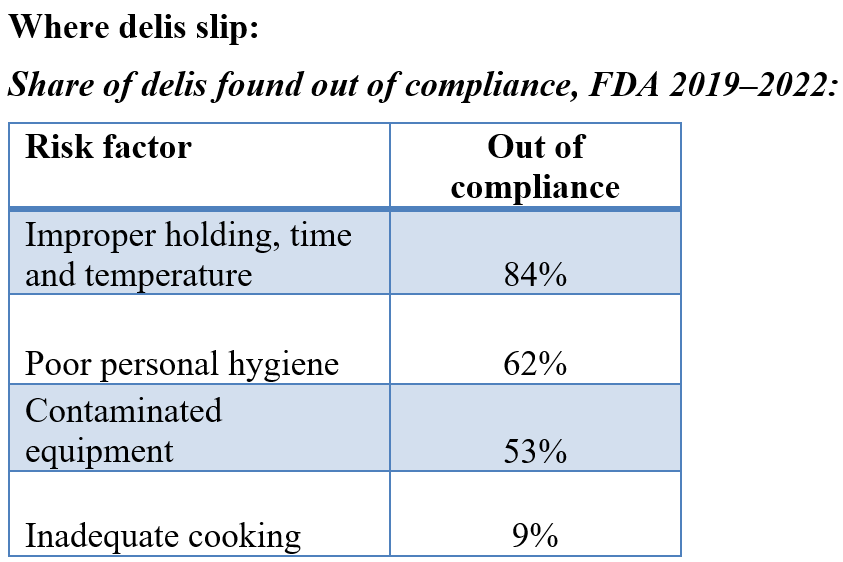 That’s why the timing of the FDA’s deli risk-factor report, released just a day before the new Code, matters. Researchers observed 438 randomly selected retail delis from 2019–2022 (full technical report, PDF). The results, summarized by FoodSafetyNews, are a reality check.
The least common problem was cooking, the part consumers understand best. The biggest problems were the boring basics: holding food at the right temperature and washing hands.
Formalizing employee health standards
It’s 7 p.m., the dining room is full, and the fry cook texts: “I’ve been throwing up.” The manager does instant math: send him home and the line collapses, or keep him and hope. The pressure to say “can you push through tonight?” is enormous.
 A written illness policy changes that math. The decision about who stays home gets made on a calm Tuesday, not in the weeds on Saturday.
That’s why the 2026 Code’s written-policy requirement is fundamentally a food-safety rule, not an HR nicety. CDC has found 1 in 5 food workers surveyed worked at least one shift with vomiting or diarrhea in the prior year.
This is also where leadership shows up in the data. Researcher Craig Hedberg, studying restaurants with and without outbreaks, found “we were much less likely to find a certified kitchen manager in a restaurant that experienced an outbreak.” CDC’s own review reached the same conclusion: restaurants with kitchen managers certified in food safety were less likely to have outbreaks.
For allergies, the same systems logic applies. The Code clarifies allergen cross-contact because the most dangerous ingredient can be the one that wasn’t supposed to be there, left behind on a utensil or surface. For a severely allergic child, changing gloves, washing equipment, and separating ingredients matters as much as reading the recipe.
From rules to systems
Perhaps the most important finding from the deli study had nothing to do with a pathogen. Delis with a Certified Food Protection Manager as the person in charge had significantly better food-safety management scores — and having a well-developed FSMS was the strongest predictor that risk factors would be minimized.
An FDA-funded review put it bluntly: “an inadequate food safety management system was the strongest predictor of data items being out of compliance… the average number of out of compliance items is greatly reduced when there is a well-developed FSMS.”
A kitchen without that system is like an orchestra without a conductor, fifteen talented people playing from different sheet music on a Friday night. The 2026 Code’s big bet is making the conductor role mandatory: a written system, a trained person in charge, and verification that it actually runs during every shift.
Keeping up with how we eat
Even the smaller updates fit this defensive posture. Freeze-drying guidance exists because restaurants are experimenting with the technique– removing water slows many microbes but doesn’t guarantee every pathogen is gone, so the Code asks the old questions of a new technology: did the process work, was the food handled safely beforehand, how do you verify?
Specialty mushrooms get a mention because the restaurant pantry looks different than it did a generation ago. Food donation provisions exist because clear rules for storage and handling make restaurants more comfortable donating edible food, not less.
You shouldn’t need to interrogate your server about refrigeration logs before ordering dinner. That’s the point. The meal you see sits on top of a safety system you don’t: decades of basics that still work, plus a government playbook that updates before our eating habits outrun it. The deli data says our biggest opportunities are still surprisingly basic – temperature, handwashing, sick-leave policies, training, and putting someone in charge of the system.
The Bottom Line
The 2026 Food Code adds new science and responds to new trends, but its most important message is old-fashioned: safe food usually comes from doing dozens of small things correctly, over and over again. The safest restaurant meal isn’t necessarily the one made by a flawless kitchen. It’s the one made in a kitchen designed to catch mistakes before they reach your plate.
Share this article



Listen to the Dirt to Dinner Podcast