Food Labels & Pesticides: A Science-Based Perspective
The Dirt
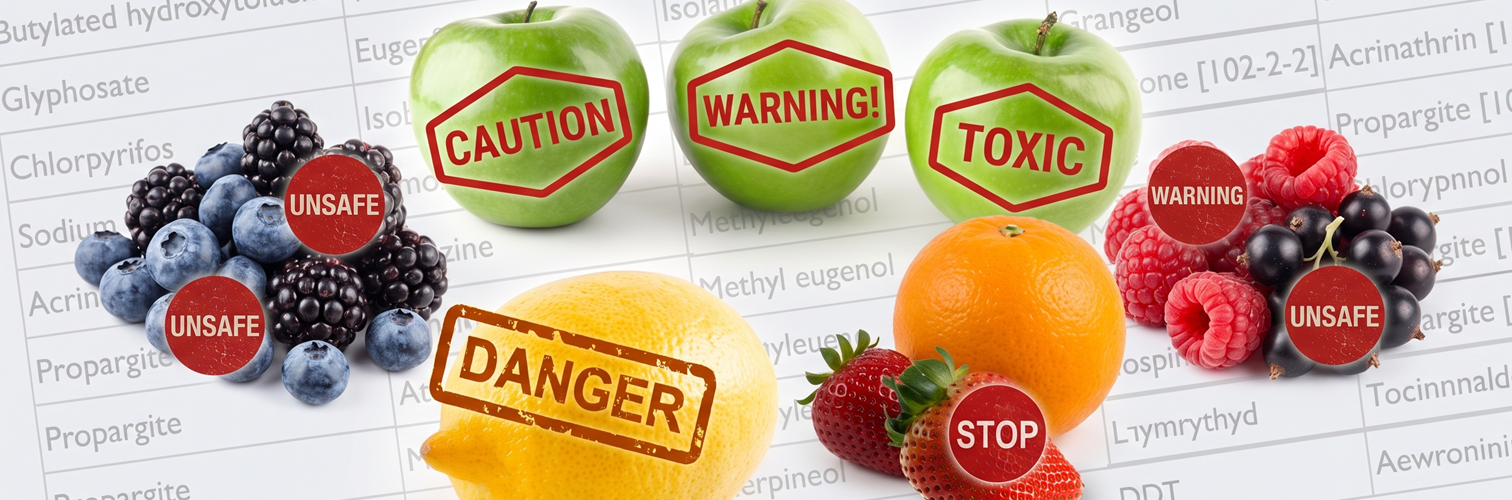
Every year, headline warnings about pesticide residues on produce and "Frankenfoods" make their way into nutrition news, causing many of us to pause in the grocery aisle. But if the primary health issue facing our nation is a simple lack of fresh, whole foods in our diet, why do we let these commentaries dictate what goes onto our plates?
Global Food
Food Labels & Pesticides: A Science-Based Perspective
The Dirt
Every year, headline warnings about pesticide residues on produce and "Frankenfoods" make their way into nutrition news, causing many of us to pause in the grocery aisle. But if the primary health issue facing our nation is a simple lack of fresh, whole foods in our diet, why do we let these commentaries dictate what goes onto our plates?
If you’ve spent time on social media recently, you’ve likely seen viral videos negatively portraying crop protection from insects or weeds; or biotechnology in farming. Dramatic, out-of-context imagery can make anyone want to step back and head straight for processed convenience items.
At Dirt to Dinner, we believe in following food from soil to plate using clear, science-grounded facts. The reality is that some consumer advocacy reports don’t fully explain genetic modification and pesticide residue detections in the context of actual dietary exposure or federal safety benchmarks.
Let’s unpack how we can make well-informed grocery decisions with confidence and peace of mind.
The Invisible Shield: Rigorous Safety Standards
Before considering throwing out fresh fruits and vegetables, it helps to look at the multi-layered regulatory oversight protecting our food supply.
U.S. farmers operate under guidelines established and enforced by three federal agencies: the Environmental Protection Agency (EPA), the United States Department of Agriculture (USDA), and the Food and Drug Administration (FDA).
Here are the agencies’ key responsibilities when it comes to pesticide use:
- Setting Legal Tolerances: The EPA establishes pesticide residue limits (“tolerances”) based on a strict “reasonable certainty of no harm” standard, explicitly factoring in exposure risks for vulnerable groups like children.
- Testing and Auditing: To monitor compliance with these limits, the USDA conducts the annual Pesticide Data Program (PDP). Scientists collect and analyze thousands of food samples across the country. For example, in the 2024 PDP audit, the USDA tested 9,872 samples across 19 commodities.
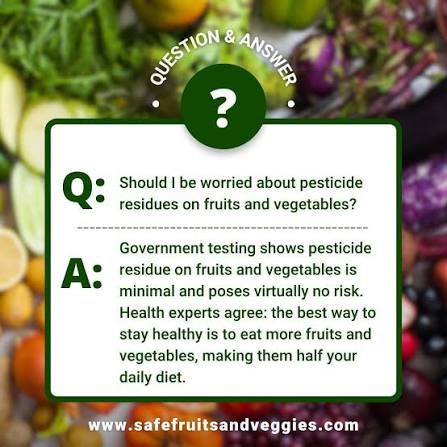
Year after year, federal monitoring data demonstrates a consistent finding: nearly 99% of sampled products have residue levels well below the safety limits set by the EPA, with a large portion showing no detectable residue whatsoever.
When videos feature farm workers applying pesticides in protective gear, it isn’t because the produce itself is dangerous to eat; it reflects occupational safety standards designed to protect workers handling concentrated materials daily, much like wearing heavy gloves and a mask when using household cleaners at home.
Pesticides: How Rankings Differ from Real Risk
If federal monitoring confirms our food supply is safe, why do some of these reports sound alarming? It often comes down to differences between simple hazard detection and comprehensive risk assessment.
Several shopping guide reports by consumer advocacy organizations rank produce items based on residue detection. However, these organizations generally do not conduct independent laboratory testing. Instead, they re-analyze publicly available USDA PDP data using their own scoring methodologies.
Historically, many of these lists focus on whether a residue is present, regardless of how small the quantity is or whether it poses an actual health risk. In toxicology, a foundational principle is that the dose makes the poison. A tiny trace of a compound measured in parts per billion is fundamentally different from a level that causes biological harm.
According to toxicologists and exposure calculators developed by independent academic experts at the Alliance for Food and Farming, an adult could consume hundreds of servings of conventional spinach or strawberries in a single day without experiencing any adverse health effects from trace residues.
Creating Unnecessary Fear of Healthy Food Choices
Pesticide residues aren’t the only area where marketing and public commentary can create unnecessary anxiety.
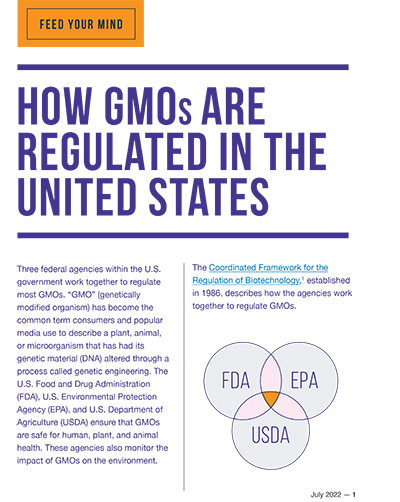 The conversation around genetically-modified organisms (GMOs) and bioengineered crops often generate similar confusion.
Decades of global scientific consensus from organizations like the National Academy of Sciences and the World Health Organization confirm that currently approved bioengineered crops are just as safe and nutritious as their conventional counterparts. Yet misunderstandings around biotechnology persists.
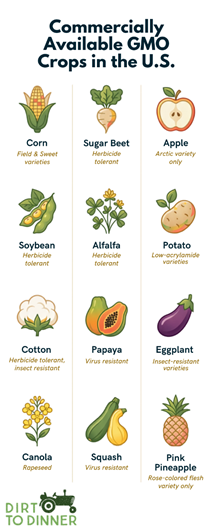
To put things in perspective, only a subset of a dozen crops are commercially available in bioengineered varieties in the United States today. What this list excludes are several crops so many of us falsely assume to be GMO, like wheat, rice, tomatoes, bananas, and apples (only the Arctic apple variety is bioengineered).
Despite this relatively short list, fear-based marketing often exploits consumer unfamiliarity with agriculture through misleading labeling practices.
Examples of misleading content:
Non-GMO Labels on Non-GMO Items: It is common to find “Non-GMO” labels prominently displayed on products that have no genetic counterpart whatsoever, like carrots, lettuces, berries, nuts and pickles. Furthermore, some companies even print the label on items that are made of elements and don’t even have genetic material, like salt (NaCl), or bottled water (H20)!
Placing a Non-GMO label on salt or on fruits like strawberries and blueberries (which have no commercial GMO varieties) implies to shoppers that neighboring, unlabeled products are modified or inherently risky.
“No Added Hormones” on Poultry & Pork: Package labels on chicken or pork often boast “Raised Without Added Hormones.” However, federal law strictly prohibits the use of added hormones or steroids in all poultry and swine production in the U.S.
Including this claim on specific brands leads consumers to mistakenly believe that competitor products contain added hormones.
“Chemical-Free” Claims: Marketing campaigns sometimes advertise food as “chemical-free.” In reality, every physical substance on Earth—including water, oxygen, and organic apples are made entirely of chemical compounds.
We humans are made of chemicals, too…comprised of the same chemicals and elements found in the stars.
“Clean Eating” or “All Natural” Rhetoric: Using terms like “clean” to market food subtly implies that conventional, affordable produce is “dirty” or unsafe.
This creates unnecessary guilt around routine grocery purchases.
The Real Threat: Skipping Our Fruits and Veggies
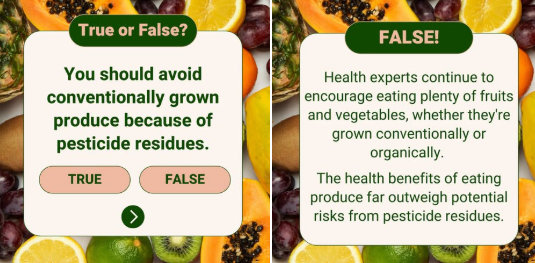
The primary drawback of fear-driven messaging isn’t just label confusion—it’s that it actively discourages people from eating nutritious foods. This is a BIG mistake. Fruits and vegetables provide the cornerstone of your immune system.
Peer-reviewed studies indicate that fear-based warnings surrounding produce lead many consumers, particularly low-income shoppers, to buy fewer fruits and vegetables overall.
This occurs at a time when dietary intake is already a major public health concern: according to data from the Centers for Disease Control and Prevention (CDC), only about one in ten U.S. adults currently meet recommended daily intakes for fruits and vegetables.
Furthermore, discouraging produce consumption is especially problematic given current economic pressures on household food budgets. Many shoppers must choose one item over another – even if they’re unrelated items, like strawberry jelly and eggs, where previously they felt more financially secure purchasing both items.
As public health concerns mount, the quote by Hippocrates, “let food be thy medicine” feels more vital than ever.
Both conventional and organic agricultural systems are strictly regulated, and both provide safe, wholesome produce. Organic farming relies primarily on naturally derived crop protection methods, while conventional farming utilizes synthetic options. Both play an essential role in maintaining a stable, accessible food supply.
Comprehensive toxicological reviews consistently show that the substantial health benefits of eating fruits and vegetables far outweigh any hypothetical risks associated with trace pesticide residues.
Practical Steps for Peace of Mind in the Kitchen
We can easily put a few practices in place to minimize exposure to foreign particulates.
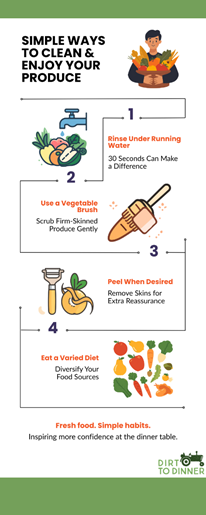
If you want to reduce residual dirt or surface traces on your produce, these simple kitchen habits are effective:
Wash Under Running Water
- Washing fresh produce under tap water for 30 seconds effectively dislodges surface residues.
- Extra credit: soaking produce in 2 tsp. baking soda & 1 qt. water for 10-15 minutes removes more residues.
Give It a Scrub
- For produce with firm skins—such as melons, cucumbers, carrots, and potatoes—gently scrub the surface with a clean brush under running water.
Peel It Off
- Peeling apples, pears, or root vegetables removes surface skins, though keeping the peel intact provides additional dietary fiber.
Mix Up Your Diet
- Consuming a wide variety of foods ensures a diverse intake of essential vitamins and minerals while naturally diversifying your food sources.
The Bottom Line
Navigating the grocery store shouldn't feel like managing a risky situation. Buy the produce your family enjoys, whether conventional or organic, fresh or frozen. Focus on colorful, nutrient-dense foods, ignore misleading marketing ploys, and eat with confidence.
Share this article



Listen to the Dirt to Dinner Podcast