Is Your Pet Food Ultra-Processed?

My boxer is 14 months old. We have had him for a year and understanding his diet needs has been complex, to say the least. The breeder had him on a simple, cost-effective, commercially available kibble. Do we switch? Do we stay?

We had all kinds of advice from veterinarians, friends, and family on pet food. “Processed kibbles are junk…would you feed your child processed food?”, “Fresh is best; we feed our dog what we eat“, and “Kibbles are a perfectly complete meal.” What and who do I believe?

Pet Food Confusion in the Grocery Aisles

Walking through the pet food store, I felt the pressure growing: glossy bags promising “no fillers,” “no corn,” “no by-products,” and “human-grade” ingredients, all implying that whatever kibble we fed our last three boxers – who lived long lives, by the way – was letting our precious new puppy down.

There are many choices to feed your beloved family member: dry kibbles, wet food, fresh & raw food, toppers, dehydrated, freeze-dried, air-dried, and treats. But which to choose? Go to chewy.com and you will be even more overwhelmed with the different choices and different brands.

If you go to consumerrating.org, it suggests that if you feed your dog anything but fresh, you are doing a disservice to a loving member of your family. Farmer’s Dog is the most popular brand made from ‘real’ meat and veggies proportioned just for your dog.

There is a lot of discussion of highly-processed food for humans in the grocery store; apparently, pet food is no different. But is it?  Is kibble “ultra-processed” in the way a candy bar is?

I noticed that the “ultra-processed” wave of suspicion that’s swept human nutrition has jumped the species line and landed in the pet food aisle. It appears the marketers of pet food are very adept at playing to our human predilections and prejudices, versus science and objectivity.

But does kibble actually deserve the “highly processed” label? And are the demonized ingredients really the problem they’re made out to be? To find out, we sat down with pet food industry experts and looked at what nutrition science shows about pet nutrition.

What Does “Complete and Balanced” Really Mean?

Every dog or cat food with the label “complete and balanced” is formulated to meet defined nutritional requirements for amino acids, vitamins, minerals, and macronutrients. Basically, that formula will keep your pet alive. The phrase isn’t marketing fluff.
All pet food must adhere to the Association of American Feed Control Officials (AAFCO) framework. This association has been guiding state, federal and international feed regulators for more than 110 years.  It supports the health and safety of people and animals by regulating the manufacture, sale, and distribution of animal feeds and animal drug remedies.

Any product carrying it must include a nutritional adequacy statement specifying the complete food for the life stage it serves, such as “puppies” or “adult maintenance”.

“If it has that statement, you’ve got a good product,” our expert explained. “If a company claims it without AFFCO standards, they’re facing FDA and government consequences.”

In other words, the regulatory floor for pet food is genuinely high. A complete-and-balanced kibble and a complete-and-balanced fresh or frozen meal are nutritionally equivalent at that baseline, regardless of how different the packaging makes them feel.
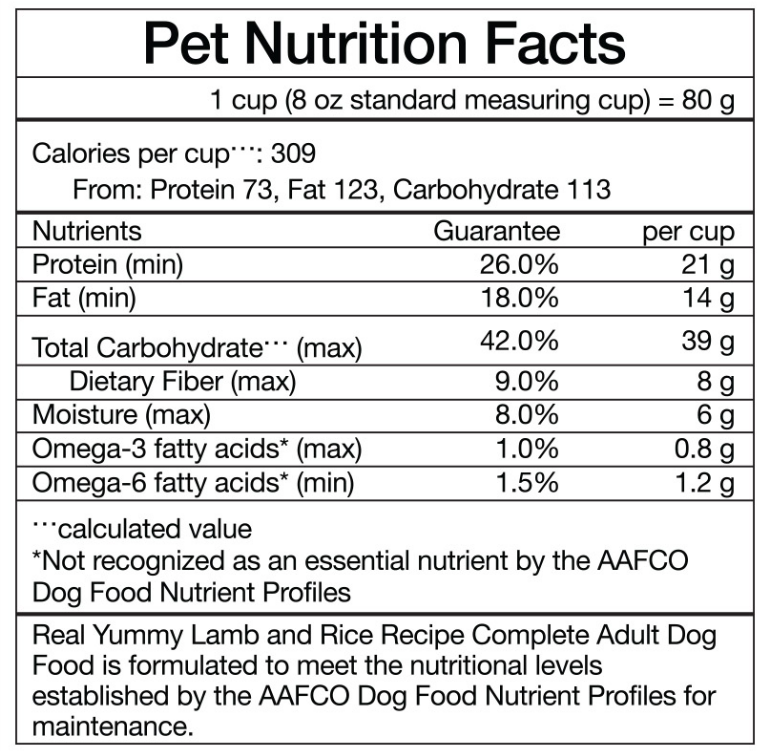
The labels must also include Guaranteed Analysis of Nutrients (in the Future Nutrition facts box), ingredient statement, and handling and storage instructions.

However, surviving by “nutritional adequacy” isn’t the same as thriving. You will see brands invest in high macronutrient levels, such as protein and fat guarantees.

You will also see enriched levels of micro-nutrients like vitamins, trace minerals, fatty acids, etc.

The “Highly Processed” Question

Pet food experts caution against importing the human-food framework for pets. Consider corn, an ingredient often questioned in the pet aisle. Experts note that grinding corn for livestock is a matter of particle size. “It’s no different than mashing potatoes, where you’re changing the physical form of the ingredient and it’s digestible and good for your dog.”

The claim that kibble is somehow inherently indigestible doesn’t hold up. Kibbles are just baked ingredients. It is really not all that different than chicken pot pie; it just is baked so it has a shelf life. Dogs have evolved the physiology to chew and digest these foods.

And the word “filler”? “There’s no such thing,” experts said. “Everything you put in food has a reason.” Peas, wheat, and grains serve as carbohydrate and protein sources, and different grains are even chosen deliberately for their glycemic response, with rice digesting quickly while wheat and barley release energy more slowly.

How Demonized Ingredients Got Their Reputation

If corn and by-products aren’t nutritionally problematic, why do so many pet food products brag about leaving them out?

The answer, largely, is marketing. Some brands have built their positioning on the exclusion of specific ingredients such as corn, wheat, soy, and chicken by-products. They present them as meaningful product differentiators. Newer iterations now extend the list to potatoes and peas.

By-products are a telling example. Organ meats and stomach contents are exactly what wild canines seek out first because they’re nutrient-dense food sources. But because humans tend to avoid organ meats, the “would you eat it?” instinct gets projected onto pets. The issue is often less about the inherent nutritional value of the ingredient and more about consumer perception and product positioning.  There are now some brands incorporating individual organs into pet foods while continuing to avoid broader by-product terminology.

The same goes for some “grain-free” and “organic” positioning. Organic pet food, our experts noted, isn’t necessarily any better nutritionally. All of these ingredients have a long track record of being safe to use.

What’s really happening is a move away from a nutrition-and-science framework and toward a consumer feeding philosophy, one shaped by how we think about our own diets.

Why the Big Players Still Matter

The depth of a pet food manufacturer’s quality control often depends on the resources, systems, and sustained investment it has in place. It requires a significant amount of invested capital and science to make sure the right ingredients are mixed with the right specifications. And, of course, that includes eliminating pathogens.

Rigorous standards around salmonella are particularly high, as pathogen prevention goes beyond concern for just your pet. Remember, crawling children and toddlers also claim the floor as their domain – and the kibble that they can so easily grab is fair game to them.

Some manufacturers may have more extensive quality systems and testing protocols than others. Manufacturers like Mars, (Royal Canin, Iams, Pedigree) Nestlé (Purina), Colgate-Palmolive (Hills Science) and Cargill (Loyall) are deeply invested in food safety, quality and testing ingredients for pathogens like salmonella before they leave the facility, verifying vitamin premixes, and meeting tight specifications.

“Whatever you’re buying, you want to make sure it’s quality,” our pet food expert said. “Many companies emphasize product safety, but those statements are most meaningful when supported by documented quality systems, testing protocols, and preventive food safety controls.”

There’s a business logic underneath it: no company wants a recall, and the established players pour money into avoiding one. More broadly, a brand’s quality systems can evolve over time, particularly when it gains access to additional technical, manufacturing, and food-safety resources. Consumers should look for manufacturers that can demonstrate robust quality assurance, ingredient testing, and preventive food-safety controls.

Where the Real Research Happens

One reason pet nutrition can feel like a black box is that much of the science lives inside a handful of companies, with Mars, Royal Canin, Purina, and Hills Science among them. Some of the science stays internal as trade secrets, even though much is published and patented.
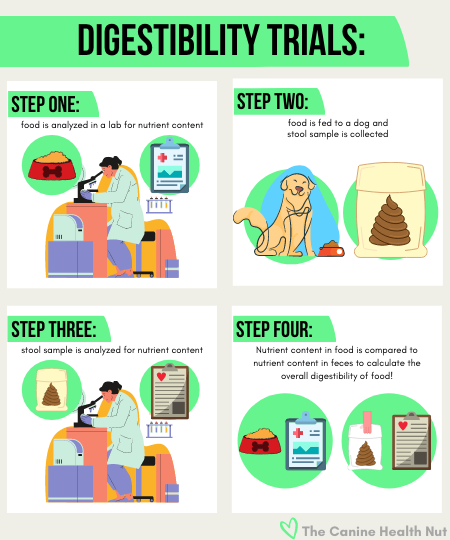
The research that does get done leans on academic partnerships with institutions, like the University of Illinois, the University of Guelph in Ontario, Kansas State, and the University of Kentucky. They conduct studies on palatability, digestibility, and stool quality, the measurable “back-end” markers of how well a food performs.

There are real limits, though. For ethical reasons, pet research can’t be as invasive. For instance, doing a liver biopsy to see how pet food is being absorbed is less ideal than research for human consumption.

The only humane way are lifelong studies, where they track two treatment groups from puppyhood to old age. These studies are enormously costly and slow, which is part of why foundational vitamin and mineral digestibility data still traces back to work done in the 1940s and ’50s.

Reading the Label Without the Hype

So how should you actually choose your pet’s food?

Our expert’s advice was refreshingly grounded. Start with the baseline: any complete-and-balanced food will keep a dog alive and healthy. From there, you differentiate based on your animal’s needs:

  • A Boxer, who loves to run and run, may benefit from higher protein and fat.
  • A King Charles Spaniel, who loves to sit on your lap, is prone to weight gain so may need a weight-control formula and controlled intake.
  • Dogs with skin or digestive sensitivities may need specialized diets, including hydrolyzed formulas for serious cases.
  • An Iditarod athlete will require very high fat, high protein, hydration and supplements to fuel their marathon sledding.

Just like humans, dogs have needs: activity level, skin, digestive, allergies, bone density, and aging, just to mention a few.

What about treats and supplements?

Too many can add up and dilute an otherwise complete diet, showing up in body composition and stool quality.

As for the supplement aisle, pet supplements are regulated like human ones: they can make “structure/function” claims (an ingredient may support or improve something) but cannot make drug claims. Ingredients must be backed by data submitted to AAFCO before they’re approved.

And on popular omega supplements, the goal for pets isn’t the human emphasis on omega-3s; a ratio in the range of 5:1 up to 10:1 favoring omega-6s is more appropriate, and more isn’t always better.

The smartest question isn’t “is this processed?” It’s the same one our source kept returning to:

“What’s actually in this product, what does my specific pet need, and is the company behind it one I trust to get the quality right?”

I ended up with Royal Canin for Boxers. I like the research behind it as well as their understanding of boxer’s athletic requirements for protein and fats. For treats, he loves blueberries, strawberries, and almond butter.

But my son and daughter-in-law are perfectly content with The Farmer’s Dog for their King Charles who is on a weight-controlled formula.

Just like humans, we all have our needs and our preferences.

Can Gene-Editing Tech Rescue At-Risk Crops?

Consider these options: wheat that forms less acrylamide when toasted; rice that can better tolerate heat; tomatoes with improved flavor, nutrition, and disease resistance; and corn that can withstand drought. Citrus trees that could one day resist the disease devastating Florida groves.

Foods that can be modified to include more qualities and characteristics that make them easier to convert into the food we want—that deliver more nutrition, or better at adapting to demanding climate and soil conditions.

The future of food may not be about replacing what we eat, but instead making our crops healthier, survive a more volatile climate or even help them resist disease. And increasingly, the research is moving from theory to field trials, regulatory review, and real-world food-system questions.

First, what is genetically modified versus gene-edited? Genetic modification changes an organism’s DNA through a variety of different methods, one of which is to take a gene from one species and insert it into another one. While gene editing, such as CRISPR, makes small, precise changes to a plant or animal’s DNA.  It is like speeding up what happens naturally over time.

A New Kind of Wheat

Start with something as ordinary as toast. Most of us do not think of toast as a food-safety story. It is breakfast. It is butter and jam. It is the thing you hand a child when they are hungry and dinner is still 20 minutes away.

But when starchy foods like bread, potatoes, biscuits, and crackers are baked, fried, roasted, or toasted at high temperatures, a compound called acrylamide can form. Acrylamide is created through the Maillard reaction – the same browning chemistry that gives toast its flavor and color.

Regulators such as the US EPA and the IARC classify acrylamide as a probable or likely human carcinogen, based primarily on animal studies. It is unclear how much you have to consume to have adverse health effects.

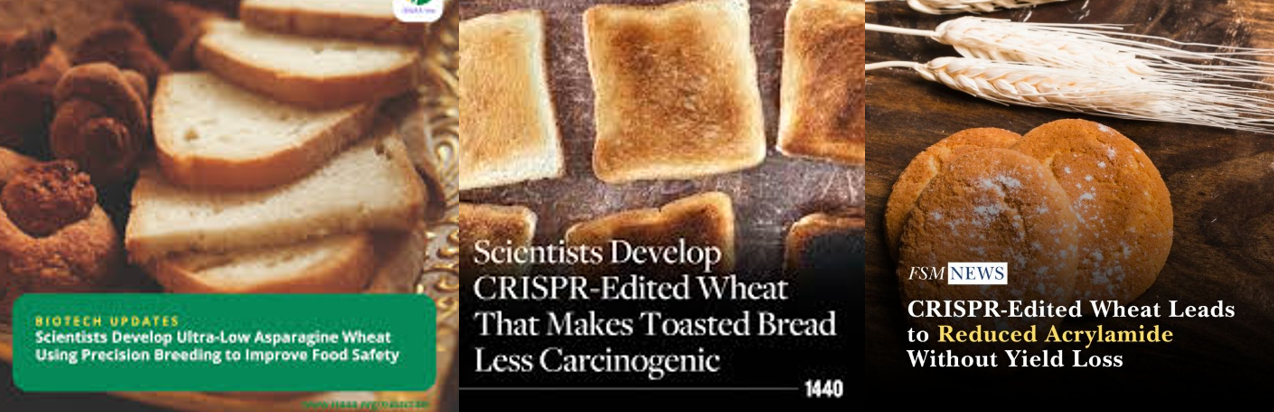
That is why the 2026 announcement from Rothamsted Research is so interesting. After two years of field trials, scientists reported that CRISPR-edited wheat had dramatically lower levels of free asparagine, the amino acid that converts into acrylamide during baking, frying, and toasting. Rothamsted stated that the edited wheat reduced free asparagine by up to 93%, without reducing yield in the field trials.

This is the kind of example that may change how consumers understand gene editing. It is not about making bread glow in the dark. It is about reducing a naturally-occurring precursor to an unwanted compound in a food people already eat. In other words, not “fake food,” but a safer version of a familiar food.

Why Gene Editing is Arriving Now

Food has always been edited, just not always in a lab. The public often thinks of gene editing as adding something unnatural. But in many crop applications, the goal is much more targeted: turning down, removing, or adjusting a trait already present in the plant.

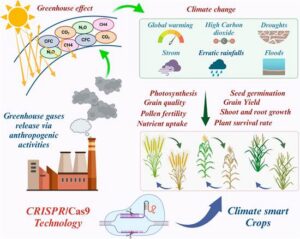
That distinction matters. Traditional breeding can also change plant traits, but it often takes years of cross-breeding and selection. CRISPR allows scientists to make more precise edits to a plant’s own genome. A 2026 review in Current Plant Biology describes CRISPR/Cas9 as a technology that can introduce accurate, stable changes in crops, with applications in yield, resilience, nutritional quality, and postharvest waste reduction.

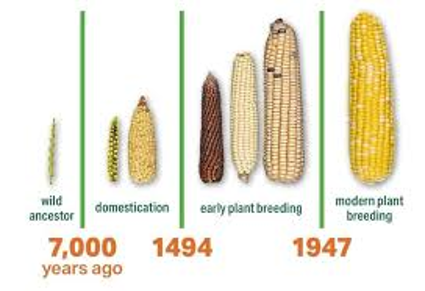
The corn we eat today does not look like its wild ancestor. Modern wheat, apples, tomatoes, carrots, and strawberries all reflect centuries of human selection. Farmers and breeders have always chosen plants with the best flavor, yield, disease resistance, size, shelf life, or harvest traits.

Gene editing is different in method, but not necessarily in goal. Instead of waiting for a useful trait to appear through random mutation or generations of crossbreeding, scientists can target a specific gene or family of genes tied to a desired outcome. Ohalo offers a real-world example of how gene editing may transform the breeding process itself, not just create one improved trait. Its “Boosted Breeding” platform is designed to allow offspring to inherit the complete genomes of both parent plants, rather than a random half from each, making it possible to combine valuable traits more quickly and produce uniform seed-grown varieties. The company is applying the approach to crops including potatoes, strawberries, corn, and almonds, with goals such as higher yields, improved flavor and nutrition, longer shelf life, and greater resource efficiency.

That can matter when the food system is under pressure from multiple directions at once, like a changing climate, pest pressure, crop diseases, labor shortages, land constraints, water scarcity, consumer nutrition concerns, and the need to reduce food waste.

A 2025 review on gene editing and climate-resilient crops argues that these tools could help develop crops better suited to drought, heat, salinity, and other climate-related stresses. Another 2025 review in Frontiers in Genome Editing focused on cereal crops such as wheat, rice, and maize, noting that CRISPR/Cas9 is being explored to improve tolerance to harsh climates in staple crops that feed much of the world.

This is where the future-of-food conversation becomes less futuristic and more urgent. If wheat, rice, corn, citrus, and tomatoes face more disease, heat, drought, and supply instability, then innovation is not just about novelty. It is about keeping familiar foods available, affordable, and nutritious.

Rice in a Hotter World

Rice is a staple food for billions of people, which makes heat stress a global food-security issue.

In 2025, researchers identified a heat-sensitive gene in rice that appears to affect yield and grain quality under high-temperature conditions. In coverage of the study, the edited or naturally altered rice performed better under elevated temperatures, while unmodified plants had major yield losses under heat stress.

That is exactly the kind of application consumers rarely hear about. Gene editing is often debated as a “should we or shouldn’t we?” issue. But for farmers facing heat, flooding, disease, and unpredictable weather, the question may become more practical: which tools help crops survive while using land, water, and inputs responsibly?

Tomatoes: Flavor, Nutrition, and the Complexity Problem

Tomatoes are another perfect example of why gene editing may matter for consumers.

Everyone knows the disappointment of a beautiful tomato that tastes like almost nothing. Over decades, tomatoes have often been bred for shipping durability, size, uniformity, and yield, all important traits in a national food supply chain. But flavor can suffer.

Recent research suggests gene editing could help breeders better understand and improve complex traits in tomato. In 2025, a Nature Communications study developed large-scale, multi-targeted CRISPR libraries in tomato. The researchers designed more than 15,000 unique guide RNAs to target gene families and help overcome functional redundancy, a major challenge when multiple similar genes influence a trait.

That sounds technical, but the consumer translation is simple: the traits we care about, flavor, disease resistance, nutrient uptake, shelf life, are rarely controlled by one simple switch. Plants are complicated. Gene editing is becoming more sophisticated because the biology requires it.

A 2025 summary of that tomato work noted that the approach generated roughly 1,300 CRISPR lines connected to traits such as flavor, nutrient uptake, and pathogen response. This is where gene editing starts to look less like a “one gene, one miracle crop” story and more like a modern breeding accelerator. It can help scientists identify which genetic pathways matter, which traits can be improved without tradeoffs, and which changes might help growers deliver food that tastes better, lasts longer, or resists disease with fewer losses.

Citrus Disease and the Foods We May Lose

Some of the most important gene-editing stories are not about making foods more exciting. They are about preventing them from disappearing from certain regions.

Florida citrus is one of the clearest examples. Citrus greening, also called Huanglongbing or HLB, has devastated groves and reshaped an industry that once felt permanent. A future where gene editing helps citrus trees tolerate or resist disease would not be about creating a new luxury product. It would be about preserving orange juice, grapefruit, and a way of farming that has already been deeply damaged.

The same logic applies across crops: bananas threatened by fungal disease, wheat facing rusts, potatoes vulnerable to blight, tomatoes facing viruses, and rice confronting heat and flood stress.

A 2026 review on CRISPR/Cas gene editing for plant resistance describes applications for developing resistance against insects, diseases, and herbicides, underscoring how pest and disease pressure remains a central driver of crop biotechnology research.

This is the part of the story that often gets lost in consumer debates. Farmers do not need innovation because farming is easy. They need innovation because crops are biological systems grown outdoors under pressure from weather, insects, weeds, fungi, bacteria, viruses, and markets.

The Trust Problem

Even if the science advances, consumer trust will decide how much of this technology reaches the plate. And trust cannot be engineered in a lab.

For many consumers, skepticism is not irrational. People remember earlier food technologies that were introduced with more industry confidence than public explanation. They worry about corporate control of seeds, labeling transparency, ecological risks, unintended consequences, and whether benefits will flow to farmers and consumers. Those concerns deserve to be taken seriously. Gene editing should not get a free pass because it is precise. Precision is valuable, but the final crop still has to be evaluated for safety, environmental impact, farmer access, and whether the trait actually solves a meaningful problem.

Each crop, each trait, and each use case still needs to be evaluated on its own merits. But the direction of the research is clear: gene editing is increasingly being studied as a climate-adaptation tool, not just a yield-boosting technology. The future of crop breeding will likely require a toolbox, not a single tool. Conventional breeding, genomic selection, gene editing, biologicals, soil health, irrigation management, and farmer knowledge all have to work together.

Why This Matters for Farmers and Consumers

For farmers, gene editing could eventually mean more resilient seeds, fewer crop losses, and more tools to manage disease and climate stress. But access and economics matter. A crop that performs beautifully in a research trial still has to make sense in the field. It has to fit regional growing conditions, supply chains, export markets, seed costs, consumer expectations, and regulatory rules.

This is why the wheat example is so compelling. Rothamsted’s low-asparagine wheat was not just a lab proof-of-concept; the 2026 reporting highlighted results from two years of field trials. That is a key step because the field is where crops prove whether they can perform under real growing conditions. The same is true for climate-stressed crops. A gene edit that works in a greenhouse is promising. A gene edit that works across seasons, geographies, soils, weather events, and farmer practices is much more valuable.

For consumers, gene editing may show up quietly. It may not be labeled in giant letters as “CRISPR food of the future.” It may arrive as a better-tasting tomato, a longer-lasting berry, a wheat ingredient that helps bakers reduce acrylamide, a potato less prone to browning, or citrus that remains viable in a region where disease nearly wiped it out. That quietness is both an opportunity and a risk.

On one hand, consumers do not need every food innovation to feel like a science experiment. On the other hand, transparency matters. People should not feel tricked into acceptance. If gene editing delivers real benefits, those benefits should be explained clearly and honestly. The message should not be: “Trust us, it’s science.” The message should be: “Here is the problem. Here is the edit. Here is what changed. Here is what did not change. Here is how safety was evaluated. Here is who benefits.”

Consumer Takeaway

Gene editing is not a silver bullet. It will not replace soil health, water management, crop rotation, integrated pest management, good nutrition, or thoughtful regulation. But it may become one of the most important tools in the future-food toolbox.

The most promising gene-edited foods are not trying to make dinner unrecognizable. They are trying to solve specific problems in foods we already depend on: safer wheat products, more resilient rice, better tomatoes, disease-resistant fruit, and crops that can withstand the realities of a changing climate. That is a very different story from the old “Frankenfood” narrative.

Digging In: Modern Farming’s Tech Transformation


This podcast episode of “Dirt to Dinner: Digging In” features Nancy Post, a senior adviser at Boston Consulting Group and former Vice President of Technology at John Deere. Post describes how the agricultural industry is shifting from being “dirt dependent” to “data dependent” through the integration of AI, robotics, and automation to feed an expected global population of 10 billion by 2050.

The Economic and Environmental Value of Tech

Post explains that the primary goal of modern agricultural technology is to maximize outputs while minimizing inputs. This balance is crucial for farmer profitability and environmental stewardship. Key examples of this technology in action include an AI-driven system using 36 cameras to target only the weeds to dramatically reduce herbicide use and fuel consumption, planting technology that applies the precise amount of fertilizer needed, and a self-steering guided system to reduce overlap in the fields and decrease operator fatigue.

The conversation also highlights a shift in farming from being purely dirt-dependent to being data-dependent. Post notes that every pass through a field makes the entire system smarter, as sensors collect data that can be used to optimize the next pass or the following year’s planting. This continuous learning allows farmers to skip unproductive sections of a field entirely, saving seed and spray.

Socio-Economic Impacts

The transformation affects more than just crop yields:

  • Labor and Usability: Technology helps address labor shortages by making complex machinery easier to operate for less tech-savvy workers through simplified, multi-language interfaces
  • Consumer Food Costs: While Post is hesitant to predict price drops, she suggests that reducing production costs through technology creates the opportunity to maintain or lower food prices for consumers
  • Quality of Life: High-tech tools allow owners to manage multi-million dollar operations remotely via smartphones, enabling them to be present for family milestones without neglecting farm management
  • Equipment Value: Technology has become so vital that it now dictates resale value; farmers are increasingly reluctant to buy used equipment that lacks self-steering or advanced sensors

The Future of Farming

Looking ahead, Post identifies real-time insights as the next “big thing”. This involves using data to change operations in the moment—such as a harvester automatically adjusting its settings based on slope or crop density—rather than waiting until the next season to apply lessons learned. Improved logistics and constant communication in rural areas will also be critical to further reducing waste in the production and delivery chain.