Ditching the Daily Diet Scorecard

Click Play to listen to our generated podcast. Access our full podcast library here.


It starts the same way for almost everyone. You wake up with good intentions. Today is going to be different. More protein. More vegetables. Don’t forget the fiber. Less sugar. By mid-morning, you’ve already adjusted. Lunch is rushed. Dinner is late. Someone suggests takeout. The kids want pasta. You didn’t hit your protein goal. You forgot vegetables at lunch. You had dessert.

Again. And just like that, the quiet thought creeps in: I failed today. But what if you didn’t? What if the problem isn’t your discipline, or even your food choices, but the fact that you’re trying to measure health in 24-hour increments? The newest Dietary Guidelines and the broader Make America Healthy Again movement are pushing an important shift: Health is built in patterns and consistency. And yet, most of us are still grading ourselves like every meal is a final exam.

The Shift: Stop Trying to Win the Day

The human body doesn’t operate on a daily scorecard. Variability in our daily eating habits isn’t failure, it’s normal. What matters is what happens across a week, not a single day.

As Dr. Andrew Huberman often emphasizes in his work on behavior and neurobiology, it’s the patterns you repeat, not the occasional deviation, that shape long-term outcomes. A single “off” day doesn’t define your health, but consistently misaligned habits can.

So instead of asking: Did I eat perfectly today? A better question is: Did I have a solid week?  Did I achieve my goals for the month?

A New Food Pyramid

The modern “food pyramid” isn’t a daily checklist anymore. It’s a rhythm.

Your daily foods are the ones that quietly shape your metabolism, your energy, and your long-term health. They don’t need to be complicated, but they do need to be consistent.

Protein

At the center of this foundation is protein.

Modern research increasingly shows that most adults benefit from roughly 1.2 to 1.6 grams per kilogram of body weight per day, which translates to about 0.55 to 0.73 grams per pound. This is higher than older minimum recommendations, but aligns with newer findings on muscle preservation, metabolic health, and satiety.

To make this more practical, protein needs are often best based on ideal body weight, rather than current weight—especially for those trying to lose fat or improve body composition. Ideal body weight is typically defined as the weight associated with a healthy BMI range (roughly 18.5–24.9) or a weight where you feel strong, energized, and metabolically healthy.

For example, someone with an ideal body weight of 150 pounds would aim for approximately 80 to 110 grams of protein per day, spread across meals.

Studies over the past decade consistently show that higher protein intake helps regulate appetite, maintain lean mass as we age, and stabilize blood sugar levels throughout the day. Protein sources like red meat, chicken, fish, and pork not only provide variety, but make it easier to consistently meet these targets.

Just as important is how that protein is distributed. Rather than loading it all into dinner, spreading protein across meals appears to better support muscle protein synthesis and energy levels.

In practice, that might look like starting the day with eggs and berries, or Greek yogurt with nuts and fruit, simple combinations that deliver both protein and micronutrients.
Lunch could be a grilled chicken salad with olive oil and a variety of vegetables, or a grain bowl with salmon, quinoa, and roasted vegetables.
Dinner might center around a piece of fish or meat, paired with vegetables and a whole grain like rice or farro.

Fruits and Vegetables

Alongside protein, fruits and vegetables remain the most under-consumed, and most impactful, part of the modern diet. A simple, achievable target is about five servings per day: roughly three servings of vegetables and two of fruit. Large-scale prospective studies have consistently linked this level of intake to lower risk of cardiovascular disease, improved gut health, and reduced overall mortality.

Fiber

Fiber plays a central role here. Most Americans fall well short of the recommended 25–35 grams per day, yet fiber intake is strongly associated with better metabolic health, improved cholesterol levels, and a more diverse gut microbiome. Practically, this looks like adding spinach or peppers to eggs in the morning, including vegetables at lunch, and building dinner around a vegetable-forward plate rather than treating them as an afterthought.

Healthy Fats

Healthy fats, once broadly feared, are now recognized as essential. Foods like olive oil, avocados, nuts, eggs, and fatty fish provide not only energy, but also support hormone production, brain function, and the absorption of key nutrients. Research over the past two decades has shifted away from blanket fat restriction toward a more nuanced understanding: the type of fat matters far more than the total amount.

Whole Grains

Whole grains round out this foundation, offering sustained energy and additional fiber when consumed in their minimally processed forms. Oats at breakfast, quinoa in a lunch bowl, or a side of brown rice at dinner all contribute to more stable blood sugar and longer-lasting satiety compared to refined carbohydrates.

Taken together, these daily foods don’t require perfection or precision. A breakfast might be as simple as eggs and fruit, lunch a protein-forward salad or bowl, and dinner a straightforward combination of protein, vegetables, and grains.

The goal isn’t to optimize every bite, it’s to make sure these foods show up, again and again, most of the time.

What to Eat Each Week: The Balance Layer

Not everything needs to happen every day. One of the biggest shifts in modern nutrition science is moving away from labeling foods as simply “good” or “bad,” and toward thinking about them in terms of frequency. There’s a middle category of foods that are enjoyable and compatible with good health, but don’t need to be part of your daily baseline. They fit better into a weekly rhythm.

Take processed meats. Bacon, sausage, deli meats, and jerky can contribute protein, but they also come with added sodium, preservatives, and processing methods like curing or smoking. The goal isn’t elimination, it’s moderation. In real life, that might look like bacon on a Saturday morning or jerky as an occasional snack.
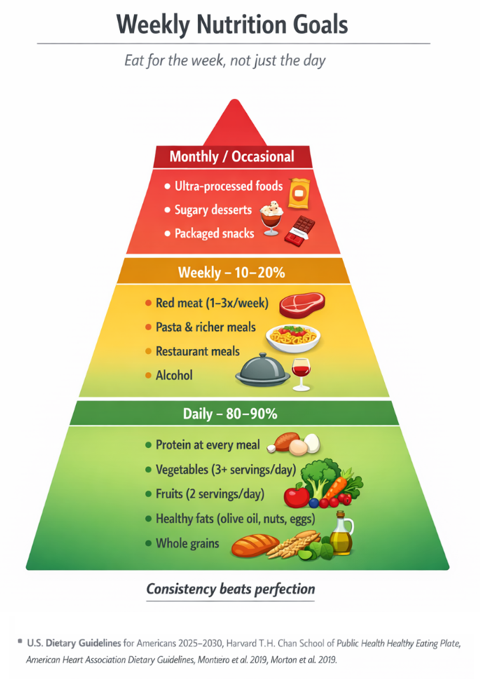
The same applies to richer, more calorie-dense meals. Pasta, creamy dishes, cheese-heavy meals, and restaurant dining are not “off-plan” they’re part of how people actually live. But when they become routine, they start to crowd out simpler, more nutrient-dense meals built around protein and vegetables. A bowl of pasta on a Friday night, pizza with friends, or dinner out can absolutely fit into a healthy pattern. What matters is that these meals are part of the week, not the structure of every day.

Alcohol fits here as well. While the science continues to evolve, the trend is toward more caution at any level of intake. When alcohol becomes a deliberate, occasional choice rather than a daily habit, both frequency and quantity tend to regulate naturally. The goal isn’t to remove foods that are enjoyable or culturally meaningful—it’s to right-size their role. Give them a place, just not the entire stage. That’s what makes this approach sustainable.

What to Save for Monthly: The Reality Check

At the top of the pyramid are foods that are hardest to manage—not because they’re inherently harmful, but because they’re designed to be easy to overconsume. Ultra-processed foods like chips, packaged snacks, sugary drinks, fast food, and desserts are engineered for taste, convenience, and shelf life. Combinations of refined carbs, added fats, salt, and flavor enhancers make them highly palatable, and hard to stop eating.

This is by design. And today, these foods have shifted from occasional treats to daily staples, making up more than half of calorie intake for many Americans. Research consistently links high consumption to increased risk of obesity, type 2 diabetes, cardiovascular disease, and mood disorders. The takeaway isn’t elimination, it’s frequency. When these foods are occasional, cake at a birthday, ice cream on a summer night, chips at a party, they stay what they’re meant to be: enjoyable and social.

But when those same foods become automatic, an afternoon snack every day, dessert every night, processed options at most meals, they stop being treats and start becoming the baseline. And in doing so, they gradually displace the foods that support long-term health.

This is where the distinction becomes important: the difference between a treat and a habit is not the food itself, it’s how often it shows up.

A healthy diet doesn’t look rigid, it looks rhythmic. During the week, meals are simple and repeatable. Protein shows up at every meal. Vegetables are included when possible. Snacks are built from real food. On the weekend, there’s flexibility. A dinner out. A shared dessert. A break from routine.

What to Eat in a Day: A Practical Breakdown

For an average adult, a realistic daily intake might look like this:
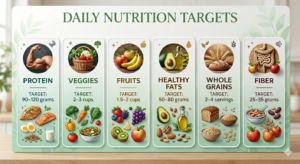
A day built around this might include eggs and berries in the morning, a protein-forward lunch with vegetables, and a simple dinner of fish, grains, and greens.

Not perfect. Just consistent.

The new Dietary Guidelines have a message that nutrition science has been moving toward for years:

  • Eat whole foods
  • Prioritize protein
  • Reduce ultra-processed foods
  • Limit added sugars

What’s different now is not the message, but the recognition that it must be livable. Because the best diet isn’t the most optimized one. It’s the one you can sustain. Psychologically, rigid rules often lead to burnout, while structured flexibility leads to consistency.

What this looks like in practice for me, a strong week usually starts with a few days of consistency. Monday through Wednesday tend to feel structured, our meals are simple, protein shows up at each one, and I’m making a conscious effort to include vegetables. Nothing elaborate, just a rhythm that works. By Thursday, things often start to shift. Schedules get busier, groceries are running low, and the idea of another round of leftovers feels less appealing. That’s usually when I might open a bottle of wine, or we pivot to something easier, takeout between activities, a quicker dinner, something less planned.

And then the weekend looks different altogether.  Breakfast and lunch are wholesome but we might go out to dinner, have a more indulgent meal, or share dessert, something we don’t do every night, but something we actually enjoy when we do. These aren’t failures. They’re part of a full life. The difference is that they don’t define the entire week.


Your Lesson Planning for the Spring? Done.

Searching for sustainability-inspired content for your classroom?

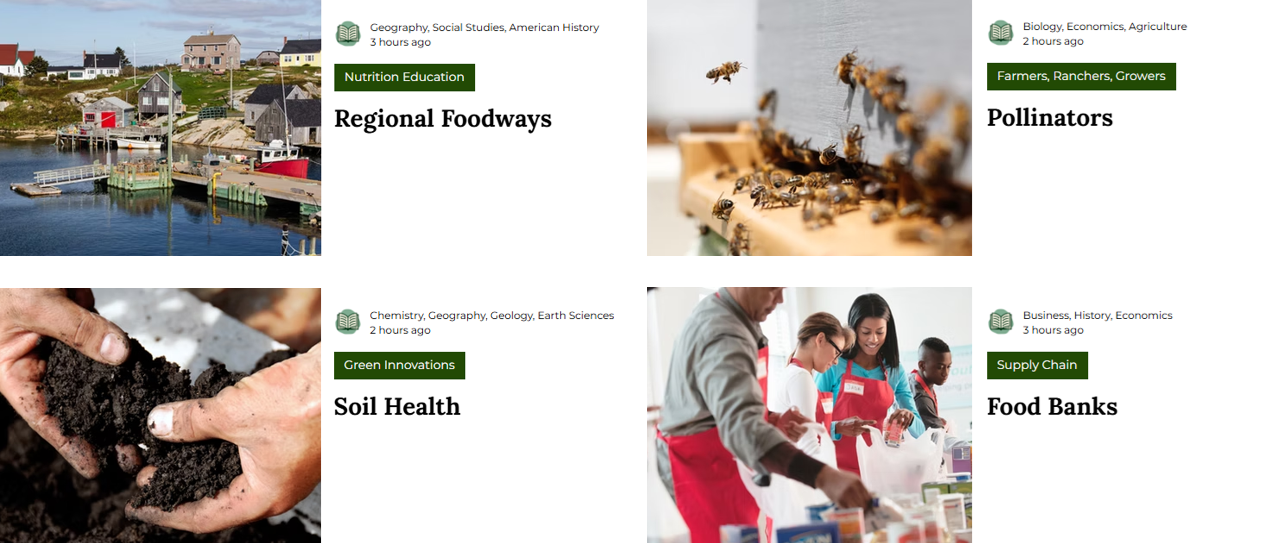
Lucky for you, Dirt to Dinner’s In the Classroom program has a zero cost, zero prep Sustainability Survival Kit, filled with four unique lesson plans for any educator looking to connect the real-world systems that sustain our planet while putting food on our plates!

All you have to do is create an account to access our free content! Click “Log In” on the homepage, and then sign up to view and print content from over 20 lesson plans.

Just Released! Spring-inspired Lesson Plans

Our newest lesson plans come with a presentation deck with notes, an activity sheet, and an educator guide that turn “Green Living” into a high-engagement exploration of our world:

  • Soil Health: There’s no better time of year to remind students that the ground beneath their feet isn’t just “dirt”—it’s a living filter and the foundation of all life. This lesson plan introduces them to the soil sciences that will protect our planet’s future.

  • Pollinators: Celebrate the tiny heroes of the ecosystem! This plan shows students that protecting Earth’s biodiversity is the only reason we have so many delicious foods on our plates, from apples to chocolate. It’s a great way to turn “Save the Bees” into a deep dive into co-evolution and agricultural science.

  • Regional Foodways: Connect environmental geography with cultural identity. Students will explore how the “edges” and “centers” of our supply chain impact what’s on our plates, from the tundra of Alaska to the central hubs in Louisiana.

  • Food Banks: Sustainability isn’t just about the environment; it’s about people. This lesson plan tackles the logistics of food waste and security, showing students how a sustainable food system must also be an equitable one.

Whether you’re teaching Biology, History, Business or Nutrition, these plug-and-play resources help your students view these lesson plans as a lens through which to view the entire global food system!

Dirt to Dinner’s In the Classroom program provides ready-to-use lesson plans for students Grades 5-12 to explore every step in food production.

Our standards-driven lessons will get your students engaged from the start, with every lesson featuring icebreakers, slides and media, and an immersive classroom activity that gets students thinking.

Need more time? Take a test drive!

We’ve put together a set of preview lessons for each of our grade bands. Click on the links below to download a demo presentation.

Grades 5-8:

From Farm to Plate 

The journey food takes to our plates is full of surprises!

Our lesson starts out on the farm and follows key ingredients all the way to the pizza shop.

Grades 9-12:

Ploughing Ahead

Growing crops often starts with one fundamental tool: The Plough!

This lesson presents students with the surprisingly dynamic history of this vital farm implement and challenges them to innovate their own solution to a problem facing farmers.


Pesticides vs. Microplastics

Click Play to listen to our generated podcast. Access our full podcast library here


Glyphosate is back in the headlines…again. This time, it is resurfacing amid political crosscurrents, with figures inside the MAHA movement shifting tone and reigniting debate over what to fear in our food system. Lawsuits are recycled. Old studies are recirculated. Social media frames it as a clear villain hiding in plain sight. But as the volume rises, a harder question lingers beneath it: are we aiming our fear in the right direction? What actually happens inside the body when we’re exposed to glyphosate at the regulated levels found in food?

Unlike pesticides, which are intensely studied, regulated, and measured down to microscopic thresholds, microplastics exist inside a system we rarely question because it delivers what we value most: convenience. Lightweight packaging. Shelf stability. Portability. All at an affordable price. So the real question may not be whether concern is warranted. It is whether our concern is proportionate and whether convenience is quietly shaping which risks we amplify and which we tolerate.

What is Glyphosate? And Why Does It Exist?

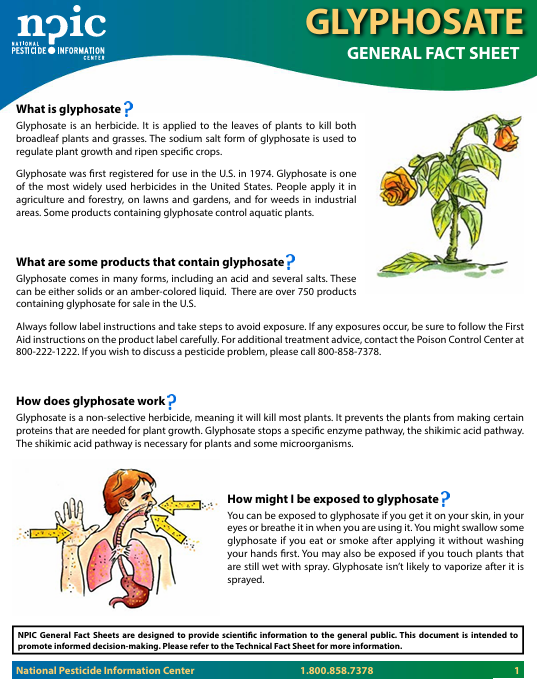
Glyphosate, also known as RoundUp, is a broad-spectrum herbicide. It works by inhibiting an enzyme pathway critical to plants and certain microbes, a pathway humans do not have.

That biological distinction is part of why regulators historically viewed glyphosate differently than older classes of pesticides. It is used to control weeds in crops like corn, soybeans, wheat, and cotton. In many systems, it allows farmers to reduce tillage, which means fewer tractor passes, less soil disruption, and lower erosion. Modern no-till farming systems expanded in part because effective herbicides made weed control possible without repeatedly turning over the soil.

That’s not a minor detail. Soil erosion strips nutrients, releases stored carbon, and reduces long-term productivity. Weed pressure also reduces crop yields dramatically by competing for light, water, and nutrients. In unmanaged systems, yield losses from weeds can reach 30–50%, and in some regions, far higher. Before modern weed control, farmers relied on intensive cultivation, manual labor, and rotational timing to suppress weeds. That approach limited yield stability and required more land to produce the same food.

Today, herbicides like glyphosate are land-use efficiency tools. They are part of the infrastructure that allows eight billion people to eat from a finite acreage. From a toxicological standpoint, glyphosate also stands out: its acute oral lethal dose in rats is approximately 5,000 mg/kg, placing it in one of the lowest toxicity categories for herbicides. By comparison, common pesticide alternatives such as 2,4-D (~700 mg/kg) and dicamba (~1,700 mg/kg) are significantly more acutely toxic, and even some organic-approved herbicides like copper sulfate (~300 mg/kg) are far more toxic on the same scale.

The Cancer Question and What Regulators Actually Say

Few topics in modern food and agriculture generate as much confusion, and concern, as the question of whether glyphosate causes cancer. At the center of this debate are two very different scientific conclusions, often presented without the context needed to understand why they differ.

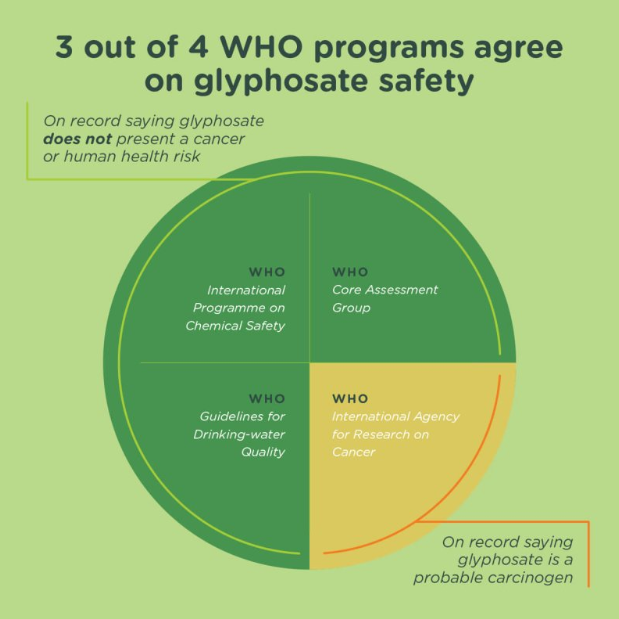
In 2015, the International Agency for Research on Cancer classified glyphosate as “probably carcinogenic to humans.”

This designation was based on hazard identification, meaning the agency asked whether glyphosate could cause cancer under certain conditions—not whether it does so at levels people are typically exposed to in everyday life. IARC’s classification places glyphosate in the same category as substances like red meat and working night shifts, which may come as a surprise to many readers.

In contrast, regulatory bodies tasked with assessing real-world risk have reached different conclusions. The U.S. Environmental Protection Agency, after reviewing decades of toxicological data and large-scale epidemiological studies, has concluded that glyphosate is “not likely to be carcinogenic to humans” at doses relevant to human exposure. Similarly, agencies in Europe, Canada, and Australia have arrived at comparable determinations, emphasizing that dose and exposure context matter when evaluating risk.

Much of the divergence comes down to methodology.

IARC evaluates whether a substance has the potential to cause harm under any circumstance, while regulatory agencies evaluate whether that harm is likely to occur under actual conditions of use.

These are not contradictory approaches, but they answer fundamentally different questions.

Adding further nuance, large prospective cohort studies, including research following agricultural workers with relatively higher exposure levels, have not found a consistent association between glyphosate use and cancer incidence. While no single study is definitive, the weight of evidence continues to shape how regulators assess safety thresholds and acceptable exposure limits.

For consumers, this creates a challenging landscape: one where a single headline, “probably carcinogenic,” can overshadow the broader scientific consensus on real-world risk. Understanding the distinction between hazard and exposure is essential. It does not mean glyphosate is beyond scrutiny, but it does mean that how, and how much, we are exposed plays a critical role in determining actual health outcomes.

What Happens Inside the Body

One of the most persistent fears surrounding pesticides is that they “build up” over time, with small daily exposures stacking silently in tissues until they reach a tipping point. That mental model makes intuitive sense. It just doesn’t match how glyphosate behaves in humans. Controlled biomonitoring studies measuring urinary excretion show that glyphosate is absorbed and then largely eliminated within hours. Estimates of its elimination half-life in humans are generally in the range of approximately 5 to 10 hours.

Most detectable glyphosate is cleared within a day or two after exposure. It does not bioaccumulate in fat tissue. It does not linger for months or years. This is not a “forever chemical.” That doesn’t mean exposure is irrelevant. Occupational handlers, applicators, and those in high-contact environments deserve rigorous safety oversight such as protective clothing. But for typical dietary exposure, the body treats glyphosate as something to process and remove, not something to store. The image of trace residues stacking indefinitely inside organs is not supported by any evidence. And this matters, because the persistence of a compound in the body is often more relevant to long-term risk than its mere detectability.

The Food System Without It

It is worth pausing to imagine modern agriculture without synthetic herbicides, not as a thought experiment, but as an economic shockwave.

Weed pressure would surge immediately. Farmers would be forced back to intensive mechanical tillage, increasing soil erosion, fuel use, labor costs, and carbon release. Yields in major commodity crops could fall sharply in many regions. That is not a cosmetic shift — that is a supply contraction. And when supply contracts, prices climb. Food inflation would not be marginal; it would ripple through grain markets, livestock feed, exports, and ultimately grocery shelves. More land would need to be brought into production, pushing into marginal acres and environmentally sensitive areas just to maintain baseline output.

Source: Colorado Virtual Library. The April 14, 1935 “Black Sunday” dust storm as seen near Springfield, Baca County. Photo by the Farm Security Administration (FSA).

This would not simply mean fewer perfect apples. It would mean tighter global grain stocks, higher input costs, and volatility in export markets that many developing nations rely on for staple foods. A 10–20% yield decline in crops like corn, soy, or wheat is not theoretical — it translates into billions of bushels lost. Agricultural productivity underpins food affordability, trade balances, and political stability. History shows that food price spikes destabilize governments far faster than most policy debates.

Pesticides are not flawless tools. But they are foundational ones. Removing them without scalable, economically viable alternatives would not usher in a pastoral renaissance of backyard abundance. It would mean lower yields, higher prices, greater land use, and amplified inequality in food access. Modern food security, imperfect as it is, rests on crop protection. That is not ideology. It is structural reality.

Meanwhile, Something Else Is Showing Up

While glyphosate dominates cultural attention, a different exposure has quietly moved from environmental issue to human issue.

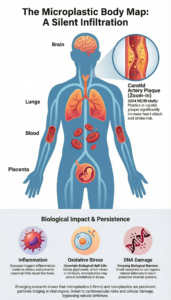
Microplastics, plastic fragments smaller than 5 millimeters, and even smaller nanoplastics are now being detected in our organs.

Microplastics have been shown to cause inflammation, oxidative stress, tissue damage and further increase chronic diseases. In 2024, a study published in The New England Journal of Medicine reported microplastics and nano plastics embedded within carotid artery plaque. Individuals with detectable plastics in their plaque were significantly more likely to experience heart attack, stroke, or death over the following three years compared to those without detectable particles.

Other research has identified microplastics in lung tissue, placenta, blood, and even brain samples. Experimental work suggests potential mechanisms, including inflammation, oxidative stress, and cellular disruption.  Plastic particles have even shown to change your DNA and prevent basic functions such as DNA repair systems.

Unlike glyphosate, microplastics are not a single molecule. They are particles. Their size, shape, polymer type, and chemical additives vary widely. Some may pass through the digestive tract. Others, particularly smaller particles, may cross biological barriers. There is no single established human “half-life” for microplastics. Because we do not yet fully understand how long they remain, or what their long-term biological consequences may be. And that uncertainty deserves attention.

The study did not prove causation. But it did something important: it demonstrated presence and association.

The Psychology of Fear

So why does one exposure dominate public panic while the other moves quietly through emerging literature?

Convenience.

Plastic makes life easy. It keeps strawberries from bruising in transport. It makes takeout possible. Milk in glass bottles has gone the way of the local dairy man. It reduces food waste by extending shelf life. It allows sterile medical packaging. It makes bottled water portable. It makes lightweight clothing affordable. Plastic underpins modern logistics.

To meaningfully reduce microplastic exposure would require enormous behavioral shifts. Using glass instead of plastic for heating food. Reducing single-use packaging. Filtering water. Rethinking synthetic textiles. That’s inconvenient. Pesticides, by contrast, feel distant and industrial.

Pesticides belong to “big agriculture.” They have brand names and lawsuits. They are easy to externalize, something done by someone else. Microplastics are personal. They come from the packaging in our fridge, the bottle in our car, the fibers from our clothes. We accept what makes our lives easier. We criticize what feels industrial and abstract. But the body does not respond to narratives. It responds to chemistry and particles.

The Real Risk Conversation

None of this means pesticides deserve a free pass. Continued research, transparent regulatory review, and improved agricultural practices are essential. Safer formulations and precision application matter. So does innovation.

It also does not mean microplastics are definitively causing disease at scale. It does mean our risk conversation should evolve.

We should ask:

  • Which exposures bioaccumulate?
  • Which persist in tissues?
  • Which are present at biologically meaningful concentrations?
  • Which trade-offs are structural to feeding the world, and which are conveniences we could redesign?

The modern food system is not simple. It is a balancing act between yield, sustainability, affordability, and safety. 

Pesticides are tools that emerged to solve biological competition in crops. Plastics emerged to solve durability and transport problems in consumer goods. Both carry trade-offs.

But when it comes to biological persistence, they are not equivalent.

It’s also worth saying clearly: concern about pesticides and concern about microplastics are not mutually exclusive. We can, and should, scrutinize agricultural chemicals while also demanding better research and policy around plastic exposure. The point is not to minimize one risk in favor of another. It’s to think carefully about persistence, exposure levels, biological plausibility, and long-term effects, and to let science, not volume, guide our priorities.

Microplastics, meanwhile, have been found inside human arteries and organs. Early evidence links their presence to inflammatory pathways and cardiovascular outcomes. Their long-term biological behavior remains uncertain, and that uncertainty deserves careful study. One system underpins global food security. The other underpins global convenience. Finally, there is no simple solution to detox a human body from microplastics.

We should examine both.

Scaling Regenerative Ag with Big Food

Click Play to listen to our generated podcast. Access our full podcast library here


PepsiCo recently announced a partnership with the National Geographic Society that supports scientists, agronomists, and farmers to work on soil health measurement, biodiversity tracking, and data-driven farming tools, including the use of satellite monitoring and artificial intelligence to translate soil science into field-level decisions. The significance isn’t just the funding. It’s the shift in posture.

Rather than waiting for consumers to reward niche regenerative brands at the checkout line, one of the largest food companies in the world is investing upstream, directly in how corn, oats, potatoes, and other foundational crops are grown.

For years, regenerative agriculture has lived in two places: academic soil science and marketing language. It has been praised as the future of farming and criticized as too loosely defined to scale. Now corporate dollars are being tied to measurement frameworks and farmer transition models. The question is not whether regenerative agriculture sounds promising. The question is whether this moment represents structural change in how American farmland is managed?

How We Got Here

Modern American agriculture did not emerge accidentally. After World War II, farm policy prioritized yield, efficiency, mechanization, and shelf stability. Commodity crops such as corn, soybeans, wheat, and cotton became the backbone of a system designed to feed a growing population affordably and reliably. Technological innovation accelerated productivity. Food became cheaper relative to income. Caloric abundance was no longer the national crisis it once had been.

But efficiency brought tradeoffs. Decades of intensive production in some regions reduced soil organic matter and simplified crop rotations. Erosion and nutrient runoff became persistent environmental concerns. (Think of the Dust Bowl). Farmers grew extraordinarily good at producing high yields, but questions began to surface about what was happening with the integrity of the soil and the watersheds beneath the farmland.

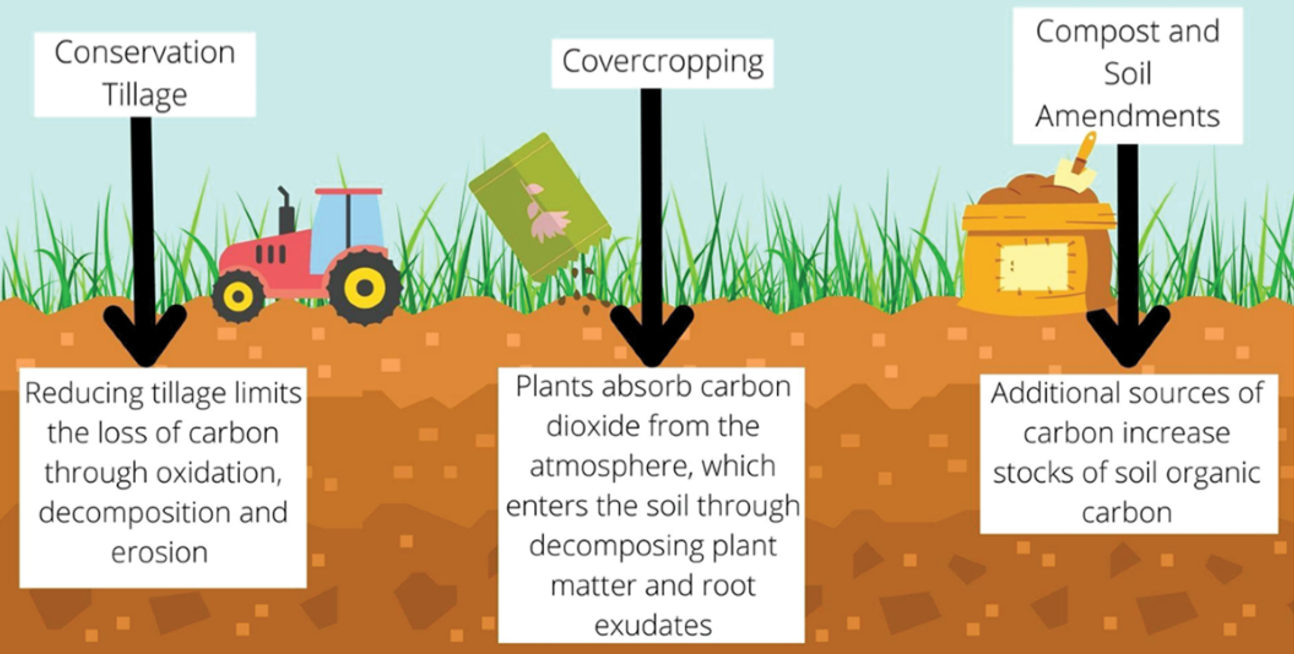
Regenerative agriculture emerged as a response to those concerns. Rather than focusing solely on sustaining current productivity levels, regenerative advocates argued for rebuilding soil health. Practices typically associated with regenerative systems include minimizing soil disturbance, keeping the ground covered with living roots, diversifying crop rotations, spraying bacteria healthy for soils, and in some cases integrating livestock. The promise is compelling: healthier soils can hold more water, resist erosion, improve biodiversity, and store carbon.

For years, however, regenerative agriculture remained aspirational. It was discussed at conferences, featured in documentaries, and highlighted in brand campaigns.

But scaling and measuring it across millions of acres of commodity farmland proved more complicated.

The Definition Problem

One of the biggest obstacles has been definition. Unlike organic agriculture, which is governed by federally regulated standards and certification protocols, regenerative agriculture has no single nationally accepted framework. One company may define it as reducing tillage. Another may require cover crops. A third may include carbon measurement, livestock integration, or biodiversity targets.

This variability has drawn legitimate criticism.

To make it more complicated, each farm has its own unique weather pattern, soil diversity, and water quantity. Growing potatoes in Idaho requires a different level of regenerative agriculture than growing potatoes in Pennsylvania.

Scientists have questioned how soil carbon gains are measured and whether they persist over decades. Economists have debated whether regenerative systems can maintain yields at scale. Policy analysts have noted that practices successful in one climate zone may not translate seamlessly to another. Without common metrics, regenerative agriculture risked becoming a flexible marketing term, another ‘sustainable’ phrase, appealing but difficult to evaluate. That is where the current shift becomes important!

When Procurement Drives Change

Large consumer packaged goods companies like Pepsi, occupy a powerful position in the food system. They purchase enormous quantities of agricultural commodities each year, from corn and oats to potatoes and sugar. Their procurement decisions influence planting choices across vast regions.

Historically, those procurement contracts rewarded uniformity, yield, and efficiency. They shape monoculture systems and optimize supply chains for cost and predictability. If those same contracts begin rewarding soil health outcomes, the incentives across millions of acres begin to change. A change that consumers have been demanding.

It is difficult to alter the behavior of millions of individual consumers.

It is comparatively straightforward to alter procurement standards among a handful of multinational buyers whose contracts reach deep into rural America.

When corporate purchasing criteria shift, farming practices often follow. This is why corporate involvement in regenerative agriculture matters. It moves the conversation from niche brands and boutique labels, direct from the farm, and majority consumer-influenced, to instead massive mainstream supply chains.

Measurement Changes the Equation

Perhaps the most consequential shift in this new phase of regenerative agriculture is not the rhetoric surrounding it, but the infrastructure developing beneath it. For years, regenerative commitments were largely descriptive. Companies spoke about improving soil health or supporting farmers without clearly defining how progress would be verified. That is beginning to change.

PepsiCo is not alone in moving toward measurable systems.

  • General Mills has committed to advancing regenerative agriculture across one million acres by 2030, working with academic researchers and retail partners such as Walmart to quantify soil carbon, biodiversity, and farmer outcomes within its wheat and dairy supply chains.
  • Nestlé has launched pilot programs across key sourcing regions that tie financial incentives and agronomic support to documented soil improvements.
  • Unilever has embedded regenerative agriculture into its climate transition planning, emphasizing traceability and supplier-level verification across tea, soy, and vegetable oil systems.
  • Cargill, one of the world’s largest agricultural commodity traders, has expanded its RegenConnect program to reward farmers for measurable outcomes, linking soil-health practices to carbon markets and corporate buyers seeking verified supply chain improvements.

Retailers, too, are recognizing that long-term supply chain resilience depends on what happens at the field level. What distinguishes this wave of investment from earlier sustainability pledges is the insistence on verification. Regenerative agriculture is increasingly being pulled into systems that demand proof.

Advances in satellite imagery now allow companies to confirm whether cover crops are planted and crop rotations diversified. Soil sampling protocols are becoming more standardized, enabling year-over-year tracking of organic matter. Digital agronomic platforms use artificial intelligence to model nutrient flows and water retention patterns.

At the same time, sustainability reporting frameworks require companies to account for Scope 3 emissions, the indirect emissions embedded in agricultural supply chains, drawing soil practices directly into formal climate disclosures.

In other words, regenerative agriculture is (finally) being translated into data.

When soil organic matter is tracked over time, when water infiltration rates are measured, and when carbon metrics are tied to financial filings, regenerative practices shift from philosophy to performance indicator. Data opens the door to sustainability-linked loans, carbon markets, and supply contracts tied to environmental outcomes. It also invites scrutiny, which may ultimately strengthen credibility.

Measurement does not eliminate uncertainty. Soil systems remain complex, shaped by weather variability, crop type, and regional conditions. But measurement narrows subjectivity. It reduces the distance between marketing claim and field-level reality, and that narrowing may be what allows regenerative agriculture to scale beyond aspiration.

The Farmer Perspective

For farmers, transitioning practices is not simply an environmental decision; it is an economic one. Margins in commodity agriculture are often tight, and even modest yield variability can have financial consequences. Cover crops require seed costs and management time. Reduced tillage may require new equipment or altered weed management strategies. Integrating livestock into crop systems demands infrastructure many grain farmers no longer have.

Without financial support, experimentation carries risk. “Historically, when we’ve transitioned farms, we’ve just eaten those losses annually,” says Matt Fitzgerald of Fitzgerald Organics in Minnesota, describing the financial strain of cover crop and regenerative transition before securing multi-year financing support. “Getting funding to transition to regenerative practices can be a challenge for farms of all sizes, but it’s a necessity if we want to have abundant harvests for generations to come.”

Corporate regenerative programs often attempt to address this through multi-year contracts, cost-sharing arrangements, or technical assistance partnerships. By offsetting early transition expenses and offering longer-term purchasing stability, companies reduce the financial uncertainty farmers face.

Still, adoption will not look identical across all farm sizes or regions. Large operations may integrate practices differently than smaller diversified farms. Climate variability adds another layer of complexity. The transition to regenerative systems is gradual and context-dependent, not instantaneous.

What This Means for American Farmland

If regenerative practices scale meaningfully, the long-term implications for farmland could be substantial. Soils with higher organic matter content typically retain water more effectively, which can reduce vulnerability during drought conditions. Improved soil structure may decrease erosion and runoff. Reduced reliance on certain inputs could alter cost structures over time.

However, regenerative adoption does not guarantee uniform outcomes. Yield impacts vary by crop and region. Carbon sequestration rates depend on climate, soil type, and management consistency. Policymakers and researchers continue to debate how best to quantify long-term soil carbon permanence.

What appears increasingly clear is that farmland management is entering a data-intensive era. Soil is no longer merely a substrate for crop production; it is becoming an asset class evaluated for resilience and climate performance.

The Consumer Role Going Forward

For you, as our reader, the implications may be subtle but meaningful. Instead of relying solely on niche regenerative brands, mainstream packaged foods could increasingly incorporate ingredients sourced from farms using soil-health-focused practices. Sustainability becomes embedded upstream rather than displayed exclusively on boutique labels.

This shift may not dramatically change grocery store aesthetics overnight. But it suggests a movement from consumer-driven pressure toward supply-chain-driven reform.

Consumers will still influence demand. Yet the mass of change may expand beyond the checkout line to the contract negotiation table.

For years, regenerative agriculture hovered between idealism and ambiguity. It promised healthier soils and more resilient ecosystems but struggled with definitional clarity and scalable infrastructure. If major food companies continue tying financial incentives to measurable soil outcomes, regenerative agriculture may move from aspiration to operational standard. Data, not just narrative, will determine its credibility.

Whether this moment represents genuine transformation or an incremental evolution remains to be seen. Agriculture has always adapted slowly, shaped by weather, economics, and policy. But when procurement contracts begin valuing soil health alongside yield, the system’s incentives shift.

Regenerative agriculture may not be a silver bullet. It may not reverse decades of soil degradation overnight. Yet the convergence of corporate capital, scientific measurement, and farmer partnership suggests that something more structural than a marketing trend is unfolding.