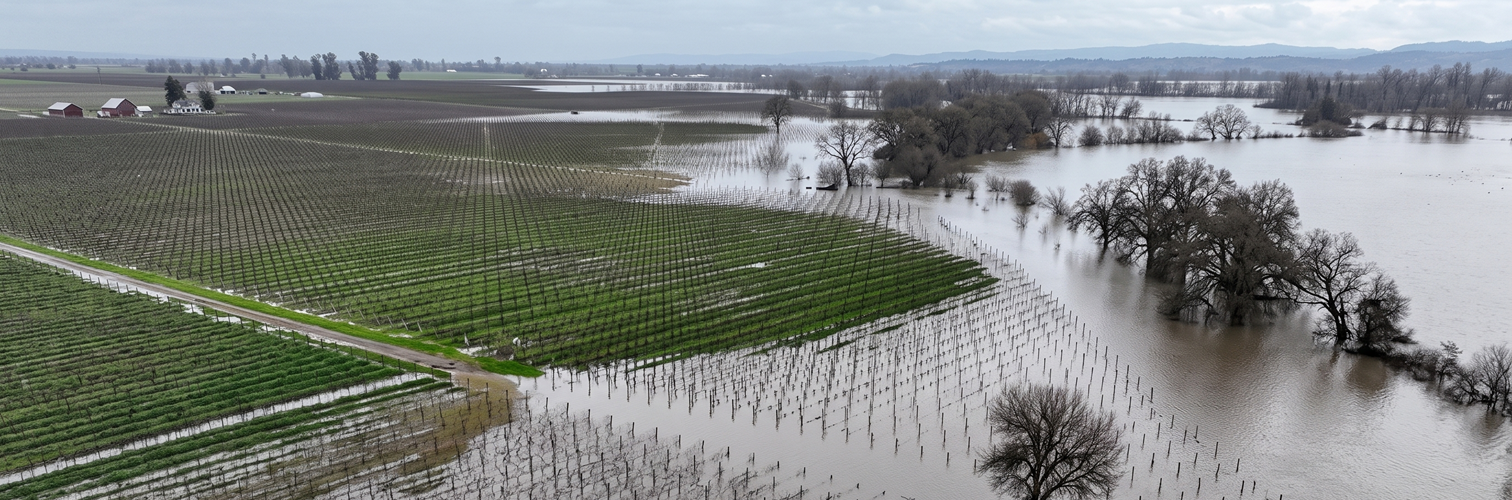
Source for image: United24 Media
Labor Concerns Drive New Tech
The Dirt
Actual and potential labor shortages remain a headache for farmers and others in our food system. Technology is stepping in to help deal with it – and in the process stands to boost efficiency and productivity across the entire food chain.
Global Food
Labor Concerns Drive New Tech
The Dirt
Actual and potential labor shortages remain a headache for farmers and others in our food system. Technology is stepping in to help deal with it – and in the process stands to boost efficiency and productivity across the entire food chain.
Labor issues continue to worry the farming community, with more than half of farmers (56 percent) in a recent FTI Consulting survey saying they have experienced labor shortages.
Not only are people apparently less eager to take on the often physically demanding tasks and long hours that go into farming, but the men and women who do that important work are growing older. And to top it all off, serious questions about the future of undocumented aliens are a major concern for an economic sector that depends upon immigrant labor for 42 percent of farm and food-related jobs.
The food and agriculture sector has responded by raising farm wages and carrying out ambitious programs to educate and attract the next generation of farmers and food workers. Add new technology to those efforts, and we have a pretty powerful response to the farm labor challenge.
Catching up with Industrial Practices
Farmers, ranchers, and all the others along our complex food chain are among the most innovative and adaptive sectors of our entire economy. The food chain sees what’s happening in the technology world, and it is responding.
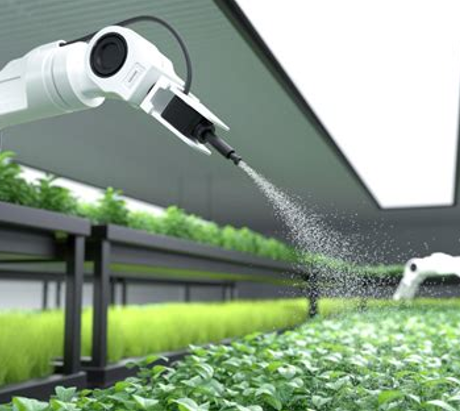
Think about automation. Once it seemed the sole province of the industrial sector. What arguably began in warehouses, shipping facilities, and work lines doing repetitive tasks proved valuable to our food system, too.
Smart technology only added to the power of simple robotics. Robots and automated equipment could not just perform those tasks but learn as well – and adapt to not just maintain but also enhance efficiency and productivity.
Robots come in all sizes and types, tailored for specific purposes. Industrial robots have been around for quite some time, but service robots, medical robots, and other specialized types are growing in number and use.
Increasingly, the word “robot” triggers a mental picture going far beyond the automotive assembly line.
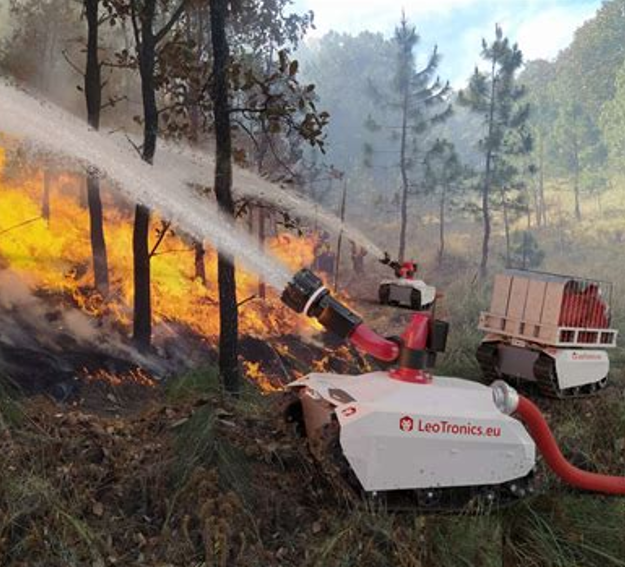
Picture robots tasked with the dangerous job of fighting fires. Think of the various tools already in use to help with such tasks as home cleaning and laundry sorting, or the medical robots used in routine and delicate surgeries.
According to the International Federation of Robotics (IFR), an estimated 4.8 million robots are at work in industrial uses. One robot is at work in industry for every 71 human workers.
Asia – notably China – has been the fastest to embrace robotics, accounting for about 70 percent of all new robotic installations last year.
Robots have proven valuable in automotive production, electronics, metal, and machinery operations, and more. Service robots are increasingly common in medical facilities worldwide, with the medical sector alone accounting for about one-quarter (27 percent) of the global robotics market in 2025. On the food front, IFR estimates that just under 15,000 robots were installed in food-related activities in 2023 alone.
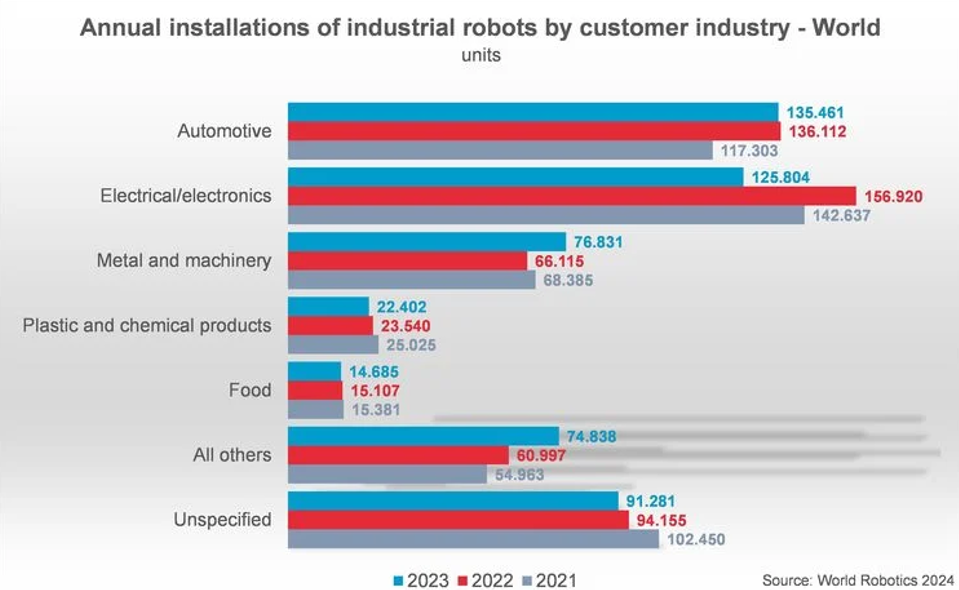
Use of robotics across all segments of the global economy has shown significant growth, especially as the cost of humanoid robots has declined. Humanoid robots can cost as little as $16,000 for basic units to more than a quarter-million dollars for very advanced models.
Most commercial humanoid robots sell in a range from $20,000 to $120,000. China’s Unitree Robotics captured wide attention this year when the company announced the cost of its humanoid robots had dropped to $25,000 in 2025, down 70 percent from the 2023 average price.
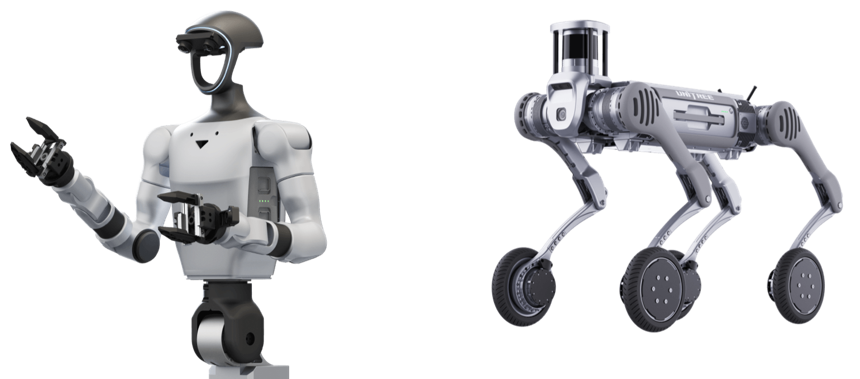
Photos courtesy of Unitree
Global robotics has grown to become a $48 billion market in 2024 – and is still growing. By 2034, the market is projected to be over $211 billion.
Robotics in Action on the Farm
Agriculture stands to contribute significantly to this growth, from the farm field across the entire food chain.
Robots already can play a valuable role in such activities as crop planting, weeding, input application, harvesting, crop sorting, greenhouse management, irrigation management and more. They not only perform mechanical tasks but also can gather and transmit data that helps farmers make better decisions.
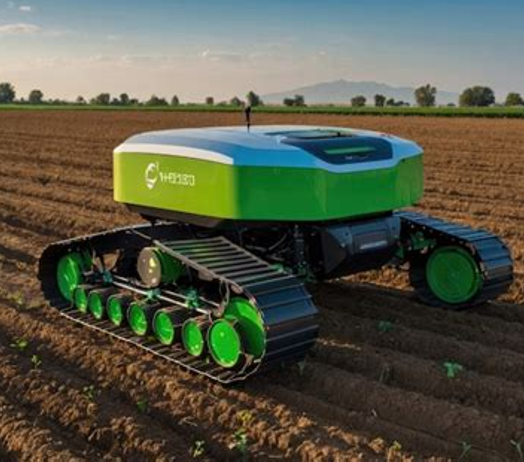 With AI, they also can learn and act independently to adapt and adjust for greater efficiency and effectiveness. Robots no longer are dumb mechanical devices but rather smart, efficient actors in producing the food we all consume.
Smart technology helps relieve farmers of many of the multiple tasks that go into farming and allows them to concentrate on other demanding aspects of running a profitable operation.
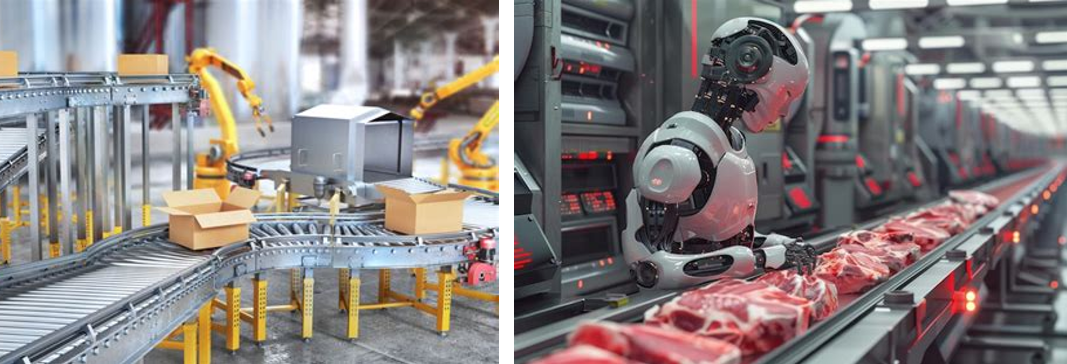
Off the farm, robots can be just as valuable. They can take on many of the strenuous labors involved in shipping and warehousing, for example, or be used to speed packaging.
Labor-intensive activities such as meat and poultry processing may be able to use faster line speed by using technology, while reducing risks of harm to human workers.
Cost – Or Investment?
As with all aspects of farming and the entire food chain, the key to growth in use of modern technology is in its financial returns – for both those who produce the technology and those who use it.
If technology doesn’t deliver a demonstrable and acceptable contribution to the bottom line, it’s not likely to grow very quickly – if at all. That process of economic evaluation is still playing out. But the early signs are encouraging.
For example, India-based Niqo Robotics produces automated spray equipment capable of reducing chemical spraying by up to 60 percent. The company also has been producing intelligent weeding robots for farms, focused on specialty crop producers. Its automated spraying equipment already is in operation, too.
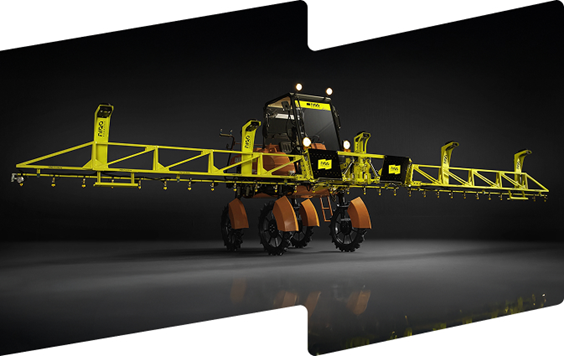 Using AI, their products use sensors and visual tools to identify individual weeds and direct their removal – all with an accuracy measured in millimeters. That level of automated precision not only helps farmers be more efficient, it also provides an enormous opportunity to avoid actions harmful to the environment.
As Niqo Robotics Founder and CEO Jaisimha Rao explained in a media interview, “In the U.S. specialty crops segment, growers face intense pressure from rising labor costs, shrinking workforces, and narrow operational windows. Robotics directly addresses all three. By automating repetitive and time-sensitive tasks such as weeding or spraying, farmers can focus human labor on skilled, high-value activities.”
Perhaps just as encouraging, Nico Robotics has announced that it is “on track for profitability” in its first full commercial year.
“Every innovation must create real value for farmers, not just demonstrate what is technologically possible.”
– Jaisimha Rao, Niqo Robotics CEO & Founder
The Price Tag
The costs of integrating more technology into farming and other segments of the food chain can be high. Even as the price of robotics moderates, machinery that harnesses all the potential of better technology and AI can come with a sobering price tag.
Consider the numbers associated with some of the best of the best in this equipment world.
John Deere has reinvented itself into a technology company with all the software installed in their farm, forestry, and lawn care tractors.
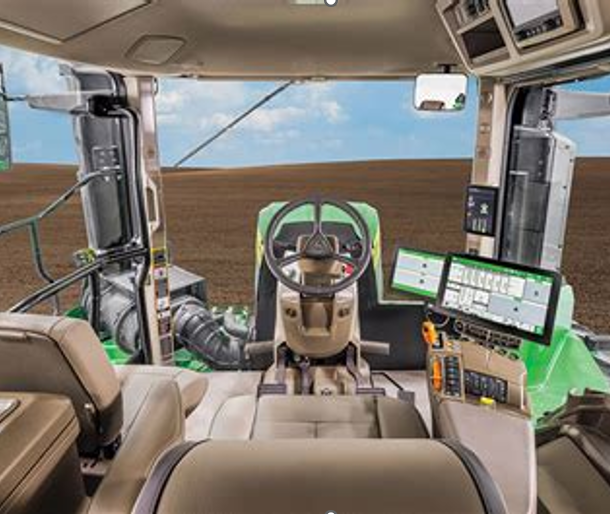 John Deere’s 9RX tractor – which the company touts as “the smartest John Deere tractor you can buy” can be yours new for about $1 million – or maybe a touch more. The 9RX is indeed a marvel – no manual steering, data sharing and streaming-ready, satellite-connected, capable of syncing with other machines… and fully engineered to use up to 140 different software packages that help make farming faster, better and more responsible than ever before.
With this kind of technology-rich equipment, farmers can direct farm operations wherever they happen to be – at their desk, in their car or truck, walking the fields, or maybe even at that special family event.
Equipment marketplaces make it possible to buy one of the three 9RX models at lower prices, based on the age and model type. Recently, sites such as tractorhouse.com offered used units for as little as $519,000, with the price of displayed units averaging about $583,000. Higher-end 2025 models appeared available in the range of $939,900 to $947,400. Prices through other sales channels, of course, will vary. But these numbers make one thing clear: embracing technology at the high end can come with a real hefty price tag.
“John Deere has shifted the narrative from machinery to autonomy-as-a-service. While its rollout may appear incremental, the strategic signal is loud and clear: in the automation race for agriculture, passive adoption is no longer an option.
Those unprepared to integrate machine-led intelligence into core operations risk being outpaced—quietly but definitively.”
– The Silicon Review; April 8, 2025
At this time, farmers must find the balance – a sober assessment of the payback created by new technology. Does it deliver value? Does it improve my bottom line – and if so, when? How long will it take for my investment to pay off? Can an equipment-sharing arrangement work for me? What about leasing options?
If history is any guide, farmers (and others along the food chain) will find innovative ways to make technology work for them. Most will realize they have no real option but to embrace technology as best they can. Farmers always look beyond the day to the future, and they know that the future is tech-driven.
What about the Food Consumer?
Improvements in operating efficiency in both farming and processing in the long run will help stabilize and potentially lower food costs for consumers, according to most technology proponents.
As technology improves and it use expands, the potential for benefit to consumers increases. But a precise calculation of the effect on prices remains elusive, as the process of integrating more and better technology across the entire food chain progresses.
As Sustainability Directory recently concluded, “Technology is now the primary tool for farmers to cut costs and stabilize food prices against climate and supply chain volatility.”
Transformation through Technology
Automation, robotics, drones, artificial intelligence – all are coming together to transform the modern farming system. Technology is already on the farm, and in our entire food chain, too.
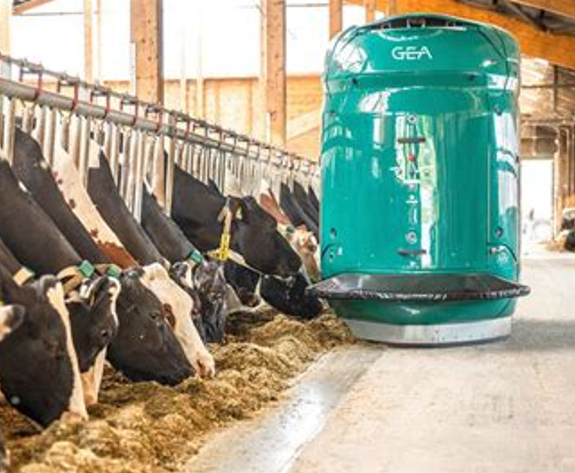 People along that chain are working every day to think of new ways to make technology work even harder to do more. We’re finding more ways to assure the efficient, profitable production of the foods we depend upon every day.
We’re building in improved ways of protecting and making optimal, sustainable use of our soil and water. We’re making food processing faster, more efficient, and safer than ever before.
We’re creating even more career opportunities within our food and agricultural system for engineers and experts in technology development, operation, and maintenance.
There’s a lot of work yet to do. As Richard Stup of Cornell University said, “Farm automation and technology will be a significant part of the farm future in the United States. But it is not a quick and easy solution to the labor challenges the industry will face in the near future.”
The Bottom Line
Technology may not be the fast fix we would like to see for our farm labor problems. But it will be a growing part of the way we farm, process, and deliver our food. Technology and agriculture have a shared future – and it’s coming at us at a very rapid pace.
Share this article



Listen to the Dirt to Dinner Podcast