Is Your Pet Food Ultra-Processed?
The Dirt
Pets have become full-fledged family members, and the "clean eating" movement aimed at our own plates has spilled into theirs. Some pet food marketing now cast ground corn, peas, and processed kibbles as less desirable while marketing fresh, frozen, and grain-free as superior. But how much of this is nutrition science, and how much is marketing? We gained insight by speaking with pet food industry scientists.
Global Food
Nutrition
Is Your Pet Food Ultra-Processed?
The Dirt
Pets have become full-fledged family members, and the "clean eating" movement aimed at our own plates has spilled into theirs. Some pet food marketing now cast ground corn, peas, and processed kibbles as less desirable while marketing fresh, frozen, and grain-free as superior. But how much of this is nutrition science, and how much is marketing? We gained insight by speaking with pet food industry scientists.
My boxer is 14 months old. We have had him for a year and understanding his diet needs has been complex, to say the least. The breeder had him on a simple, cost-effective, commercially available kibble. Do we switch? Do we stay?
We had all kinds of advice from veterinarians, friends, and family on pet food. “Processed kibbles are junk…would you feed your child processed food?”, “Fresh is best; we feed our dog what we eat“, and “Kibbles are a perfectly complete meal.” What and who do I believe?
Pet Food Confusion in the Grocery Aisles
Walking through the pet food store, I felt the pressure growing: glossy bags promising “no fillers,” “no corn,” “no by-products,” and “human-grade” ingredients, all implying that whatever kibble we fed our last three boxers – who lived long lives, by the way – was letting our precious new puppy down.
There are many choices to feed your beloved family member: dry kibbles, wet food, fresh & raw food, toppers, dehydrated, freeze-dried, air-dried, and treats. But which to choose? Go to chewy.com and you will be even more overwhelmed with the different choices and different brands.
If you go to consumerrating.org, it suggests that if you feed your dog anything but fresh, you are doing a disservice to a loving member of your family. Farmer’s Dog is the most popular brand made from ‘real’ meat and veggies proportioned just for your dog.
There is a lot of discussion of highly-processed food for humans in the grocery store; apparently, pet food is no different. But is it? Is kibble “ultra-processed” in the way a candy bar is?
I noticed that the “ultra-processed” wave of suspicion that’s swept human nutrition has jumped the species line and landed in the pet food aisle. It appears the marketers of pet food are very adept at playing to our human predilections and prejudices, versus science and objectivity.
But does kibble actually deserve the “highly processed” label? And are the demonized ingredients really the problem they’re made out to be? To find out, we sat down with pet food industry experts and looked at what nutrition science shows about pet nutrition.
What Does “Complete and Balanced” Really Mean?
Every dog or cat food with the label “complete and balanced” is formulated to meet defined nutritional requirements for amino acids, vitamins, minerals, and macronutrients. Basically, that formula will keep your pet alive. The phrase isn’t marketing fluff.
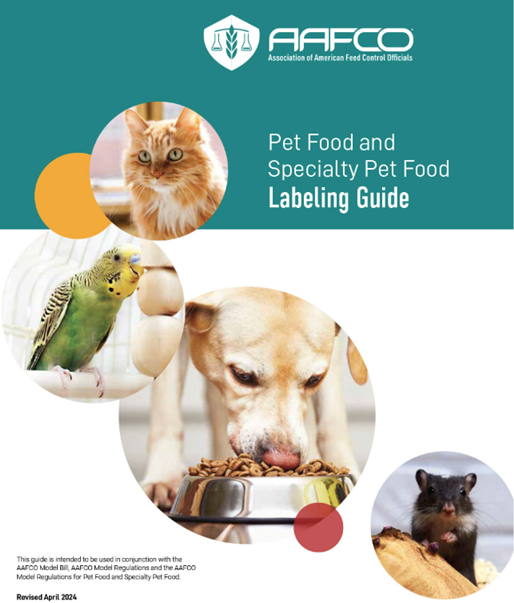 All pet food must adhere to the Association of American Feed Control Officials (AAFCO) framework. This association has been guiding state, federal and international feed regulators for more than 110 years. It supports the health and safety of people and animals by regulating the manufacture, sale, and distribution of animal feeds and animal drug remedies.
Any product carrying it must include a nutritional adequacy statement specifying the complete food for the life stage it serves, such as “puppies” or “adult maintenance”.
“If it has that statement, you’ve got a good product,” our expert explained. “If a company claims it without AFFCO standards, they’re facing FDA and government consequences.”
In other words, the regulatory floor for pet food is genuinely high. A complete-and-balanced kibble and a complete-and-balanced fresh or frozen meal are nutritionally equivalent at that baseline, regardless of how different the packaging makes them feel.
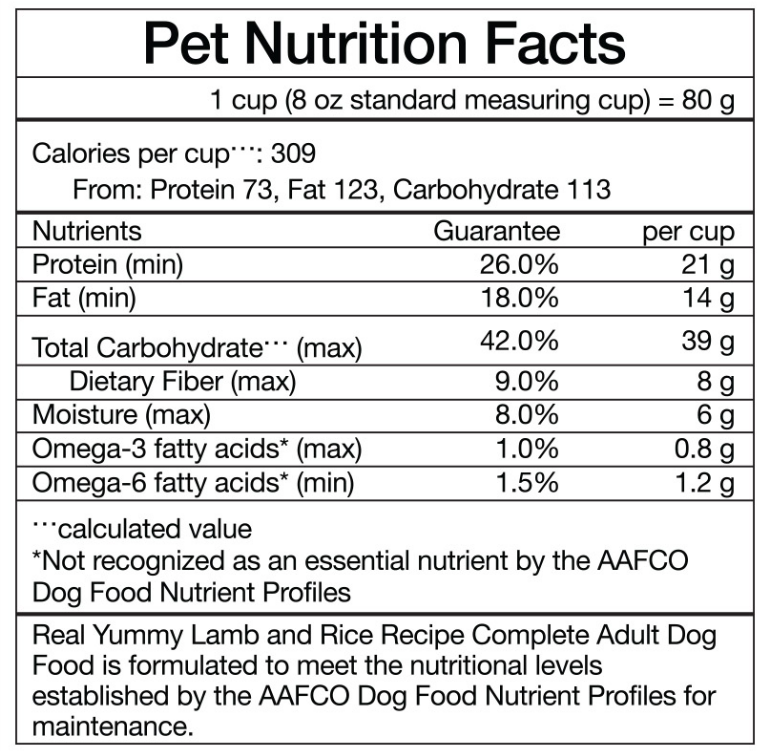
The labels must also include Guaranteed Analysis of Nutrients (in the Future Nutrition facts box), ingredient statement, and handling and storage instructions.
However, surviving by “nutritional adequacy” isn’t the same as thriving. You will see brands invest in high macronutrient levels, such as protein and fat guarantees.
You will also see enriched levels of micro-nutrients like vitamins, trace minerals, fatty acids, etc.
The “Highly Processed” Question
Pet food experts caution against importing the human-food framework for pets. Consider corn, an ingredient often questioned in the pet aisle. Experts note that grinding corn for livestock is a matter of particle size. “It’s no different than mashing potatoes, where you’re changing the physical form of the ingredient and it’s digestible and good for your dog.”
The claim that kibble is somehow inherently indigestible doesn’t hold up. Kibbles are just baked ingredients. It is really not all that different than chicken pot pie; it just is baked so it has a shelf life. Dogs have evolved the physiology to chew and digest these foods.
And the word “filler”? “There’s no such thing,” experts said. “Everything you put in food has a reason.” Peas, wheat, and grains serve as carbohydrate and protein sources, and different grains are even chosen deliberately for their glycemic response, with rice digesting quickly while wheat and barley release energy more slowly.
How Demonized Ingredients Got Their Reputation
If corn and by-products aren’t nutritionally problematic, why do so many pet food products brag about leaving them out?
The answer, largely, is marketing. Some brands have built their positioning on the exclusion of specific ingredients such as corn, wheat, soy, and chicken by-products. They present them as meaningful product differentiators. Newer iterations now extend the list to potatoes and peas.
By-products are a telling example. Organ meats and stomach contents are exactly what wild canines seek out first because they’re nutrient-dense food sources. But because humans tend to avoid organ meats, the “would you eat it?” instinct gets projected onto pets. The issue is often less about the inherent nutritional value of the ingredient and more about consumer perception and product positioning. There are now some brands incorporating individual organs into pet foods while continuing to avoid broader by-product terminology.
The same goes for some “grain-free” and “organic” positioning. Organic pet food, our experts noted, isn’t necessarily any better nutritionally. All of these ingredients have a long track record of being safe to use.
What’s really happening is a move away from a nutrition-and-science framework and toward a consumer feeding philosophy, one shaped by how we think about our own diets.
Why the Big Players Still Matter
The depth of a pet food manufacturer’s quality control often depends on the resources, systems, and sustained investment it has in place. It requires a significant amount of invested capital and science to make sure the right ingredients are mixed with the right specifications. And, of course, that includes eliminating pathogens.
Rigorous standards around salmonella are particularly high, as pathogen prevention goes beyond concern for just your pet. Remember, crawling children and toddlers also claim the floor as their domain – and the kibble that they can so easily grab is fair game to them.
Some manufacturers may have more extensive quality systems and testing protocols than others. Manufacturers like Mars, (Royal Canin, Iams, Pedigree) Nestlé (Purina), Colgate-Palmolive (Hills Science) and Cargill (Loyall) are deeply invested in food safety, quality and testing ingredients for pathogens like salmonella before they leave the facility, verifying vitamin premixes, and meeting tight specifications.
“Whatever you’re buying, you want to make sure it’s quality,” our pet food expert said. “Many companies emphasize product safety, but those statements are most meaningful when supported by documented quality systems, testing protocols, and preventive food safety controls.”
There’s a business logic underneath it: no company wants a recall, and the established players pour money into avoiding one. More broadly, a brand’s quality systems can evolve over time, particularly when it gains access to additional technical, manufacturing, and food-safety resources. Consumers should look for manufacturers that can demonstrate robust quality assurance, ingredient testing, and preventive food-safety controls.
Where the Real Research Happens
One reason pet nutrition can feel like a black box is that much of the science lives inside a handful of companies, with Mars, Royal Canin, Purina, and Hills Science among them. Some of the science stays internal as trade secrets, even though much is published and patented.
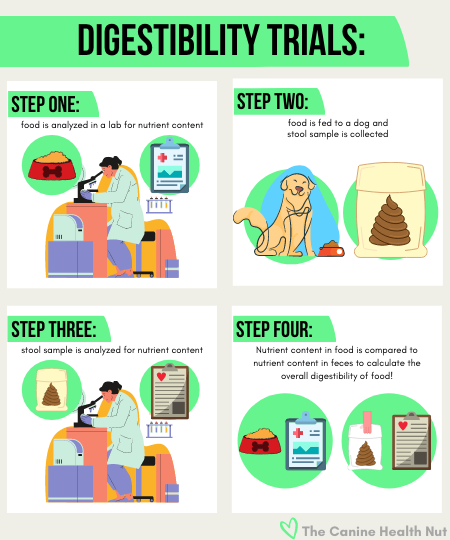
The research that does get done leans on academic partnerships with institutions, like the University of Illinois, the University of Guelph in Ontario, Kansas State, and the University of Kentucky. They conduct studies on palatability, digestibility, and stool quality, the measurable “back-end” markers of how well a food performs.
There are real limits, though. For ethical reasons, pet research can’t be as invasive. For instance, doing a liver biopsy to see how pet food is being absorbed is less ideal than research for human consumption.
The only humane way are lifelong studies, where they track two treatment groups from puppyhood to old age. These studies are enormously costly and slow, which is part of why foundational vitamin and mineral digestibility data still traces back to work done in the 1940s and ’50s.
Reading the Label Without the Hype
So how should you actually choose your pet’s food?
Our expert’s advice was refreshingly grounded. Start with the baseline: any complete-and-balanced food will keep a dog alive and healthy. From there, you differentiate based on your animal’s needs:
- A Boxer, who loves to run and run, may benefit from higher protein and fat.
- A King Charles Spaniel, who loves to sit on your lap, is prone to weight gain so may need a weight-control formula and controlled intake.
- Dogs with skin or digestive sensitivities may need specialized diets, including hydrolyzed formulas for serious cases.
- An Iditarod athlete will require very high fat, high protein, hydration and supplements to fuel their marathon sledding.
Just like humans, dogs have needs: activity level, skin, digestive, allergies, bone density, and aging, just to mention a few.
What about treats and supplements?
Too many can add up and dilute an otherwise complete diet, showing up in body composition and stool quality.
As for the supplement aisle, pet supplements are regulated like human ones: they can make “structure/function” claims (an ingredient may support or improve something) but cannot make drug claims. Ingredients must be backed by data submitted to AAFCO before they’re approved.
And on popular omega supplements, the goal for pets isn’t the human emphasis on omega-3s; a ratio in the range of 5:1 up to 10:1 favoring omega-6s is more appropriate, and more isn’t always better.
The smartest question isn’t “is this processed?” It’s the same one our source kept returning to:
“What’s actually in this product, what does my specific pet need, and is the company behind it one I trust to get the quality right?”

I ended up with Royal Canin for Boxers. I like the research behind it as well as their understanding of boxer’s athletic requirements for protein and fats. For treats, he loves blueberries, strawberries, and almond butter.
But my son and daughter-in-law are perfectly content with The Farmer’s Dog for their King Charles who is on a weight-controlled formula.
Just like humans, we all have our needs and our preferences.
The Bottom Line
Kibble has become an easy target in an era suspicious of anything "processed," but the label doesn't fit the way it does for human junk food. Complete-and-balanced pet food is a regulated, nutritionally sound product, and the ingredients most often demonized, corn, by-products, grains, are there for sound reasons. The more productive approach isn't chasing trends away from "filler" or "by-products," but matching a quality, complete diet to your individual pet, and trusting the manufacturers who invest most heavily in proving it's safe.
Share this article



Listen to the Dirt to Dinner Podcast