What Really Drives the Price of Our Food?

Commodity markets wrestle with that question every day. And the job isn’t getting any easier.

Crop production reports. Weather. Stock levels. Economic outlook and currency trends. Producer confidence. Politics. Disease. Shifting trade flows. International conflict. And all of them are important on both a local and global scale. This highlights just how many things go into establishing the prices received by farmers and ultimately paid by consumers everywhere. Dirt-to-Dinner takes a look at just some of the things that go into determining the price of our food – and why consumers might want to pay attention.

Pity the poor commodities trader watching the Chicago markets last week.

Many traders expected the USDA to forecast a low corn crop harvest due to all the flooding in the Midwest. But instead, it forecast a relatively strong yield at 169 bushels per acre. As a result, futures prices for almost every major commodity plummeted. Analysts issued dire warnings of possible further price declines in the days and weeks remaining in the growing season.

This turbulent environment is a case study in just how complex the mix of factors shaping commodity prices – and ultimately the prices paid by consumers for food – can be. It also illustrates why these considerations are so important to the global food system – from the farmers trying to make a living off of these price fluctuations to the consumers who depend upon it for a steady supply of wholesome, affordable food.

Just another day in the dynamic world of buying and selling the world’s wheat, corn, and soybeans? Well, sort of, but the turbulent environment from early August is a case study in just how complex the mix of factors that go into the price of food in your grocery cart. 

Traders start their market assessment with some simple supply and demand: high supply equals low prices and low supply equals high prices. Take the number of acres planted to a particular crop and multiply it by the yield per acre – the result is the total amount of that crop for that year. It’s the bedrock on which traders evaluate the likely available supply.

The Department of Agriculture (USDA) issues regular crop production estimates based on information gathered from across the country. Traders and analysts watched the August crop report very closely, looking for signs of just how much the unprecedented weather conditions in the spring affected the crop supply.

To much surprise, the August report painted a picture of another year of robust production – down a bit from last year’s exceptional crops, but still an ample supply of the building blocks of the modern food system – corn, soybeans, and wheat. The market’s response: a sharp downturn in commodity prices.

Why did the market respond the way it did?

Accurate predictions of final crop size are simply tough to make. For this year, in particular, there was the inclement weather. This spring’s heavy rains and flooding across many important agricultural areas meant that farmers couldn’t get into the fields to plant when they normally would do so. In some locales, dry conditions hindered crop development. Poor conditions also mean lower yields per acre. Unlike last year, when generally favorable conditions led to a more uniformly strong production pattern, this year seems to show a picture of spotty production – some areas very robust, others less so.

Nonetheless, USDA forecast overall wheat production to be holding steady from last year. The corn crop is projected to be down about 4% from last year (13.9 billion bushels), based on about the same acreage but lower per-acre yields. Soybean production, however, is seen as declining by almost 20%, to 3.7 billion bushels.

To further complicate the situation, this year’s production will add to the existing stocks of commodities. Stocks are those crops held over from the previous year – crops ‘in the bank’ so to speak.

For example, soybean stocks already stand at 1.8 billion bushels – up by almost half again the previous record high. By the end of the marketing year, some analysts predict the stocks overhanging the market will still total a record 1 billion bushels.

Did the USDA’s numbers alone justify the drop in prices? To better answer that question, traders had to turn to the demand side of the price equation.

A grim trade picture

Soybean markets highlight the importance of trade to the prices paid to farmers and the prices paid by consumers – and provide a case study of how so many diverse factors play into price. Soybeans provide the high protein meal and oil critical to growing herds of animals around the world – nowhere more so than China, and its increasingly large, commercial-style pork production industry.

U.S. soybean production is down and stocks have surged because exports have declined, largely in response to the continuing trade dispute between the United States and China. All in all, U.S. soybean exports this year are down almost a quarter from last year’s levels to about 35.6 million tons.

China is the largest importer of soybeans in the world, and the United States traditionally is the largest exporter of the crop. At its peak, the China market represented 60% of all U.S. soybean exports. But exports of U.S. soybeans and soybean products to China are down by half – and for now, likely to stay at that level, given that China announced they have suspended purchases of all U.S. agricultural products.

China still needs soybeans to feed its expanding demand for animal protein, so they turned to the other major supplier in world markets – Brazil. A surge in demand adds incentive to expand production, and Brazil has faced increasing concern from the environmental community for its renewed efforts to clear more land for crop production. In fact, President Bolsonaro has encouraged deforestation – an unintended consequence of soybean tariffs from the U.S. and China. At the same time, the shift in global trade flows means a shift in transportation and logistical costs, complicating the pricing process still more.

To muddy the waters still more, Chinese pork production has taken a significant hit due to the emergence of African swine fever. The African swine fever has thus far reduced their pork production by about 21%  thus reducing the need for as many soybeans.

However, the need to manage imports carefully as an element of their trade strategy, this development has further clouded the outlook not only for Chinese demand for soybeans but for other basic crops and farm products, as well.

On an even higher level, the pricing process must consider macro-economic conditions and currency rates. The Chinese, for example, lowered the value of the yuan to its lowest level in more than a decade. This makes Chinese goods less expensive for foreign buyers, thus helping offset newly imposed import tariffs.

Meanwhile, back on the farm…

All this uncertainty has another important effect – on the farmer. Farm income has seen a steady decline in the past five years, with more and more people across agriculture warning of a real income crisis on our doorstep. USDA’s Market Facilitation program authorized $14.5 billion this year in direct payments for grain, oilseed and other farmers adversely affected by the trade dispute. This is on top of $12 billion authorized for assistance last year, of which about $8.5 billion was actually paid out, largely to soybean producers.

More and more farmers are willing to openly question what the future holds for them. It creates an additional layer of uncertainty that must be factored into the price decisions traders are forced to make every day. “What will farmers plant?” is no longer the primary question. Increasingly, more and more people across the agricultural sector ask, “Will they plant at all?”

Why should consumers care?

The average consumer never has to contemplate the dizzying array of factors that go into finding the price for the basic commodities on which our food system is built. After all, we all enjoy an incredible selection of food products, at a fraction of the cost when compared to the rest of the world.

USDA forecasts food price increases of 1-2% in 2019, driven largely by higher costs for dairy products, vegetables, and fresh fruit. Current grain and oilseed prices are expected to help hold the line on prices paid for poultry, beef and veal (rising an estimated 1-2%) while pork prices may actually decline a bit as soybeans and soybean products previously going into export channels overhang the market.

The Department of Agriculture’s Economic Research Service (and the National Farmers Union) estimate that the farmer’s share of the food dollar continues to decline. In 2019, the farmer’s share is just 14.6 cents, down 17% from 2011 and at the lowest level since such analysis began.

All that is the good news.

But the more important consideration may be the long-term implications – the effect of uncertainty and potential price volatility that can be created by factors far more complex than crop size. Take a look at the 2008 global economic crisis as an example. We saw commodity prices rise when supply and demand tightened. Food prices spiked that year by 6.4%, followed by another increase in 2011-12 of more than 5%, following drought and various environmental problems in key production areas. We’re always one weather calamity, or one political dispute, or one economic crisis from a completely changed price picture.

Can I Get Sick from Animals Fed GMOs?

steak

Many believe that consuming animals fed GMOs will adversely affect our health. For instance, we may think our DNA changes or immune systems weaken when we eat dairy or meat from animals eating GMO feed. These misconceptions create conclusions like “GMO feed must be harmful to both humans and animals alike.” But fear not because, as science shows us, these conclusions are not possible.

Scare Tactics Manipulate Consumers

Some organizations and major consumer product companies are spearheading fear-based marketing tactics that cause concern about GMO-fed meat, poultry, and dairy we put into our grocery carts.

  • A coalition called Green America asks companies like Chobani to stop using GMO feed for their dairy cows, as it is not ‘real’ and ‘natural’. Tell Chobani to shift to non-GMO feed for their cows, to help accelerate the shift to a non-GMO food system! We and the cows thank you.

  • Given their stance on genetic engineering, it is no surprise that Ben & Jerry’s ice cream doesn’t contain milk from cows fed with GMOs.

  • The Institute of Responsible Technology, an anti-GMO blog, posted about a woman who fell down on the floor, terribly sick immediately after eating pork that was fed genetically-modified corn.

Messages like these only gives room for more confusion. We have written about how GMOs are proven safe for humans; however consumer concerns span beyond just choosing to eat GMO or non-GMO foods.

Animal Research into GMO Feed

There is a tremendous amount of animal research that looks specifically at animals fed genetically modified foods, like corn or soybeans. Conclusions illustrate that it is not possible to find any of the genetically modified proteins in the animals’ meat. The beef, pork, poultry, or dairy is not statistically different between animals fed GMO feed and those who have not. Furthermore, the animals and poultry reproduce and mature in exactly the same manner, regardless of whether there are GMO crops in their feed or not.

Dr. Alison Van Eenennaam of the University of California, Davis published the results of her study on animal health in the Journal of Animal Science, August 2017. Dr. Van Eenennaam led a study that examined 29 years of livestock productivity and health before and after the introduction of genetically modified crops. This was a study that looked at trillions of pounds of GM feed and over 100 billion animals. This was no easy feat! Her team concluded the following:

“DNA from GE crops is chemically equivalent to DNA from non-GE crops and both are broken down the same way during digestion.…. there is no evidence suggesting DNA or rDNA transfer from plants to animals.”

When looking at the actual meat, milk and eggs from animals and poultry fed genetically modified feed the study found that…

“Neither recombinant DNA (rDNA) nor protein from GE feed crops are reliably detected in the milk, meat and eggs from livestock that have been fed GE feed.”

Another study from University of Nottingham and AgroParisTech also proved that the meat from animals fed non-GMO grain vs. animals fed GMO grain is genetically identical. Researchers performed substantial equivalent experiments on the effect of diets on GM corn, potato, soybeans, rice, or wheat on animal health.

These tests look at all the metabolites, like amino acids and lactic acids, that are produced by a GMO-fed animal and compared it to its non-GMO fed counterpart. What scientists have found is that GMO- and non-GMO-fed meat are identical. They determined that the GMO corn is “substantially equivalent” to non-GMO corn in order to ensure that it is not present in the animal after it has eaten and digested the crop.

Marketing Misrepresentation

Don’t fall for the food fear misrepresentation. For companies to claim their food is healthier or safer because their animals do not eat GMO feed is not only scientifically untrue, it perpetuates consumer confusion and fear. Each year, millions of animals are grown on GMO feed – none of them have documented evidence that they have had ill health due to GMOs. What we do have is researched evidence that meat is identical from GMO vs non-GMO-fed animals.

Finally, let’s look at this practically. Your meat and eggs are cooked and your milk is pasteurized. The GMO proteins in the animal feed become inactive after heating. If, by chance, there are any small GMO proteins left, they are attacked by the animal’s digestive enzymes. They are then converted into amino acids, where it can either be used to build its own proteins, for energy, or break down and exit the body. By the time you eat the meat or dairy, all of these scenarios would never adversely affect your body, digestive process, or even change your own genes. 

Manuka Honey: Life Changer or Money Waster?

I don’t know about you, but I am always a sucker for the latest superfood, cure-all, next-best-thing! I love to try products out for myself, but always wonder if it will actually work. And can I do any harm in the process of my personal exploration?

What’s the 411 on Manuka Honey?

Manuka honey, different from regular honey, is being hailed as liquid gold because of the supposed healing and antimicrobial powers of this superfood. The emergence of Manuka popularity comes on the heels of new superbug discoveries claiming that antibiotic-resistant pathogens can be treated with Manuka honey. The medical field has started dealing with these pathogens in alternative ways, thus Manuka honey’s gain in recent popularity due to its ability to slow down or prevent bacterial growth.

However, what comes from a spark? A fire. And the claims of Manuka honey began to spread. Instead of an accurate portrayal of an alternative antimicrobial substance that is under scientific investigation, thanks to social media, we have gone from zero to a hundred in less than 5 seconds.

What are the supposed health claims?

Manuka honey has carbohydrates, minerals, vitamins, and phenolic and flavonoid compounds. However, what makes Manuka particularly unique are three special ingredients: methylglyoxal, dihydroxyacetone, and leptosperin. MGO is said to fight off several bacteria-related infections. Dihydroxyacetone, a precursor chemical of MGO, is found in the nectar. Leptosperin is a natural chemical from manuka nectar that makes the product shelf-stable. When these ingredients work together, they enable this particular honey to potentially fight off several bacteria-related infections.

The combination of these ingredients is touted to reduce allergies, boost immune function, enhance skin, improve sleep, combat staph infections, reduce IBS, prevent tooth and gum decay, treat infected wounds, burns and ulcers. Sounds like another Celery Juice cure-all!

Is there a scientific foundation for these claims?

To be frank, scientific studies do not exist to support every health claim out there. Investigations into some of the supposed benefits are in the works, but here is what we found on its efficacy…

Evidence for treating all these ailments remains largely anecdotal. However, a few small studies have concluded that Manuka honey can aid in treating gingivitis. By chewing what they refer to as “Manuka honey leather”, plaque was reduced, and ultimately was proven to be a positive treatment for oral health.

The most compelling studies show that Manuka honey can help to inhibit or stop the growth of certain topical bacteria – especially compared to other types of honey. This study showed that when Manuka is used in wound protection, it elicits antibacterial results. Continued study is critical as chronic wounds resistant to antibiotics are a global health issue around the world.

For instance, a friend of mine had a terrible bacteria infection on her face and antibiotic cream didn’t work. She tried Manuka honey – and it disappeared with a week. However, it has been determined that replications to these clinical studies are needed before claims like this can be truly confirmed.

Ultimately, there is little evidence to support the purported benefits. However, it is safe to consume, can be a natural and safe topical antibiotic, and there is likely little harm in trying it. Western medicine often refers to it as a ‘worthless but harmless substance‘. Unless you have a bee allergy, of course – then take caution!

So what exactly is Manuka Honey?

Manuka honey comes from the manuka bush, which is indigenous to New Zealand and Australia. Some argue that only the “real” manuka comes from New Zealand. In fact, the two countries are actually in a dispute for the trademark over the health product.

The honey itself comes from the flower nectar on the manuka bush. But both the nectar and the bees together are what give manuka its unique properties. It is thicker in texture than other types of honey. It tastes less sweet, though it can still be used in drinks, as a spread, and for baking.

The UMF Honey Association developed the term UMF, or Unique Manuka Factor, that grades the honey as to whether it meets the UMF Honey Association standards. The ideal score is between 10 and 18, and is based on certain chemical markers unique to the manuka plant. However, more research needs to be done to determine whether this rating has any significance. Brands that use the rating system include Manukora, Comvita, and Happy Valley.


Where can I buy Manuka Honey?

It’s widely available now – even at Walgreens and CVS. In fact, I just bought some at Whole Foods to see if it’ll help my mosquito bites heal. While I could not determine if it was time or the honey that helped heal the bites, it was worth a shot on such a mild affliction.

With its uses spanning from topical application, to cooking, and now in the healthcare spectrum, Manuka is a well-known product to specialty grocery store shelves, as well as many eCommerce sites. It comes in its raw form, in a supplement, and in a variety of products where Manuka honey is the primary or active ingredient. This includes beauty products, throat lozenges, face washes, hair masks and acne treatments.

How can I be sure it’s the real stuff?

For starters, don’t forget that Manuka is currently only made in Australia and New Zealand, so if a label says any other origin, it is likely not real Manuka. Another thing to note is that many labels state that their honey is “natural” or “organic”. These two labels do not mean that the honey is Manuka; you must look for the word “Manuka” in the ingredients list. Another good sign is the cost: Manuka is currently averaging about $30 a jar, or between $50 and $150 for supplements, so if the price you see is less than this average cost, be sure to confirm.

What Are Dead Zones…and is Ag to Blame?

You may have heard of “dead zones”, a term used for areas in large bodies of water where marine life cannot be sustained because of rampant algae growth. To some ardent critics of animal agriculture, these dead zones can be traced to overdependence on animals as a cornerstone component of the modern global food system.

Agriculture and, in particular, production of beef and dairy cattle, as well as the corn and soybeans grown to feed the animals, are the primary targets under attack. Essentially, almost all U.S. crops feed into the Mississippi River Basin. But there is little, if any, attention called to the other sources of the troublesome run-off that causes massive algae growth.

So how do these dead zones occur? And is agriculture really to blame for these problem areas? And, most importantly, what is being done to bring life back to these dead zones?

How are Dead Zones created?

Dead zones occur from too much nitrogen and phosphorus in the water, most in the form of run-off from use and misuse of fertilizers, inadequate wastewater control, improperly managed animal wastes, and plain old natural phenomena, such as the heavy rains and flooding that plagued major parts of the United States earlier this year.

Hypoxia is the scientific term for having too little oxygen to support life. In a hypoxic zone, animal life simply suffocates and dies. Hypoxia occurs when excess nutrients such as nitrogen and phosphorus stimulate the growth of algae, which sinks and decomposes in water. The decomposition process consumes the oxygen needed by other marine life – impairing gestation, compromising egg production, or simply suffocating much of the life in the water.

Dead zones emerge from a complex web of sources:

Where do Dead Zones exist?

Currently, there are approximately 405 dead zones around the world and in different bodies of water, but mostly along coastlines. The Arabian Sea is currently the largest one with a continual lack of oxygen preventing marine life from growing.

The Baltic Sea dead zone is also massive, at more than 23,000 square miles and stretching from Poland to Finland. Smaller hypoxic areas have emerged in Lake Erie and oceanic conditions off the shores of California and Oregon are currently being monitored for a possible return of a Pacific dead zone.

NOAA scientists are forecasting this summer’s Gulf of Mexico hypoxic zone or ‘dead zone’ to be approximately 7,829 square miles or roughly the size of the land mass of Massachusetts.

National Oceanic and Atmospheric Administration’s June 10, 2019 Media Release

The second largest dead zone is the northern Gulf of Mexico. Some industry experts estimate that the Gulf of Mexico supplies 72 percent of U.S. harvested shrimp, 66 percent of harvested oysters and 16 percent of commercial fish. So a dead zone here not only leads to a meaningful loss of shrimp, crabs, oysters, fish, and other marine life, but also disrupts a large commercial industry that provides products in high demand by food consumers. The same situation is also happening in the Chesapeake Bay, where 500 million pounds of seafood are harvested each year, primarily oysters, blue crabs, and striped bass.

Source: World Resources Institute

Waterways feeding the Dead Zones

The challenge in addressing the dead zone problem isn’t just the multiplicity of sources behind the problem.  It’s also the sheer physical size of the area involved.

Waterways such as the Gulf of Mexico, the Chesapeake Bay, and U.S. Great Lakes draw water from an enormous network of sources.  Potential pollutants can come not just from areas immediately adjacent to the dead zone, but also from potentially huge areas where run-off may occur.

For example, the Gulf of Mexico is fed by the Mississippi River basin – an area that encompasses 33 major river systems, more than 200 estuaries, and drains 41% of the contiguous United States. About four out of five acres used to produce corn and soybeans in this country are within it, as is more than half of all U.S. agricultural land, with an estimated annual production value of close to $100 billion.  Such a vast drainage area shows just how important extensive flooding – like that seen across huge swatches of the Midwest this spring — can be in the creation of a dead zone.

Source: mississippiriverdelta.org

Farming solutions to curb Dead Zone formation

Broad communities of scientists, environmentalists, farmers, ranchers, and others are joining together to tackle the problem – with the encouraging results that merit a continued mutual effort to protect one of the natural resources critical to a sustainable global food system.

In the world of agriculture, there are aggressive educational efforts to commit to responsible crop and herd management. Many farmers are employing technology to help reduce run-off through chemical and nutrient over-application, such as:

  • Precision agriculture combined with “micro nutrient” technology that fosters the application of the precisely correct type and amount of nutrients, herbicides, and pesticides

  • Genetic engineered crops also help reduce the amount of agricultural chemicals

  • Sound conservation practices such as no-tilling, proper crop rotation, and use of cover crops

Ranchers and dairy farmers are also proactively managing animal waste to help reduce run-off and revitalize these dead zones.

In fact, nearly nine out of every 10 farmers and ranchers recently surveyed by the industry’s National Cattleman’s Beef Association say they manage manure and waste in a proper manner that safeguards air and water.

Innovative programs developed by producers have helped find environmentally responsible uses for surplus manure, such as:

  • Expanded use of sanitized and pelletized manure for use in organic farming

  • Distribution arrangements with gardening and landscaping enterprises interested in expanded use of non-chemical fertilizers

  • “Spread the wealth” by finding available surplus storage and composting opportunities for “black gold,” as ranchers often call manure

  • The Environmental Protection Agency is facing lawsuits from environmental groups to speed their updating of wastewater guidelines for animal processing facilities, and public pressure on these companies is growing

Working together for real results

Despite what ag critics may say, there are multiple sources contributing to the problem. Many of the golf courses, housing developments, and other urban development areas that were previously undeveloped are now inadvertently contributing to the rising risks of run-off, and ultimately the growth of the occurrence and size of dead zones.

On the municipal wastewater front, state and federal agencies report an expansion in the number of municipal water management authorities monitoring nitrogen and phosphorus levels in their facilities, and perhaps more important, in establishing limits for each element in discharge levels.

On an even-broader scale, several task forces have been created to find long-term solutions to the management of U.S. dead zones. For example, the Mississippi River/Gulf of Mexico Hypoxia Task Force includes representatives of agencies from almost all states along the Mississippi, from Louisiana to Minnesota, as well as federal agencies such as the U.S. Army Corps of Engineers, the Departments of Agriculture, Commerce and Interior, the Environmental Protection Agency and the National Tribal Water Council.

Their goal is to reduce the size of the Gulf dead zone to 5,000 square kilometers (roughly 1,900 square miles) by 2035, with an interim goal of a 20 percent reduction in nitrogen and phosphorus loading by 2025. We have already seen significant progress in achieving its goals.

What Does the Market Hold for Alternative Proteins?

alternative protein burger

Burger King recently ran into a surprising problem: it ran out of burgers.

Well, not exactly. The restaurant still had plenty of ground beef and other traditional ingredients on hand, but at the end of June, the burger chain was running low on the new, meatless burgers from Beyond Meat that had been added to its menu last year, according to The Wall Street Journal.

What’s changing? Consumers.

And Burger King wasn’t alone. Burger chain White Castle, which added Impossible Foods’ meatless burgers last year, reported similar shortages, as did restaurants including TGI Fridays, Del Taco, CKE Restaurant Holdings’ Carl’s Jr., Red Robin, and others.

That’s right, consumer demand for alternative meat products has officially arrived.

In fact, White Castle leadership credited the 4 percentage point increase in same-store sales to its Impossible Sliders. As of this spring, a full 15% of U.S. restaurants offered meatless products, according to market research firm Technomic, accounting for nearly 20,000 locations nationwide, a figure that was up 3% year-over-year.

Younger shoppers, in particular, are looking for healthier, more sustainable alternatives to the usual meat-and-potatoes menus of their parents’ and grandparents’ generations. According to Technomic, 71% of consumers now eat seafood at least once a month and 50% eat vegetarian or vegan dishes at least once a month. Meatless burgers and other alternative proteins are one way for restaurants to reach these diners.

“This desire for flexibility highlights the fact that dietary lifestyle choices are often not all-or-nothing decisions for consumers…Semi-vegetarian and flexitarian diets appeal to those who aspire to eat healthier while still providing leeway to splurge on meat or seafood occasionally. To cater to shifting behaviors, operators can offer protein substitutes for certain dishes or create a handful of build-your-own options that give consumers an even greater level of control.”

– Bret Yonke, Manager of Consumer Insights at Technomic

These findings line up with what Chris Kerr, Chief Investment Officer with New Crop Capital, a venture capital fund focused on investing in plant-based alternative protein technologies, has been seeing on an anecdotal basis in the market for the last year-plus. In Kerr’s view, it all comes down to awareness, price, taste and convenience, and we’ve reached the tipping point on all four.

R&D advancements in recent years have led to massive improvements in alternative protein taste and texture. That’s attracted new investment capital to support marketing and product design efforts. And that has brought about new consumer awareness and interest.

“It’s just a self-feeding loop that is basically allowing all this to happen,” Kerr says. “What it’s demonstrating is that there’s all this pent up demand, and now that all of these dollars are finding their way into the market it’s bringing in more attention and the large food companies are playing a role in [alternative proteins] in a way that they haven’t for the last 50 years.”

And that fact matters a lot, because the leading global food providers are large, diversified corporations that can make or break new markets like these.

Consumers demand taste and variety

Buyers today are more concerned about their health, more socially conscious and aware of where their food comes from. Because of this, they are more accepting of alternatives to meat, dairy, eggs and other proteins than previous generations as a result. However, taste is still king, and without it, these products won’t succeed.

Explains Kerr, “If taste doesn’t drive this, everything else fails. I think what’s really happened is that companies like Beyond Meat and Impossible Foods have convinced people that they don’t have to settle for plain old quinoa burgers anymore.

It’s not that there’s a huge new population becoming vegan. According to Gallup, less than 10% of Americans adhere to either a vegetarian or vegan diet and those numbers have been steady for years. But what has changed is a new acceptance of alternative proteins in the marketplace.

“Many people today are embracing this idea that we don’t have to eat meat as our sole source of protein,” says Kerr, ”and I think that’s the real driver behind what’s going on right now. From gay rights to cannabis, a lot of social stigmas have changed, and I see plant-based eating right in there as well. That wasn’t the case even five years ago. That’s the tipping point.”

A growing market

Of course, there’s far more to the alternative protein space than just well-known names like Beyond Meat and Impossible Foods. A fast growing segment, the plant protein market value is expected to grow 55% in just six years, according to Persistence Market Research.

Source: Statista.com.

For one thing, established industry players like Tyson and Cargill have gotten into the game, as well. Tyson Foods recently announced their plans to start selling pea protein nuggets this year, in addition to a blended pea and beef burger, potentially bringing alternative proteins to a huge new market. Cargill has invested in lab-grown meat startup Memphis Meats, pea protein producer PURIS, and Calysta, which is developing methane-based proteins. Even Ikea, the Swedish purveyor of flat-packet furniture, is getting into the game with a new plant-based version of their iconic Swedish meatballs.

The science behind alternative protein technology is far from a new development, considering that companies like Kraft and Kellogg have been selling for years. But it is only now finding broad consumer reach and appeal thanks to a range of new developments and innovations.

Atlantic Natural Foods, the manufacturer of Loma Linda®, Neat® and Kaffree Roma™ brand products, produces alternatives for seafood, beef and pork products. The company aims to create affordable, sustainable and healthy sources of plant-based protein, with a focus not only on what today’s shoppers are looking for, but also what is driving future trends.

Laura Lapp, innovation brand manager explains:

“Plants are remarkable in the way the texture, size and shape can be made to mimic traditionally animal-based foods. We’ve gotten really creative with soy and have now produced what looks just like conventional tuna. We’re using real seaweed too, which has the flavor of the ocean, but doesn’t harm the ocean.”

Equinom, an Israeli seed-breeding company, is working a step up the alternative proteins supply chain, breeding various grain crops with an eye toward bringing better protein to the world.  While it used to focus on crops for feed and biodiesel, it has turned its eye toward human health. Currently, it is working to create 50% more protein from already high protein crops, such as soybeans, pea, sesame and chickpeas. Others that have potential are cowpeas, green peas, mung beans, and quinoa.

“We believe we could reduce the cost of plant-protein also as a viable cost-effective alternative to meat protein with better taste and functionality,” Dana says. “We want to make it clear to the market that plant protein are here to stay and this is not a trend.”

Looking ahead

In such a fast-moving industry, we’ll continue to see many players challenging the alternative protein space. For instance, did you know you can create protein out of thin air? It sounds impossible, but clean tech experts from Finland, Solar Foods can build edible proteins with just CO2, electricity, and water!

At the end of the day, the market for alternative proteins is facing a perfect storm event – product quality has reached a point where even meat eaters are looking at plant-based proteins as tasty options, interest in health and wellness have moved front and center for many buyers, and demand for protein in all forms continues to rise worldwide along with rising standards of living. The challenge is aligning the resources, along with the manufacturing and distribution capabilities, to make it all a reality.

On the Farm & In the Books: FFA Spotlight on Katherine Smith

ffa katherine smith

The Future Farmers of America (FFA) is the premier youth organization preparing members for leadership and careers in the science, business and technology of agriculture. In an effort to spread the word about the inspiring efforts of leading FFA members, Dirt to Dinner will be highlighting some participant stories.

Our first featured story is about Katherine Smith. Through her extensive work on the farm and in the books, Katherine sees the biggest challenge in modern agriculture is helping smallholder farmers achieve profitability through financial stability and process improvement, and her mission is to make that happen.

Here is Katherine’s story told from her unique point of view. She details how she found her special niche in ag and what she is doing to further her career in the industry.

I grew up in Lynden, Washington, an agricultural community known for our dairies and berries. 90% of North America’s red raspberries are grown within a 50-mile radius of Lynden. My grandparents live on the south coast of Oregon and are organic cranberry farmers. Growing up, I always got to skip at least a week of school during October so that my family could go down to help with the harvest. Perhaps one of my fondest memories was my grandma teaching me how to do long division on a cardboard box so that I could calculate something for the farm. From a young age, I knew I wanted to work in agriculture. I loved how there was always a new challenge to solve, whether that was machinery breaking or trying to figure out a better way to complete our work.

I first joined FFA during my freshman year of high school because I wanted to show pigs at the local fair. I’d been involved in poultry 4-H, but my mom thought FFA was a better fit. I joined the Livestock Judging team because I figured that would be a good way to make me a better and more knowledgeable showman. However, I wasn’t that committed to FFA until after my judging team went to state and ended up placing second. This meant that I was now going to the state convention the following week for the awards on stage.

At the first State dinner, one of the advisors asked me if I was good at math. I said sure, and he asked if I wanted to join the Farm Business Management team since they had an extra spot. The Farm Business Management competition is a three-hour agricultural economics, accounting, and finance test.

That was a pivotal moment for me; from then on, FFA became my passion. I ended up raising hogs, competing in Livestock Judging, Horse Judging, Farm Business Management, Parliamentary Procedures, and Extemporaneous Public Speaking. I served as a chapter and district officer and ran for state office.

The summer following my senior year of high school, I began working as a Quality Control Lab tech at Enfield Farms, Inc. in Lynden, WA. Enfields grows, processes, and packages individually quick-frozen raspberries and blueberries, in addition to puree and juice stock products. Having grown up working on my grandparent’s organic fresh fruit cranberry farm, I had experience with processing fruit and thoroughly enjoyed my work at Enfield’s.

The following summer I was offered an internship with the Quality Control department. Through that internship, I continued my work in the lab, but also performed a study on storage temperatures and the formation of ice crystals. I then assisted in the development of a process to allocate pallets of finished product to different product codes based on quality.

My third summer at Enfield’s, my internship changed a bit to focus on Food Safety and Inventory Control. During that summer, we implemented a new warehouse management system and I worked with the inventory tracking personnel to take raw fruit weight measurements and label-finished product according to the product codes given by the process I had worked on the previous year. I also worked with production employees to ensure food safety protocols were followed.

Last summer, my job title was Production Quality Coordinator. I was responsible for ensuring the correct operation of our inventory tracking process within the processing plant, the product disposition process, and shipping finished pallets to the various cold storage facilities.

While in college, my hope had been to work with my grandparents to expand their cranberry operation and to eventually move into farming full-time. As a result, I began majoring in biochemistry since the university with the best scholarship didn’t have an agricultural program. I started taking some business classes, as well, and eventually realized my passion for accounting.

Perhaps I should have figured this out a little sooner because as soon as I graduated high school, I began coaching my chapter’s Farm Business Management team and have always been passionate about bringing business and agriculture together. I ended up changing my major to Accounting during my junior year and miraculously still managed to graduate on time.

In college, I realized that while my grandparent’s farm is great for them in their retirement, the amount of capital required to expand it to the point where it would be profitable for a family is extensive. At the moment, I am studying for my Certified Public Accountant (CPA) exams and this fall will begin working for a local public accounting firm with a lot of agricultural clients. While at the moment I’m not pursuing agriculture full-time, my plan is to save my money and slowly work into farming for myself.

Over the last few years, I’ve learned that I love educating people about agriculture, working to develop new processes, and the challenges provided by agriculture. My hope is that I will be able to use my business education and agricultural experience to help farmers do business better so that they can continue to do what they love. Whether that means that I continue in accounting or end up with my own farm, I think I can achieve those objectives either way.

Stay tuned for more Future Farmers of America stories like this. If you would like to get involved with FFA, visit www.ffa.org. If you’re a fellow FFA and want to share your story, or tell us more about an inspiring FFA member, please email us at info@dirt-to-dinner.com – we’d love to hear your stories!


Can GMOs Make Me Sick?

gmo, tortilla chips

According to a survey done by GMO Answers, only 32% of consumers are comfortable having GMOs in their food. Google “GMOs” and you will find a plethora of scary statements:

  • “GMOs damage our microbiome and can cause a leaky gut.”

  • “GMO wheat created gluten allergies.”

  • “GMOs may make my genes mutate and cause cancer.”

  • “Eating a GM diet causes liver damage.”

  • “Stomach lesions are linked to FLAVR SAVR tomatoes.

  • “Pets fed GMOs have organ damage, cancer, allergies and more.”

No wonder consumers are concerned! At D2D, we’ve heard comments like these all too often. So we dug into exactly what happens in our bodies when we eat food that has been grown with a GMO.

First off, let’s understand a little more about GMO crops. As you may know from reading our previous post, GMOs are Confusing: A Recipe for Understanding, genetically changing a crop simply means adding in one or two targeted genes from another organism to achieve a desired outcome.

Another thing to know is that there are only 10 commercially available GMO crops: corn, soy, cotton, canola, sugar beets, alfalfa, papaya, squash, apples and potatoes. If you read something scary about “GMO wheat”, or even see “Non-GMO water”, consider yourself armed with knowledge because now you know there’s no such thing.

What exactly happens when you eat a GMO?

As I write this, my husband and I are watching the pink and orange sunset from our garden patio. While dipping my corn chips in the salsa, my husband wryly asks if it contains any GMOs. I chew the corn chip and salsa. Whether the corn chip has GMOs or not, it is still loaded with genes. Every living organism has genes and corn has as many as 32,000 genes.

I am pretty confident that my body knows how to digest proteins as it has been doing so my entire life. I have eaten tons of GMO food over the past 20 years and I am still healthy. How does my body do this?

Using enzymes in my saliva and intestine, I, like all humans, am able to digest hundreds of thousands of proteins every single day. Trypsin and Chymotrypsin are digestive enzymes found in our saliva, gut, and small intestine, that break proteins down into peptides and amino acids. Our bodies use these as building blocks which, in turn, produce new proteins that control hormones, create muscle, and other very necessary functions. In fact, every cell in our bodies have proteins that were directed by specific genes.

Digesting GMO and Non-GMO Foods: It’s All the Same!

Simply put, GMOs provide a few added proteins into the crop. By inserting these genes into the DNA, researchers are ultimately adding in a non-corn protein to the corn plant. These proteins may provide either additional nutrition to a crop, give a crop insect resistance, tolerate herbicides, or even create a greater yield.

Different types of proteins are affected in a variety of ways when cooked. For instance, Bacillus thuringiensis (Bt) is a soil bacterium that produces a protein that kills corn-attacking insects and is a common gene inserted into corn crops. These Bt proteins in my processed corn chips become inactive after cooking. If, by chance, there are any small protein pieces left, they are attacked by the enzymes in the mouth and stomach. They are then converted into amino acids, where the body can either use them to build its own proteins, use them for energy, or break down and exit the body.

But what if it isn’t cooked? You may have read about the citrus greening disease, which has killed millions of citrus plants in the Southeastern U.S. via an infected insect. To combat this, a GMO orange was created to resist the citrus greening. An anti-citrus greening gene from the spinach plant was isolated and inserted to protect the trees.

So, if you are allergic to spinach, will you now be allergic to genetically modified oranges? No, because the specific gene from the spinach plant was tested for human allergens before it was used in oranges.

What studies have been done to ensure human safety?

First of all, to be sold commercially in the United States, the EPA, FDA and USDA must agree that the genetically-modified crops are safe for human consumption and for the environment. Before a GMO comes on the market it is tested for human allergies and toxicity. Clinical testing has been conducted to determine changes to a genetic profile, effects on fertility, effects on internal organs, and nutritional composition.

 Foods from GE plants must meet the same food safety requirements as foods derived from traditionally bred plants” – FDA website

In addition, health groups such as the American Medical Association, WHO, Mayo Clinic, Royal Society of Medicine, European Commission, American Council on Health Science, OECD, FAO, American Society of Microbiology, just to list a few, have all concluded – from independent research – that GMOs are safe in our food system.

Researchers in the U.S. and countries around the world have completed hundreds of individual peer-reviewed studies that report on tests on GMOs in the environment and on human and animal health. The Center for Environmental Risk Assessment has compiled a database open to the public where you can see most of these studies. The U.S. National Academy of Sciences has also compiled a most comprehensive research on genetically engineered crops and food.

Given the extreme testing that GMO crops are subjected to, some scientists even argue that they are safer than traditional crops!

Some conventional crops carry genes that have the potential to cause harm when eaten. When a non-GMO potato is deep fried, a new chemical is created during the cooking process: a carcinogen called acrylamide. A variety of GM potatoes have been altered to produce less acrylamide when deep fried than a regular potato. To reduce the levels of acrylamide created from the cooking process, a natural protein is added to potatoes to reduce the production of this carcinogen.

Food fear is so prevalent online. For instance, GMO FLAVR SAVR tomatoes are not even on the market anymore, but critics continue to talk about it. The gene used to keep it fresh was the ‘reverse’ of the tomato fruit enzyme, which softens fruit but the public demanded it gone from grocery stores due to pervasive misunderstanding about GMOs.

Understandably, with all the information we read on the internet, it is hard to know what to believe. As I eat my chips and salsa, short of conducting the research myself, I choose to believe the 30 years’ work of independent scientists, researchers, and government organizations that have been published as peer-reviewed studies. The science says my corn chips are safe, so I confidently eat another chip and pass the bowl to my husband.

Fair Oaks Farms: Taking Responsibility

Fair Oaks Farms

What happened on Fair Oaks Farm is surprising, unacceptable and horrifying. Animal Recovery Mission (ARM) videotaped five people, four of whom were employees, severely abusing calves. Fair Oaks had previously terminated three of these employees before the videos were released. The fourth, who was behind the video camera, was terminated after the videos were released. Additionally, there was a truck driver involved who worked for Midwest Veal, a company that picks up and delivers calves between farms or for delivery to processors. He is now banned from any Fair Oaks Farm.

A few years ago, I was so excited to hear about the partnership between Fair Oaks Farms in Indiana and Coca Cola. They created a new technology that gives us healthy nutrients, such as DHA and more protein, while reducing the sugar and fat compared to other milks.  They have committed to traceability and sustainable farming – which includes exceptional cow care.  I have never looked back.

CEO Takes Full Responsibility

It is not the challenges that define you as an individual or a company, it is how you handle them and prevent them from occurring again.

Mike McCloskey, CEO of Fair Oaks Farms, immediately took control and made a statement:

I am disgusted by and take full responsibility for the actions seen in the footage, as it goes against everything that we stand for in regards to responsible cow care and comfort. The employees featured in the video exercised a complete and total disregard for the documented training that all employees go through to ensure the comfort, safety and well-being of our animals.

While they already have a strong policy which adheres to each animal’s welfare, Fair Oaks Farms has now strengthened it further. It is due to their existing policy of “if you see something – say something”, they were able to fire the three criminals well before the videos came out. His additional policies not only will make Fair Oaks cows more protected, but this will most likely filter out to other large dairies, thus making animal welfare an even more significant focus on his farms.

McCloskey guarantees this will not happen again at Fair Oaks Farms, as he has already implemented the following protocols since the incident:

  • Invested in a 24-hour camera system at each point where animals and personnel interact. This will stream live into the public domain and the Fair Oaks Adventure Center.

  • Contracted with a third-party animal welfare company to perform random audits on his facility and expects that they will be on his facilities every other week. They will report directly to McCloskey.

  • Hired an animal welfare specialist to continually train all employees at all locations and be responsible for reporting on animal welfare. All employees will continue their animal welfare training upon hiring.

  • Working with an attorney to prosecute the employees in the video and any future animal abusers.

Changing an Industry for the Better

This fallout has caused some grocery stores to pull Fairlife from their shelves. Some people have elicited a ban on Fair Oaks dairy products, or even dairy itself, saying that the entire industry abuses their animals. This is not true. This is not the first time some twisted individual has infiltrated a company in an attempt to spread rhetoric like this.

How many of us take Tylenol or other over-the-counter anti-inflammatories? If you recall the Tylenol scare in 1982, someone replaced extra-strength Tylenol pills with deadly cyanide-laced capsules pills inside the Tylenol bottles, resealed the boxes and put them on pharmacy shelves near Chicago. Seven people died. Jim Burke, the CEO, immediately pulled all Tylenol bottles off the shelves and set the new standard for safety. Johnson & Johnson was the first company to implement triple-sealed tamper-resistant packaging. We, the consumers, didn’t reject all anti-inflammatories as a result of this disaster.

Who’s Next to Take Responsibility?

In the Fair Oaks case, there are a couple of unanswered questions:

  • If ARM has the best interest of the animals at stake, why didn’t the person behind the video camera report the abuse immediately? It is difficult enough to watch the video – how could someone film this without saying something?

  • Who was the person behind the camera? Was it one of the three employees who was fired?

  • The videos ended in October of 2018; why did it take nine months to report such abusive behavior?

We might never know the answers. What we do know is that workplace violence is a form of terrorism, in this case, on animals.

Supporting the dairy industry is more important than ever. 95% of American dairy farms are family owned. The U.S. dairy industry employs, directly and indirectly, almost 3 million people with over 40,000 farms and 1,300 facilities. Banning an entire industry because of five violent individuals just doesn’t make sense.

Temple Grandin’s Advice to Fair Oaks Farms

cows

The original article was published on June 17, 2019 at MEAT + POULTRY as Editor’s Blog: Temple Grandin’s advice to Fair Oaks Farms in undercover video aftermath.

The recent release of undercover video footage by Animal Recovery Mission, depicting animal cruelty at a dairy production facility owned by Fair Oaks Farms called into question the Fair Oaks, Indiana-based company’s animal welfare practices and has triggered a proactive response from the company. Founder Mike McCloskey, DVM, has published a series of video messages on the Fair Oaks Farms website, expressing his disappointment in the content of the footage and the company’s plan to rectify the situation, which included terminating the four individuals responsible for the animal cruelty. As part of a series of videos on the company’s website, he also pledged to share the enhancements to the company’s animal welfare practices moving forward.

Animal welfare expert Temple Grandin, Ph.D., a professor of animal science at Colorado State Univ. and a contributing editor to MEAT+POULTRY praised the company’s response to the video and suggested some next steps for Fair Oaks to take. She also addressed some of the underlying issues related to the latest incident that should be addressed by all stakeholders in the dairy and beef industry supply chain. Below is Grandin’s response, emailed to M+P:

Mike McCloskey, the founder of Fair Oaks Farm, delivered an excellent response. Fair Oaks has been a leader in agritourism and his dairy is open for public tours. He admitted that employee training was not sufficient and that video cameras are going to be installed throughout the farm. For further transparency, visitors in his museum and visitor’s center will be able to view the cameras. Therefore, visitors will always be watching.

During its investigation, Animal Recovery Mission representatives followed a trailer full of very young calves to a veal farm that had old-style confined crates. It was a crate design that should have been phased out years ago. The most modern veal farms use a much-less restrictive system.

Meanwhile, the entire dairy industry must address the issue of bull calves. In some parts of the country, they are fed in beef feedlots to produce beef. Holstein steers produce excellent beef, but unless they are fed carefully, they may have severe liver abscesses that cause line stoppages at processing plants. Another problem is that Holstein steers can grow really tall and they drag on the floor during processing. Some fed-beef plants now have a height indicator at the unloading chute. Animals that are too tall are rejected. There is one major fed-beef plant that has stopped processing Holstein beef because they cause too many problems.

The dairy industry must stop treating beef as a byproduct

Additionally, the dairy industry must stop treating beef as a byproduct. Some dairies have already started using beef semen and sell all the calves produced with it for beef. Common choices of semen are either Angus or Angus x Simmental. Some of the animal abuse on the video was directed at weak calves that refused to walk. Beef breed calves are often more vigorous and walk more easily. The ideal beef semen would produce a small, vigorous calf that would not grow too tall. A possible factor contributing to numerous liver abscesses is feeding cattle too much grain to quickly fatten the animals before they become too tall.

To be proactive, Fair Oaks and many other dairies should follow bull calves throughout the supply chain. Loading bull calves on a trailer and pretending they disappear is no longer acceptable. The entire dairy industry needs to change. The silver lining in this is that developing a really good beef business would help offset low milk prices.

Four next steps for Fair Oaks Farms

  • Start using beef semen to produce high-quality beef calves;

  • Create relationships with calf producers and feedlot operators who feed the dairy beef animals. Also, choose feedlots that are well-designed for drainage so steers will stay clean and provide shade for the steers;

  • Use pain relief medication for castration; and

  • Develop an auditing and inspection system for the dairy beef cattle.

The dairy industry can no longer ignore the bull calf problem. They need to take steps to get control of what happens to bull calves. Really progressive managers may have the vision to develop a new specialty beef market, which will enable them to make money when milk prices are low.

Electromagnetic Fields: Protecting Yourself through Nutrition

phone food emfs

All day long, I am surrounded by electromagnetic fields. I wake up to the alarm on my phone. When I get to work, I fire up my laptop and connect to the internet. For lunch, I reheat leftovers in the microwave from the night before. As I drive home from work, I turn on the radio or chat on the phone with loved ones. After dinner, I use the remote to turn on my Apple TV and watch my favorite shows. And there are probably dozens of additional points of contact with electromagnetic fields that I’m completely unaware of.

All devices with radio waves or a Wi-Fi connection emit electric and magnetic fields, often referred to as EMFs. Recent research on rats have shown a correlation, depending on levels and frequencies of exposure, of low-frequency electromagnetic fields and the growth of cancer cells.

These EMFs can cause cellular damage similar to other health hazards, like pollution, smoking and a poor diet. But there’s no need to throw away all your wireless electronics – you can combat any possible negative effects with specific foods and nutrition.

This chart illustrates the low-level, or non-ionizing radiation fields on the left, opposed to ionizing radiation on the right (to which we have significantly less exposure). Adverse health effects from long-term exposure to these low-level fields is currently a matter of debate.

What do EMFs do to our bodies?

All living creatures generate electric and magnetic currents within our bodies.  These waves help to stimulate nerves, muscle movements and other biological functions.  Likewise, we also experience a natural magnetic force from the Earth, which is why a compass points its way north and birds know to fly south in the wintertime. The forces of these fields are charged particles of matter comprised of electrons and protons.

As a helpful visual, have you ever seen a rusty old car deteriorating in a farm field?  Or tossed out an apple or banana too brown and overripe to eat? This is a chemical process called oxidation. EMFs can have a similar effect on your cells. When radiation penetrates the cells in our bodies, it activates a negative cellular stress response. In the human body, when some of our atoms lose electrons, they produce free radicals, which can trigger oxidative stress in your cells.

This deteriorates our cells similar to the rusty old car due to an overabundance of free radicals that destroy the cell membranes. Ultimately, the cells weaken and die. In addition, these free radicals damage DNA, fatty tissue, proteins, and the mitochondria, which can lead to serious health problems. But we can combat these stresses. Antioxidants are the white knights that destroy those radical-floating electrons.

When EMFs penetrate a cell’s nucleus, it bypasses the cell’s defense mechanisms completely by generating what are called reactive oxygen species (ROS). EMFs can cause an overproduction of ROS. And while ROS are not always bad, they can become toxic when unregulated due to excess amounts of free radical production that occurs. This causes oxidative stress, which can lead to a myriad of chronic illnesses.

“Research has shown that EMF exposure does elicit change at a cellular level. New technological stressors, like advancements to 5G technology, are increasing exponentially. We cannot change that. What we can do is make sure our bodies are fully fortified with all the vitamins and minerals it needs to fights the effects of EMFs.”  

– Jeffery Palmer, Director, Brain Health & Energy Medicine at Third Space

Even with all this information, it is important to note that the literature and studies are limited when detailing health problems associated with EMF exposures. Most of the evidence is derived from animal studies at a cellular level. The World Health Organization has done some research via monographs as to varying electromagnetic levels and have found there’s no need for concern at this time. However, they continue to assess the effects of EMFs using other methodologies, as isolating variables as it relates to human health is very hard to capture.

Foods that fight!

Diet can play a key role in strengthening your antioxidant capacity by increasing our intake of foods that have protectant capabilities against EMFs. For example, cruciferous vegetables, like broccoli, brussels sprouts, kale and cabbage, contain nutrients that inhibit certain types of cancers, are high in antioxidant compounds and have anti-radiation properties.

Furthermore, focusing on fermented foods like yogurt, buttermilk and unprocessed cheeses can promote friendly bacteria that help to evict byproducts of radiation exposure. Foods containing omega-3 fatty acids, vitamin C, zinc, vitamin E, selenium, melatonin, cysteine and other phytonutrient-rich foods all help to protect the body from cancer-causing cell growth from exposure to EMFs. Think spinach, almonds, eggs, oranges, salmon, walnuts and cherries.  The chart below is helpful for identifying foods rich in EMF-protectant nutrients.

What else can we do to protect ourselves?

To combat the growing challenge of EMF exposure, the doctors we spoke with recommend a holistic approach to whole body health.  To rid cells of free radicals and battle oxidative stress, our bodies needs to be in peak performance shape. This means you are getting enough sleep, feel emotionally fulfilled, and debatably the most important component—fortifying your body with the right nutrients.  This will not only help protect your body from EMFs, but other external stressors.

By strengthening your cells, you allow your body to remove oxidative stress, toxins, and free radicals. It gives your cells a fighting chance—the ability to sustain its defenses against outside interferences.  On the flip side, if our cells are not fully fortified, it takes away from the body’s ability to thrive. It weakens your immune system and increases your likelihood of chronic illness because more energy is being used to fight off free radicals and disease, rather than function at its highest capabilities.

Pet Food for Thought

pet food

Important Update: As of June 27, 2019, the FDA updated their investigation into dog foods linked to canine heart disease, particularly among limited ingredient diet formulations. As addressed in our post, please be mindful when feeding your pet “grain free” or other specialty products. When in doubt, contact your veterinarian.

Exciting news – we have a new puppy at D2D! When Poppy first arrived on the scene, we were inundated with advice: we should feed her only raw food; we should cook her only chicken and rice; we should feed her only organic foods.  While we love Poppy, don’t dogs have good digestive systems?  The size of the U.S. pet food market is projected to climb to $30 billion in 2022 from $25 billion.  That’s almost four times what we spent on pets in the 1990s! In fact, total spending on our pets has increased every year over the past three decades, even through economic downturns.

We’ve seen a dramatic expansion of all the ways we can spend money on our pets — nowhere more so than in what we feed them.  Today, we have more pet food options than ever before.  A customer-centric pet food system delivers a range of product choices and delivery channels that make it a complex and confusing marketplace.

So what’s the consumer to do?  How do we make the right choice about what we feed Poppy?

Pets Are People

The statistics tell the story clearly.  The number of pets in America has increased significantly in the past few decades – and so has the amount of money we spend on them. Pets aren’t just family members, they’ve become a big business, too.

When it comes to food, consumers favor outward appearance over general health benefits. According to Packaged Facts and Petfood Industry, the number one priority is clean breath, perhaps to make sure we get better-smelling puppy kisses! Dog and cat owners then look for skin and coat health, with the third as joint health.  Very surprisingly, digestive health and probiotics falls to the bottom of the list.

In addition, the lines between human food and pet food sectors are blurring.  Many of the same ingredient claims made for human food are finding their way into the pet food sector – foods that are organic, grain-free, or touting unique health benefits. GMOs are even seen as a hazard by 28% of pet owners. As a result, a number of innovative and entrepreneurial players are entering the pet food market. 

An Exploding Market

The array of pet food offerings seems to have exploded.  And to add to the potential confusion, so have the number of ways pet food can be bought.  We no longer rely primarily on the pet store, or our local grocer, or even our local veterinarian.  At the top of the charts in selling pet food, according to the Pet Industry Forum: Amazon, followed by Walmart, and Chewy.com.  In an age in which convenience is king in the purchasing process, on-line sales and revamped delivery channels have opened the door to an almost infinite range of product offerings.  Where we are gaining in convenience, we are also increasing the potential for confusion.

So what is the average consumer to do in the face of all this change?  How do I know which pet foods offer what I want most for Poppy? Which company should I trust?

The big issue on making such a determination: the risk of marketing outrunning science in shaping both the pet food industry and what it offers to consumers.  Industry observers privately say we’re still in the early stages of developing solid, science-based data about some of the emerging claims being made by several players in the pet food sector.  To make informed decisions about what to feed our pets, consumers need to become more educated – and to look for providers who can back up the claims made about the value of what they offer.

What’s The Consumer To Do?

Pet food industry professionals offer a number of helpful suggestions:

Dr. Maryanne Murphy is Clinical Assistant Professor of Nutrition at the University of Tennessee College of Veterinary Medicine, DVM and PhD, DACVN, Board Certified Veterinary NutritionistTM. She also cites advice from her colleague, Lisa Freeman, from Tufts University.

Both professionals noted caution when dealing with “BEGs”:

  • “Boutiques”: Providers without the depth of resources or expertise you would want for your own food.

  • “Exotics”: Providers who tout some kind of unusual key ingredient or ingredients.

  • “Grain free”: Products that lack at least some of the protein-rich grains and oil meal that have been the foundation of animal feed rations for generations. Both the industry and government (the Food and Drug Administration, for example) are in the process of gathering the information needed to assess how a “grain-free” diet relates to animal health.  Such a diet may in time prove to be an acceptable dietary option, but until the science advances, consumers must make up their own mind about the potential risks associated with grain-free products.

Dr. Murphy has another key suggestion for becoming an informed consumer:

“If in doubt, call and ask,” Dr. Murphy advises. “Pick up the phone and ask to speak to someone who can tell you what’s behind their claims.  Ask if they have a nutritionist — veterinary or PhD in animal science — on staff.  Ask what they specifically do for quality control. Ask what kind of clinical trial data they have. How they respond to such questions will tell you a lot about how much you can trust them and their products.”

Dr. Thomas A. Wallrichs is a doctor of veterinary medicine, who for nearly three decades has practiced at the front lines of veterinary care for companion animals.  He echoes Dr. Murphy’s advice: “I tell my clients to stick with the suppliers who have proven they know what they are doing,” he says.  “That means known brand names.”

Dr. Wallrichs also points out that animal nutrition is an evolving science.  “We all have to work to stay current, and on top of things,” he observes.  “I look for proof, not claims.  I see an animal that is thriving, has a great coat and is active.  I ask the client what they feed them.  And I listen to what they say.”

The Industry Is Listening, Too

Ed Yuhas is Managing Partner, Kincannon and Reed Executive Search, and a respected pet industry observer and advisor to pet food industry executives.

“Five years ago, the pet food industry was generally regarded as three to five years behind the human food industry.  That’s just not true anymore,” he observes. “We recruit executive leaders across the food system.  The pet industry has become a great career channel.  Any stigma or idea it is some kind of second-class career path are totally gone,” he notes.

Yuhas also notes that “it’s no coincidence” that most of the largest pet food providers are owned by or part of major food companies – Nestle (Purina), Mars (Pedigree, Iams, Eukanuba, Whiskas, Sheba, Cesar), General Mills (Blue Buffalo), Cargill (Loyall), Colgate Palmolive (Hills Science Diet).

“They see and understand the parallels between the two, in all aspects of the business and especially in the responsible way to approach to the market,” he observes. Yuhas also believes it is important to note that the industry is working hard to provide exactly the kind of science the market wants.  Clinical research is a high priority, he notes.

“The big names in the business have the resources, the experience, and they are constantly building on that.  The newer players know they have to demonstrate the same commitment.  The business is too lucrative to do otherwise.  They want any bad actors out of the industry, just as much as the consumer does.” – Ed Yuhas, Kincannon and Reed Executive Search

Looking Ahead

What’s ahead for the pet food industry?  Most observers point to more growth, and even more sophistication in what is offered to consumers.

And perhaps most important, these same experts offer a common piece of critical advice when it comes to the nutrition and health of every pet: if in doubt, consult with your veterinarian.  Your vet knows your pets and their specific health situation and dietary needs.

To make the smart choices on pet food, be an informed consumer.  After all, just like Poppy, it’s your family. 

Organic Farming & Gene Editing: Oxymoron or Tool for Sustainable Ag?

organic, veggies, vegetables

This post is written by Rebecca Mackelprang and is posted on Cornell Alliance for Science, an initiative based at Cornell University, a non-profit institution. Their mission is to promote access to scientific innovation as a means of enhancing food security, improving environmental sustainability, and raising the quality of life globally.

The original article was published at The Conversation as Organic farming with gene editing: An oxymoron or a tool for sustainable agriculture? and has been republished here with permission from Cornell Alliance for Science.

A University of California, Berkeley professor stands at the front of the room, delivering her invited talk about the potential of genetic engineering. Her audience, full of organic farming advocates, listens uneasily. She notices a man get up from his seat and move toward the front of the room. Confused, the speaker pauses mid-sentence as she watches him bend over, reach for the power cord, and unplug the projector. The room darkens and silence falls. So much for listening to the ideas of others.

Many organic advocates claim that genetically engineered crops are harmful to human health, the environment, and the farmers who work with them. Biotechnology advocates fire back that genetically engineered crops are safe, reduce insecticide use, and allow farmers in developing countries to produce enough food to feed themselves and their families.

Now, sides are being chosen about whether the new gene editing technology, CRISPR, is really just “GMO 2.0” or a helpful new tool to speed up the plant breeding process. In July, the European Union’s Court of Justice ruled that crops made with CRISPR will be classified as genetically engineered. In the United States, meanwhile, the regulatory system is drawing distinctions between genetic engineering and specific uses of genome editing.

I am a plant molecular biologist and appreciate the awesome potential of both CRISPR and genetic engineering technologies. But I don’t believe that pits me against the goals of organic agriculture. In fact, biotechnology can help meet these goals. And while rehashing the arguments about genetic engineering seems counterproductive, genome editing may draw both sides to the table for a healthy conversation. To understand why, it’s worth digging into the differences between genome editing with CRISPR and genetic engineering.

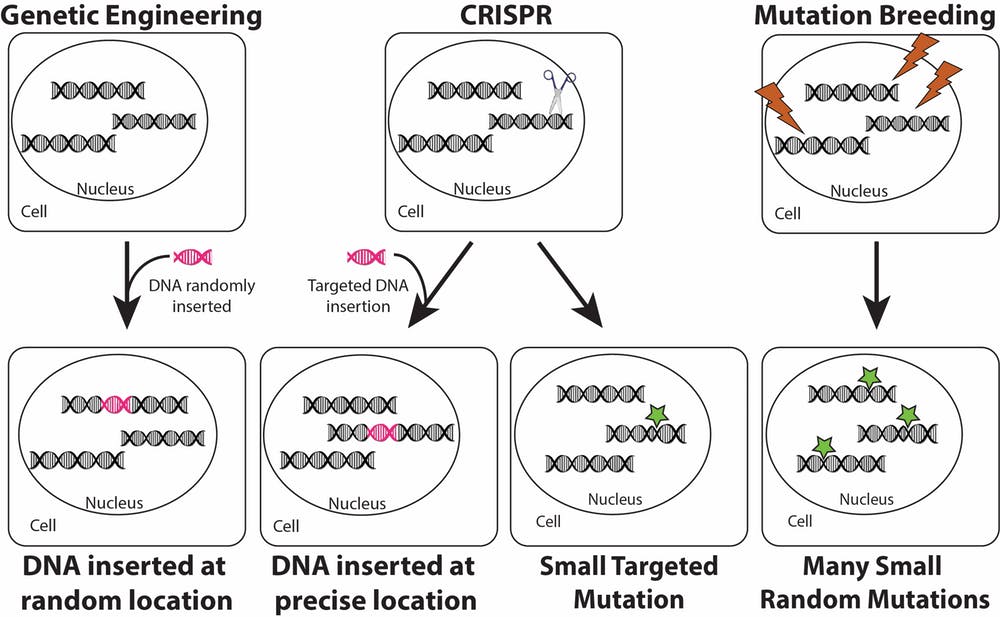
What’s the difference between genetic engineering, CRISPR and mutation breeding?

Opponents argue that CRISPR is a sneaky way to trick the public into eating genetically engineered foods. It is tempting to toss CRISPR and genetic engineering into the same bucket. But even “genetic engineering” and “CRISPR” are too broad to convey what is happening on the genetic level, so let’s look closer.

In one type of genetic engineering, a gene from an unrelated organism can be introduced into a plant’s genome. For example, much of the eggplant grown in Bangladesh incorporates a gene from a common bacterium. This gene makes a protein called Bt that is harmful to insects. By putting that gene inside the eggplant’s DNA, the plant itself becomes lethal to eggplant-eating insects and decreases the need for insecticides. Bt is safe for humans. It’s like how chocolate makes dogs sick, but doesn’t affect us.

Another type of genetic engineering can move a gene from one variety of a plant species into another variety of that same species. For example, researchers identified a gene in wild apple trees that makes them resistant to fire blight. They moved that gene into the “Gala Galaxy” apple to make it resistant to disease. However, this new apple variety has not been commercialized.

Scientists are unable to direct where in the genome a gene is inserted with traditional genetic engineering, although they use DNA sequencing to identify the location after the fact.

In contrast, CRISPR is a tool of precision.

Just like using the “find” function in a word processor to quickly jump to a word or phrase, the CRISPR molecular machinery finds a specific spot in the genome. It cuts both strands of DNA at that location. Because cut DNA is problematic for the cell, it quickly deploys a repair team to mend the break. There are two pathways for repairing the DNA. In one, which I call “CRISPR for modification,” a new gene can be inserted to link the cut ends together, like pasting a new sentence into a word processor.

In “CRISPR for mutation,” the cell’s repair team tries to glue the cut DNA strands back together again. Scientists can direct this repair team to change a few DNA units, or base pairs (A’s, T’s, C’s and G’s), at the site that was cut, creating a small DNA change called a mutation. This technique can be used to tweak the gene’s behavior inside the plant. It can also be used to silence genes inside the plant that, for example, are detrimental to plant survival, like a gene that increases susceptibility to fungal infections.

In genetic engineering, a new gene is added to a random location in a plant’s genome. CRISPR for modification also allows a new gene to be added to a plant, but targets the new gene to a specific location. CRISPR for mutation does not add new DNA. Rather, it makes a small DNA change at a precise location. Mutation breeding uses chemicals or radiation (lightning bolts) to induce several small mutations in the genomes of seeds. Resulting plants are screened for beneficial mutations resulting in desirable traits. Rebecca Mackelprang, CC BY-SA

Mutation breeding, which in my opinion is also a type of biotechnology, is already used in organic food production. In mutation breeding, radiation or chemicals are used to randomly make mutations in the DNA of hundreds or thousands of seeds which are then grown in the field. Breeders scan fields for plants with a desired trait such as disease resistance or increased yield. Thousands of new crop varieties have been created and commercialized through this process, including everything from varieties of quinoa to varieties of grapefruit. Mutation breeding is considered a traditional breeding technique, and thus is not an “excluded method” for organic farming in the United States.

CRISPR for mutation is more similar to mutation breeding than it is to genetic engineering. It creates similar end products as mutation breeding, but removes the randomness. It does not introduce new DNA. It is a controlled and predictable technique for generating helpful new plant varieties capable of resisting disease or weathering adverse environmental conditions.

Opportunity lost – learning from genetic engineering

Most commercialized genetically engineered traits confer herbicide tolerance or insect resistance in corn, soybean or cotton. Yet many other engineered crops exist. While a few are grown in the field, most sit all but forgotten in dark corners of research labs because of the prohibitive expense of passing regulatory hurdles. If the regulatory climate and public perception allow it, crops with valuable traits like these could be produced by CRISPR and become common in our soils and on our tables.

For example, my adviser at UC Berkeley developed, with colleagues, a hypoallergenic variety of wheat. Seeds for this wheat are held captive in envelopes in the basement of our building, untouched for years. A tomato that uses a sweet pepper gene to defend against a bacterial disease, eliminating the need for copper-based pesticide application, has struggled to secure funding to move forward. Carrotcassavalettucepotato and more have been engineered for increased nutritional value. These varieties demonstrate the creativity and expertise of researchers in bringing beneficial new traits to life. Why, then, can’t I buy bread made with hypoallergenic wheat at the grocery store?

Loosening the grip of big agriculture

Research and development of a new genetically engineered crop costs around US$100 million at large seed companies. Clearing the regulatory hurdles laid out by the U.S. Department of Agriculture, EPA and/or FDA (depending on the engineered trait) takes between five and seven years and an additional $35 million. Regulation is important and genetically engineered products should be carefully evaluated. But, the expense allows only large corporations with extensive capital to compete in this arena. The price shuts small companies, academic researchers and NGOs out of the equation. To recoup their $135 million investment in crop commercialization, companies develop products to satisfy the biggest markets of seed buyers – growers of corn, soybean, sugar beet and cotton.

The costs of research and development are far lower with CRISPR due to its precision and predictability. And early indications suggest that using CRISPR for mutation will not be subject to the same regulatory hurdles and costs in the U.S. A press release on March 28, 2018 by the U.S. Department of Agriculture says that “under its biotechnology regulations, USDA does not regulate or have any plans to regulate plants that could otherwise have been developed through traditional breeding techniques” if they are developed with approved laboratory procedures.

If the EPA and FDA follow suit with reasonable, less costly regulations, CRISPR may escape the dominant financial grasp of large seed companies. Academics, small companies and NGO researchers may see hard work and intellectual capital yield beneficial genome-edited products that are not forever relegated to the basements of research buildings.

Common ground: CRISPR for sustainability

In the six years since the genome editing capabilities of CRISPR were unlocked, academics, startups and established corporations have announced new agricultural products in the pipeline that use this technology. Some of these focus on traits for consumer health, such as low-gluten or gluten-free wheat for people with celiac disease. Others, such as non-browning mushrooms, can decrease food waste.

The lingering California drought demonstrated the importance of crop varieties that use water efficiently. Corn with greater yield under drought stress has already been made using CRISPR, and it is only a matter of time before CRISPR is used to increase drought tolerance in other crops. Powdery mildew-resistant tomatoes could save billions of dollars and eliminate spraying of fungicides. A tomato plant that flowers and makes fruit early could be used in northern latitudes with long days and shorter growing seasons, which will become more important as climate changes.

The rules are made, but is the decision final?

In 2016 and 2017, the U.S. National Organic Standards Board (NOSB) voted to exclude all genome-edited crops from organic certification.

But in my view, they should reconsider.

Some organic growers I interviewed agree. “I see circumstances under which it could be useful for short-cutting a process that for traditional breeding might take many plant generations,” says Tom Willey, an organic farmer emeritus from California. The disruption of natural ecosystems is a major challenge to agriculture, Willey told me, and while the problem cannot be wholly addressed by genome editing, it could lend an opportunity to “reach back into genomes of the wild ancestors of crop species to recapture genetic material” that has been lost through millennia of breeding for high yields.

Breeders have successfully used traditional breeding to reintroduce such diversity, but “in the light of the urgency posed by climate change, we might wisely employ CRISPR to accelerate such work,” Willey concludes.

Bill Tracy, an organic corn breeder and professor at the University of Wisconsin–Madison, says, “Many CRISPR-induced changes that could happen in nature could have benefits to all kinds of farmers.” But, the NOSB has already voted on the issue and the rules are unlikely to change without significant pressure. “It’s a question of what social activity could move the needle on that,” Tracy concludes.

People on all sides of biotechnology debates want to maximize human and environmental outcomes. Collaborative problem-solving by organic (and conventional) growers, specialists in sustainable agriculture, biotechnologists and policymakers will yield greater progress than individual groups acting alone and dismissing each other. The barriers to this may seem large, but they are of our own making. Hopefully, more people will gain the courage to plug the projector back in and let the conversation continue.

Rebecca Mackelprang is a postdoctoral scholar at the University of California, Berkeley. This article originally appeared on The Conversation.