Transcript: The ‘Real Food’ Reset

Click Play to listen to our generated podcast.
You can also access the original post here and our full podcast library here


We are diving into the newly released 2025 2030 dietary guidelines from the USDA and HHS. They just dropped on January 7, 2026. And normally I think people hear government guidelines and they just tune out.

Oh yeah. Normally I would say prepare to be bored because it’s usually just endless PDFs about percentages and obscure micronutrients.

Exactly. I just picture the food pyramid that weird triangle from the ‘9s that told us to eat an entire loaf of bread at the bottom.

Right. With a tiny piece of steak at the very top.

Yeah. But this this is different. The sources we’re analyzing are calling this a historic reset.

It’s a huge move away from what you would call nutrition by math. You know, counting calories and percentages and a real pivot toward nutrition by common sense, which sounds fantastic on paper, but as I was reading through this, I realized this isn’t just a friendly suggestion. The government seems, well, panicked.

That is the right word. Urgency is all over this text.

So, our mission today is to figure out why the script has flipped. We need to unpack why the government is suddenly treating your dinner plate like a national security issue.

What the heck happened to lowfat? Because that was a shocker to me and crucially what you are actually supposed to buy when you go to the grocery store now.

Well, we need to talk about the economics too because when the US government changes the menu, it sends these huge shock waves through the entire farming economy.

Okay, so let’s start with that panic. Why the reset? Why now? Was the old advice just not working?

Not working is a very polite way to put it. The source material frames this as a direct response to a catastrophic failure in public health.

So, we’re not just a little unhealthy. We are in a metabolic crisis.

The numbers in here, I had to reread them. I actually thought it was a typo.

They’re staggering. The report notes that nearly 90% of US health care spending now goes toward treating chronic disease.

So, nearly every dollar we spend on doctors and hospitals is just managing ongoing sickness.
90 cents on every dollar. We are effectively bankrupting the system, treating diseases that are for the most part preventable. It’s just unsustainable.

And the weight statistics, more than 70% of American adults are overweight or obese. But the stat that I think really terrified the policy makers, the one that likely forced this reboot, is about the kids. The pre-diabetes stat.

Yes. Nearly one in three adolescents has pre-diabetes.

So that means their bodies are already struggling to handle sugar before they even hit their 20s. That’s terrifying.

It is and the guidelines explicitly state that 60% of these chronic issues are attributed to inflammatory diets.

Okay, can we define that? Inflammation is such a buzzword; everyone uses it. But what does it actually mean in this context?

Think of it like a low-grade fire inside your body. When you eat foods that your body struggles to process, you know, highly-processed stuff, constant sugar spikes, your immune system stays on high alert. So, it never rests.

It’s constantly fighting what it inks is an invader. That chronic irritation damages blood vessels, organs, tissues, everything over time. It’s the engine heat that eventually blows the gasket.

So the government looks at this map of inflammation and says this isn’t just about fitting into your genes anymore.

No, they are framing diet related disease as a national readiness issue.

That sounds like military language.

It is. If your population is too sick to work, too sick to serve in the military, or just too expensive to insure, you don’t have a health problem. You have a national security problem.

So that explains the why. The house is on fire. Now let’s look at the what because they are changing the visuals. I mentioned the food pyramid earlier. That big slab of carbs at the bottom.

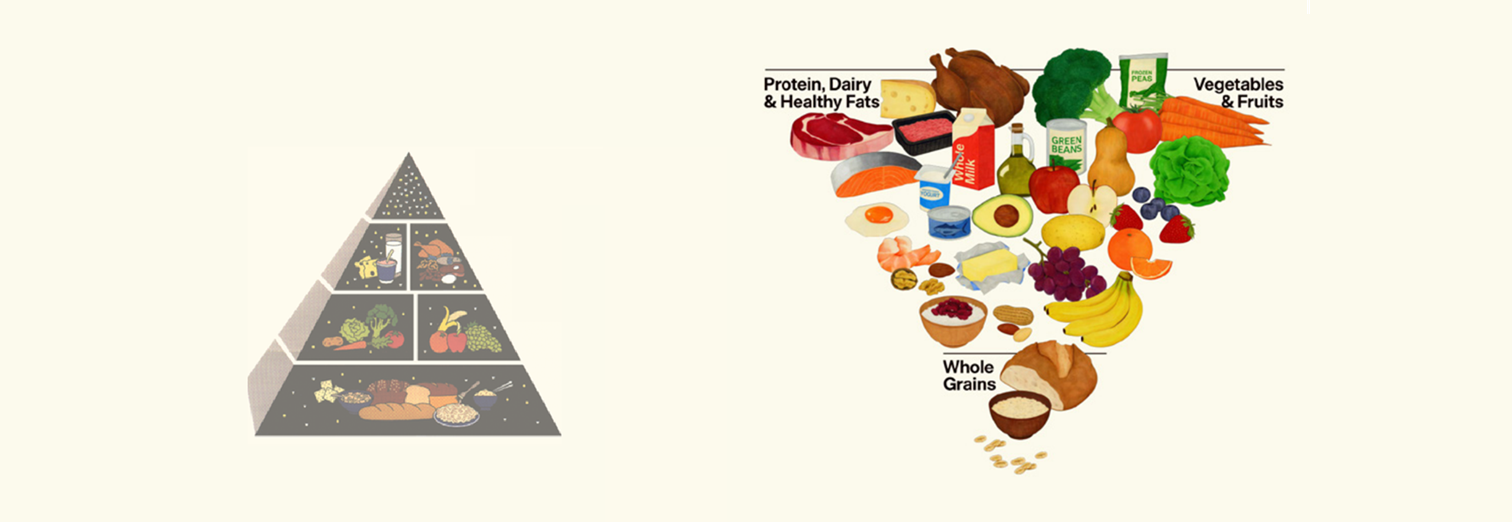
For 40 years, the advice was anchor your meal with starch and be very, very careful with fat. And the new guidelines, they completely flipped the script. The new visual anchor is protein, healthy fats, and whole produce.

Okay, let’s tackle protein first because looking at the notes here, they prioritize protein at every meal. That feels aggressive.

It is a dominant strategy and the target numbers are specific: 1.2 to 1.6 g of protein per kilogram of body weight, or roughly 0.5 grams per pound of body weight.

Okay, so if I weigh 160 lbs, I need about 80 grams of protein per day, right? Which doesn’t sound crazy until you actually try to do it, right?

That’s not just an egg for breakfast. That’s like three eggs or a substantial piece of chicken at lunch and dinner. It requires intent.

Why the push for so much? Is everyone supposed to be a bodybuilder now?

Well, there are three reasons the source really highlights. First is muscle maintenance. We are an aging population. If you want to be walking, carrying groceries, and living independently in your 80s, you need muscle mass. You can’t build or keep muscle without adequate protein. It’s basically an anti-frailty prescription.

That makes sense. But what about weight?

That’s the second reason, and it’s the most interesting one for weight loss, satiety, the feeling of being full.

But it’s more than just feeling full. There’s a theory, and the guidelines really lean into this, that your body essentially keeps you hungry until it gets enough protein.

So, it’s like a nutrient hunt.

Exactly. If you eat a bag of chips, you can eat the whole bag because there’s almost no protein. Your body is saying, keep eating. I haven’t found the building blocks yet. But if you eat a steak or a large serving of lentils, your body signals, okay, we got the goods. You can stop.

That that explains so much about my late night snacking. So, if I prioritize protein, I’m kind of hacking my own hunger signals.

Precisely. It crowds out the junk. If you fill up on the protein, you just naturally eat fewer calories overall without having to count them.

And the third reason, it’s cultural. It’s hard to teach people about complex versus simple carbs. But everyone knows what a piece of chicken is. It’s a clear message.

But I have to play devil’s advocate here. I feel like I see headlines every other week saying too much protein kills your kidneys or Americans eat too much meat. Is this universally accepted?

No. And the source acknowledges that tension. There is a counterview. Some nutritionists argue that most Americans already get plenty of protein and we don’t need to push it higher. But the guidelines committee made a choice. They decided that the risk of obesity, diabetes, and frailty was much higher and much more urgent than the hypothetical risks of eating too many pork chops. They’re betting on protein to fix the metabolic crisis.

Okay, so we’re eating the pork chop now. What do we cook it in? Because this is the part that actually shocked me. I grew up in the skim milk era. I thought fat was the enemy.

This is the aha moment of the whole document. The guidelines have done a complete 180 degree turn on dairy. They’re actually endorsing full fat dairy explicitly. Whole milk, full fat yogurt, cheese…as long as —  and this is the key — it has no added sugar.

I feel like I need a moment of silence for all the watery skim milk I drank in the ’90s. It was bluish. It was so sad.

It was a sad time for cereal. Yes.

But seriously, how did we get this so wrong? For decades, doctors told us saturated fat in milk would give us heart attacks.
Well, you have to look at the history. In the 1950s, there was this hypothesis that dietary fat equaled body fat and heart disease. It was simple. It seemed logical. But it was wrong.

And we know this for sure now.

The source notes that research since at least 2002 has shown that the fat and dairy is just not the villain we thought it was.

So why is full fat better? Is it just because it’s less processed?

It’s about something called the food matrix. Nature packages things together for a reason. Vitamins A, D, E, and K are fat soluble. You literally cannot absorb them without fat.

So if you drink skim milk, then you’re just flushing those vitamins away. You need a ‘fat taxi’ to get them into your system.

And I’m guessing the satiety factor comes back into play here.

It’s a huge factor. Fat signals to your brain that you are fed. It slows down digestion. But there’s a sneakier reason the government is pushing this. Think about what happens when you take the fat out of yogurt. What does it taste like?

Chalk. Sour chalk.

Exactly. So, what did the food companies do to make us eat it?

They dumped sugar in it, fruit on the bottom, which was basically just jam.

Right. So, The low-fat craze actually fueled the sugar craze. By embracing full fat, the guidelines are trying to break that cycle. If the food tastes good naturally, because fat carries flavor, you don’t need to sweeten it.

And this isn’t just advice, right? This is actually changing laws.

It is. The source mentions the Whole Milk for Healthy Kids Act, which was signed just after the guidelines on January 14th, 2026.

So whole milk is actually back in schools.

Correct. The era of mandatory skim milk in the cafeteria is is over.

That is a massive shift. It really signals that we aren’t scared of healthy fats anymore.

We aren’t. And it extends beyond dairy. The guidelines are pushing for avocados, nuts, olive oil, eggs. The whole idea is to replace the calories we used to get from refined carbs with calories from healthy fats.

Which brings us to the common enemy. If we are eating steak and drinking whole milk, what are we cutting? Because we can’t just add calories on top of everything.

We are cutting the refined carbohydrates: the white bread, the crackers, the pastries, the white rice,
the stuff that makes life worth living.

Unfortunately, yes, but also the stuff that spikes your blood sugar the fastest.

The advice here is eat the rainbow, which I’ve heard since kindergarten, but there’s a nuance in the new text about whole forms.

Yes, the goal is five to seven servings of fruits and veggies a day, but they are really cracking down on juice.

Juice is well, it’s been demoted.

Metabolically, drinking a glass of orange juice is very similar to drinking a soda. You get all the sugar instantly with none of the fiber to slow it down. The guidelines want you to eat the orange. The fiber acts like a break on the sugar absorption.

So fiber is the buffer.

Exactly. It changes the hormonal response completely.

Okay. So we have the good list: protein, healthy fat, whole plants. We have the bad list: refined carbs. But what about the buzzword of the decade? Ultra-processed foods, UPFs. Is the government finally banning the Dorito?

This is where it gets politically tricky. The source notes that the term UPF isn’t splashed across the document in big red letters. They don’t want to get sued by every food company in America. But they’re being subtle about it.

They’re being descriptive. Instead of saying don’t eat UPFs, they say limit foods with artificial additives, stabilizers, and high added sugar. They’re describing the wrapper without naming the brand.

It’s the if it has ingredients you can’t pronounce, don’t eat it rule.

Precisely. They’re targeting the hyper-palatability. It’s when a food is engineered to be so delicious, the perfect crunch, perfect salt, perfect sweet that your brain’s stop signal just gets overwritten.

You can’t eat just one, right? The guidelines are trying to steer us back to, you know, boring food that our bodies actually know how to regulate.

This all sounds great. It really does. I love the idea of real food, but I have to bring up the implementation problem. The source brings this up, too. Real food is expensive, it spoils, it takes time to cook…

This is the real-world reality check. It is incredibly easy for a podcast host to say just roast a chicken,
right? It’s very hard for a single parent working two jobs to find the time or money to do that.

So, does the government have an answer for that or are they just shaming people who rely on boxed mac and cheese?

Well, HHS is trying to be practical. They’ve explicitly expanded the definition of healthy to include canned, frozen, and dried options.

So, frozen broccoli is okay. Not just okay, encouraged. Canned beans, frozen spinach, tinned tuna. These are shelf stable. They’re affordable and they’re nutritious. They are trying to break the myth that healthy requires a boutique grocery store and a private chef.

That’s a crucial distinction. You don’t need the organic kale massaged by monks. You just need the frozen peas. Exactly. It’s about access, not perfection.

I want to pivot to the invisible machinery behind this. You mentioned farmers earlier. If everyone in America actually followed this advice tomorrow…if we all started eating 80 grams of protein and drinking whole milk, what happens to the economy?

The guidelines act as a demand signal. Farmers plant what they think people are going to buy.

So, this is good news for cattle ranchers and dairy farmers.

Massive news for the dairy industry. This is a reputational resurrection. After being the bad guy for 40 years, they just got a federal seal of approval. That changes marketing. It changes subsidies. It changes everything.

But what about the companies making the frankenfood, the processed stuff? Are they just going to fold?

Oh, they’re smart. They’ll adapt. The source predicts a boom in minimally processed, value-added foods.

That sounds like business jargon. Translate.

Think of a rotisserie chicken. It’s convenient. It’s prepared, but it’s just a chicken. Or a bag of chopped salad kit with a simple dressing. Food that is easy but real. The money is going to shift from making new fake foods to making real foods easier to eat.

So, less science experiment and more convenience.

That’s the hope. The market follows the money, and if the money is chasing protein and real ingredients, the companies will provide it.

It really feels like we’re closing a chapter. We spent 50 years doing nutrition by the numbers, fearing fat, swapping butter for margarine, and we just got sicker and fatter. This feels like a return to grandmother wisdom.

It’s a simplified northstar. It’s admitting that we can’t outsmart millions of years of biology with a calculator. We tried to engineer a better diet and we failed. Now we’re going going back to basics.

So, if you’re standing in the grocery store right now feeling overwhelmed by all the labels, what’s the cheat sheet? How do we recap this reset?

Ideally, you remember four things. One, prioritize protein. Aim for that 0.5 gram per pound. It’s the anchor. It builds the muscle and kills the hunger. Two, don’t fear the fat. If it’s natural, like from dairy, nuts, or avocados, eat it. It keeps you full and helps you absorb vitamins. Three, eat the rainbow. Don’t drink juice; fiber is your friend. And four, ignore the marketing on the front of the box; turn it over. If the ingredient list looks like a chemistry textbook, put it back.

Simple, effective, and hopefully delicious. But before we let you go, I have one final thought I want to leave everyone with. Can a policy document actually change what is on the shelves, or is that entirely up to us, the consumers, to demand it with our wallets?

History shows the consumer moves first, the market follows. If we stop buying the junk, they will eventually stop making it.

Something to chew on, preferably over a high protein dinner. Thanks for listening to this deep dive. Go eat some real food and we’ll catch you next time.

From Guidelines to Groceries: The Real Food Reset

Click Play to listen to our generated podcast. Access our full podcast library here


This nutrition reset might sound simple, but the implications aren’t. Because federal dietary guidance doesn’t just shape dinner-table choices. It influences nutrition education, procurement standards, labeling conversations, school meals, and the broader public narrative around what counts as “healthy.”

And in the U.S., that narrative inevitably touches agriculture: what we grow, how we raise it, how we process it, and what ends up being affordable and accessible for families.

So what actually changed in these guidelines — and what should consumers and food-system stakeholders expect to come next?

What the New Guidelines Emphasize

The January 7, 2026 rollout frames the 2025–2030 Dietary Guidelines (DGA) as a “reset” toward real food and away from dietary advice that feels abstract, overly clinical, or too easy to game with marketing.

The easiest way to understand this “reset” is as a shift in what anchors a meal.

Previously, carbs were the base, with fat used cautiously. Now, meals are framed around protein, healthy fats, and whole produce. For dairy, guidance previously directed consumers to low-fat options, but now full-fat dairy is explicitly endorsed, as long as the food items don’t have added sugar. With a new focus on whole grains as part of a diet, guidance on consuming refined carbohydrates has now lowered, as well as limiting highly processed foods, added sugars, and artificial additives.

This isn’t just a new list of “eat more, eat less.” It’s a new public framing: less nutrition-by-math, more nutrition-by-common-sense.

Key Guideline Changes

‘You are what you eat’ has never been more evident. 60% of chronic diseases can be attributed to inflammatory diets. The press release argues the shift is necessary because of these rampant chronic disease trends, pointing to:

  • Nearly 90% of U.S. health care spending going toward treating chronic disease
  • More than 70% of American adults being overweight or obese
  • Nearly 1 in 3 adolescents having prediabetes

Whether you agree with every policy implication or not, the framing is unmistakable: diet-related disease is positioned as a national readiness and economic issue, not just a personal-health issue.

Protein: Eat More at Every Meal

The guidelines urge Americans to “prioritize protein at every meal,” and the new document includes protein targets in the range of 1.2-1.6 g/kg/day, or about 0.5 grams of protein per pound of body weight per day.

Why this is being emphasized:

  • Muscle maintenance: There’s growing attention to preserving lean mass across adulthood and aging, and protein plays a critical role in that.
  • Satiety + weight management: Higher-protein patterns can help with fullness and sometimes weight-loss adherence (people naturally eat fewer calories when they feel satisfied by a food).
  • A cultural reality: Protein has become the “macro Americans can understand,” which makes it an easy public message to repeat.

Was this driven by “new research”?

  • Not in the simple way headlines suggest. There is a body of research looking at higher-protein approaches in certain contexts, but many experts argue most Americans already get adequate protein and that these higher targets may not be warranted for the general population. That critique is showing up immediately in mainstream reporting about the new guidelines.

Full-fat Dairy: Part of Healthy Diet

The guidelines explicitly recommend full-fat dairy with no added sugars.

Why this is being emphasized:

  • Nutrient density + satiety: Dairy delivers protein, calcium, phosphorus, magnesium, and vitamins A,D,E, and K.  The full-fat options tend to be more satisfying for many people. This also slows down the digestion of any milk sugars.
  • A pushback against “low-fat but more sugar”: For years, many “low-fat” flavored dairy products compensated with sugar. The new framing tries to make “unsweetened” the non-negotiable.

Was this driven by “new research”?

  • The evidence around dairy fat and health outcomes has been clear at least since 2002, but the ‘low fat’ diet from the 1950s prevailed.  The saturated fat in whole dairy was blamed for cardiovascular disease and weight gain, but research shows this is not the case.
  • Saturated fat guidance has been a consistent feature of prior DGAs and remains a major topic in the DGA report.

Produce: Eat Whole Fruits & Veggies All Day

The guidelines stress eating vegetables and fruit throughout the day, focusing on whole forms.

Why this is being emphasized:

  • This is the least controversial part of the reset. The U.S. has long-standing shortfalls in fruit/vegetable intake, and whole forms generally deliver fiber and better satiety than juice or heavily sweetened “fruit products.”

Was this driven by new research?

  • Not “new,” so much as overwhelming continuity: long-term evidence consistently supports produce-rich dietary patterns for cardiometabolic health.
  • Eat the rainbow is an easy way to remember to get your 5-7 servings of fruit and vegetable in a day.

Healthy Fats: Consume from Whole Foods & Meats

The guidelines state to incorporate healthy fats from whole foods such as meats, seafood, eggs, nuts, seeds, olives, and avocados.

Why this is being emphasized:

  • The growing body of research, supporting the importance of the omega 3’s and 6’s for brain health and anti-inflammatory benefits
  • Lower-carb messaging needs a replacement calorie source: If you reduce refined carbs and added sugar, you inevitably talk about what replaces them. “Healthy fats” fills that gap.
  • Less fear-based fat messaging: It reflects a broader public shift away from blanket “fat is bad” thinking.

Was this driven by new research?

  • This is more of an interpretive evolution than a single new study.
  • The strongest consensus has long been around types of fat and overall dietary patterns, rather than fat avoidance at all costs, but where specific foods land is still debated.

Whole Grains: Ok to Eat, Reduce Refined Carbs

The guidelines suggest that we focus on whole grains while sharply reducing refined carbohydrates.

Why this is being emphasized:

  • Refined carbs are an easy “common enemy” because they’re overconsumed, highly palatable, and often bundled with added sugars and sodium in packaged foods.
  • Shifting people toward whole grains typically increases fiber and micronutrients without demanding perfection.

Was this driven by new research?

  • It’s consistent with decades of diet-quality research and the reality of current U.S. intake patterns (too many refined grains, too few whole grains).

Limit Highly Processed Foods

The new guidelines urge us to limit ultra-processed foods, added sugars, and artificial additives.

Why this is being emphasized:

  • This reflects a major cultural and scientific focus over the last decade: ultra-processed dietary patterns are associated with poorer health outcomes in many observational studies, and controlled feeding studies are exploring mechanisms and causality.

Was this driven by new research?

  • There has been a surge in research of ultra-processed foods (UPF) that these products may negatively affect our health.
  • While there is no use of the term “UPF” in the guidelines, they do note that older adults may need “fortified foods or supplements” under medical supervision if their “dietary intake or absorption is insufficient.”

Can We Reset in The Real World?

And this is the tension consumers live in every day.

The foods most people recognize as healthy are often the foods that feel hardest to execute consistently because of cost, time, cooking skills, kitchen access, and family preferences.

The Dietary Guidelines can call for a “real food” reset, but the how matters just as much as the what. To their credit, HHS messaging tries to preempt the practicality critique by emphasizing flexibility—fresh, frozen, dried, or canned all count.

But if federal guidance is going to land with everyday households, it has to translate into real-world realities like:

  • What “protein at every meal” looks like in school cafeterias, quick-service restaurants, and tight grocery budgets
  • How “limit ultra-processed foods” intersects with the fact that processed foods are often the most shelf-stable, accessible options
  • How emerging research (like the more nuanced conversation around full-fat dairy) actually makes its way into schools, doctor’s offices, and public health messaging—especially while debates around saturated fat and population-level guidance remain unresolved in global forums

Even if you never read the full document, the consumer takeaways are familiar—and workable when you frame them as practical defaults, not perfection:

  • Build meals around a protein anchor (eggs, yogurt, beans, fish, poultry, lean beef, tofu)
  • Add produce in the form you’ll actually use (fresh or frozen)
  • Choose whole grains more often and cut back on refined carbs and added sugars
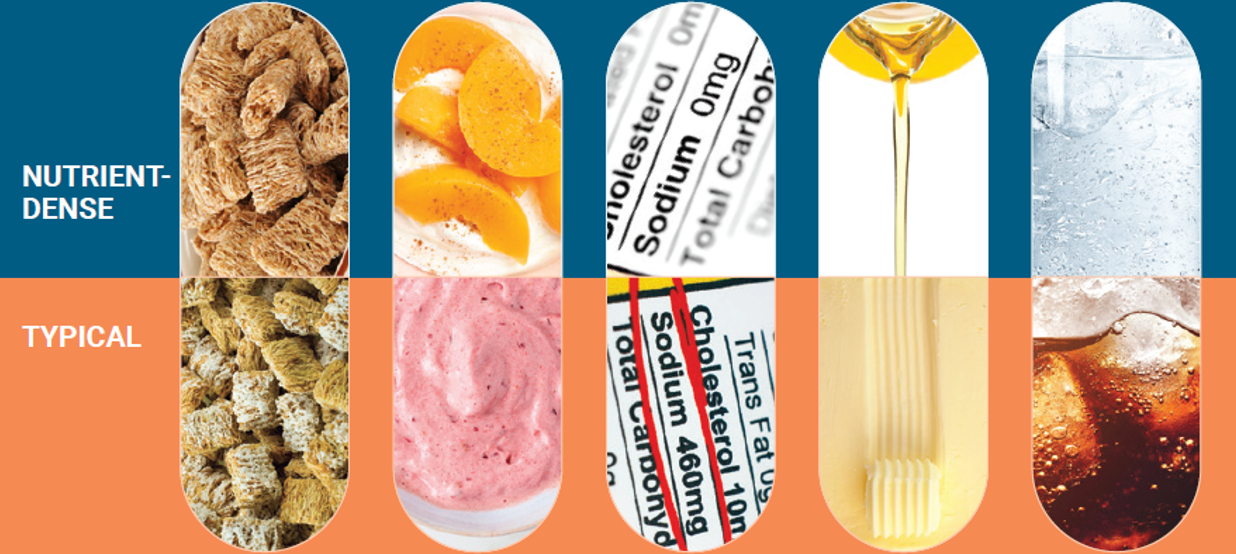
  • Be skeptical of health halos; prioritize foods that are straightforward, filling, and nutritionally complete
  • The 2025–2030 Guidelines are being positioned as a major reset with a clear theme: real food, more protein, whole fruits and vegetables, healthy fats, whole grains, and fewer ultra-processed foods and added sugars. But implementation—what people can afford, access, and realistically repeat—is where this “reset” will either succeed or stay stuck on paper.

What This Mean for Ag & Food Producers

This is where D2D readers should pay close attention: when federal guidance elevates specific categories (protein, dairy, produce, whole grains), it tends to reinforce demand signals across supply chains.

Potential downstream effects to watch:

  • Protein demand stays front-and-center
    The guidelines explicitly spotlight protein “at every meal,” which supports ongoing momentum for animal and plant protein production, and innovation in how protein is packaged, priced, and distributed.
  • Dairy — especially full-fat — gets a reputational lift
    The recommendation for “full-fat dairy with no added sugars” is a direct reversal of the cultural push many consumers grew up with. And it aligns with the Whole Milk for Healthy Kids Act, signed January 14, 2026, bringing whole milk back into school meals, a concrete example of how guidance can translate into policy and purchasing.
  • A renewed premium on minimally processed “value-added” foods
    The line between “processed,” “ultra-processed,” and “convenient but still nutritious” is where brands will compete. The winners may be foods that do the hard work for consumers, while keeping ingredient lists simple and benefits clear.

Food Trends 2026: Fewer Rules, Higher Standards

I love writing this piece every year, partly to see what’s coming, and partly to sanity-check what I’m already noticing in real life: smaller meals, tighter budgets, and way less patience for complicated food advice.

As Statista summarizes in its Consumer Trends 2026 reporting, consumers are more than ever, “increasingly deliberate about spending, prioritizing value and practicality over abundance.” Mintel echoes this framing, noting that food choices are becoming less aspirational and more rooted in everyday function. FoodNavigator’s 2026 outlook reinforces the same point, stating that the coming year is defined by “integration rather than disruption” across food and beverage categories.

When read together, these three trusted sources for consumer insights and market outlook, all point to the same conclusion: consumers are simplifying how they eat while also raising expectations for what their food delivers. The result is a move away from rigid food rules and toward food choices that combine multiple nutritional benefits and practical value.

This is not a rejection of recent food trends. It is an evolution shaped by economic constraints, new medical realities, and a more mature understanding of nutrition. In other words: the era of ‘food as identity’ is cooling off. ‘Food as a set of tools in a toolbox’ is heating up.

1. The Context: Constraint, Caution, and Choice Fatigue

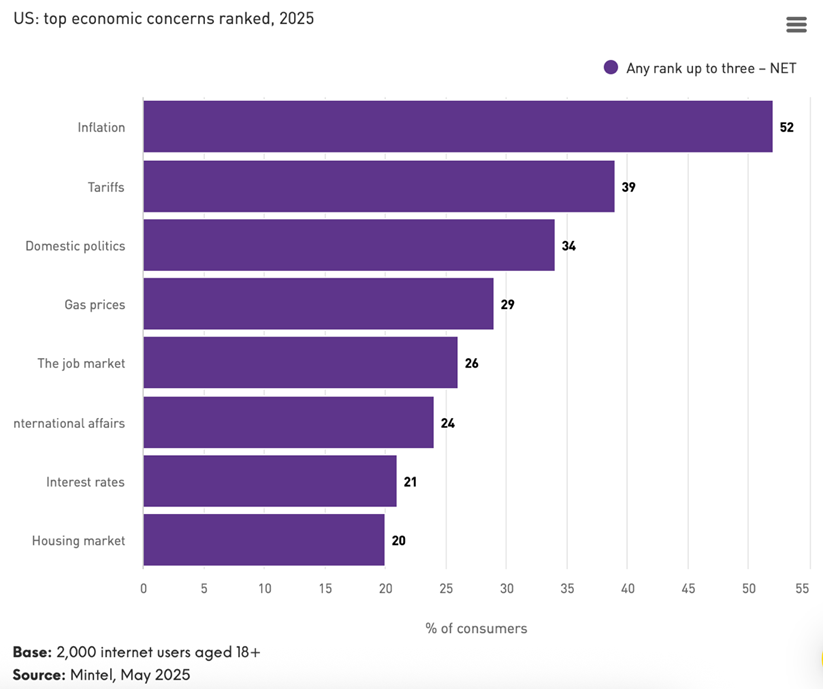
Eating well gets harder when life is expensive and decision-fatigue is real. Statista’s Consumer Trends 2026 finds households across major global markets remain financially cautious: inflation, tariffs, and cost-of-living pressures are still shaping spending, even alongside cautious optimism.

Food sits in a unique place in this landscape. Consumers may cut back on discretionary categories, but food trade-offs feel personal. Statista suggests 60%+ of consumers are actively looking for better value in food purchases, not simply buying less. That shows up as fewer impulse buys, closer scrutiny of ingredient lists and health claims, and higher expectations that foods deliver more than one benefit—especially as people consolidate eating occasions (hello, GLP-1 era) and think more about longevity.

Mintel frames this as a shift away from “aspirational eating” and toward functional, reality-based eating that supports long-term health. FoodNavigator similarly notes growing intolerance for complexity and exaggerated claims—particularly when products promise transformational outcomes that don’t match everyday use.

As FoodNavigator puts it:

“The longevity trend is relevant to almost everyone. Consumers wanting to ensure they live a longer, better quality life, are being encouraged to start paying attention to their health at a much younger age.”

Examples of this growing skepticism are increasingly evident across the food landscape. Consumers are questioning products marketed as “detoxifying,” “hormone-balancing,” or “metabolism-resetting” when those claims aren’t backed by clear, substantiated benefits. There’s also rising frustration with foods positioned as meal replacements that still require add-ins, supplements, or prep to be “complete.”

Ingredient lists and front-of-packaging claims filled with buzzwords, natural, grass-fed, adaptogens, nootropics, superfoods, are losing credibility when brands can’t explain what they do or why they matter. Highly restrictive “perfect” diet frameworks are facing similar pushback when they assume ideal schedules, unlimited budgets, or unrealistic cooking habits. (And honestly? It’s about time.)

In contrast, foods that clearly communicate what they do—delivering satiety, convenience, or basic nutrition—are gaining trust as consumers prioritize simplicity and practicality. Think: high-protein staples like Greek yogurt, cottage cheese, eggs, and rotisserie chicken; no-prep snacks like nuts, jerky, hummus, and cheese sticks; and predictable convenience foods like bagged salad kits, microwaveable grains, and frozen meals that plainly list calories and protein.

These are the “no drama” foods—the ones that actually get eaten on busy weekdays. Even functional categories earn more credibility when the purpose is straightforward, like electrolytes for hydration or fiber-forward basics like oats and beans, rather than dressed up as a transformation.

This shift away from aspirational eating and toward functional, everyday nutrition is now being echoed beyond the marketplace. In January 2026, the U.S. Department of Agriculture announced a significant reset in U.S. nutrition policy, explicitly emphasizing a return to real food, protein, fruits and vegetables on the TOP of the food pyramid as the foundation of health.

The message reflects growing recognition that increasingly complex guidance, layered claims, and rigid dietary frameworks have not translated into better health outcomes such as reduced cancer, heart disease, diabetes, and Alzheimer’s.

“American households must prioritize whole, nutrient-dense foods—protein, dairy, vegetables, fruits, healthy fats, and whole grains—and dramatically reduce highly processed foods. This is how we Make America Healthy Again.”

-U.S. Food & Drug Administration

Together, consumer behavior and policy direction point to the same conclusion: nutrition strategies that resonate in 2026 are those that emphasize efficiency, nutrient density, and practicality, not optimization for its own sake.

2. From “Maxxing” to Nutrient Density

For much of the past decade, food trends have had a strong emphasis on singular nutritional goals: high protein, low carb, plant-only. While these approaches brought attention to important nutrients, they also encouraged narrow thinking, something we know can cause nutrient imbalances and generally poor nutrition.

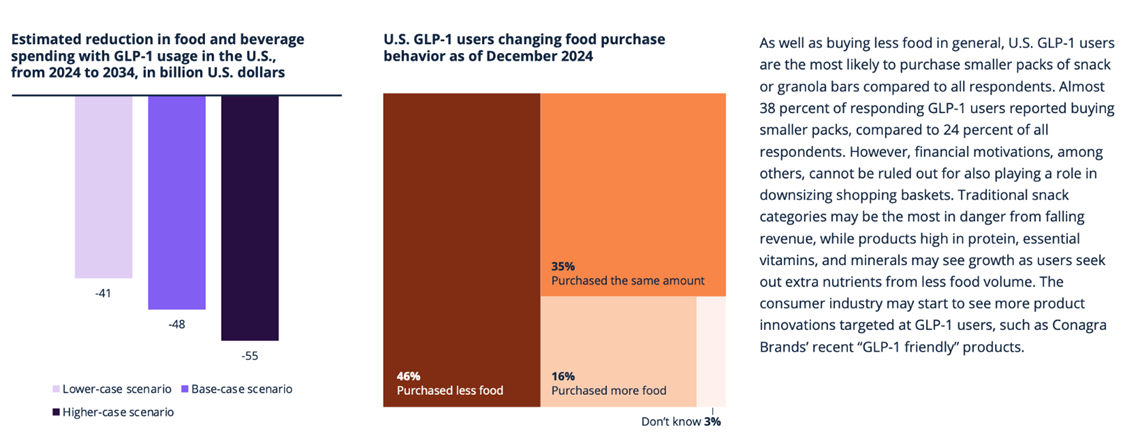
Statista data shows that the rapid adoption of GLP-1 medications is accelerating a shift away from eating for quantity alone. GLP-1 users consume about 30% fewer calories on average, are choosing smaller portions, and increasingly look for foods that deliver satisfaction and nutrition without excess. As Statista analysts note, consumers impacted by appetite-suppressing medications are “reframing health around efficiency rather than quantity,” i.e.- what gives you the most nutrients in the least amount of calories.

As a result, protein is no longer disappearing, but it is changing form.

What consumers are moving away from:

  • Protein bars and shakes engineered almost entirely around protein grams
  • Products positioned as nutritionally sufficient based on a single claim.

What is gaining relevance:

  • Naturally protein-rich foods with added nutritional benefits, such as skyr-style yogurts from brands like Siggi’s or Icelandic Provisions, which deliver high protein alongside calcium and live cultures, or lentil-based pastas like Barilla Red Lentil, which provide protein, fiber, and iron in a familiar format.
  • Strained and fermented dairy formats, including Two Good Greek Yogurt or Chobani Complete, which pair protein density with probiotic support and bone-health nutrients such as calcium and vitamin D.
  • Balanced, mixed meals built around whole ingredients—such as Amy’s Kitchen lentil bowls, Daily Harvest grain-and-legume blends, or Sweetgreen warm bowls—that deliver protein as part of a broader matrix of fiber, complex carbohydrates, and micronutrients rather than as an isolated add-on.

Mintel characterizes this transition as a move away from “nutrient maxxing” toward what it calls “nutritional efficiency,” where foods are expected to deliver multiple benefits within smaller portions. FoodNavigator similarly notes growing skepticism toward one-note nutritional messaging, observing that “consumers are no longer impressed by single claims divorced from real eating habits.”

3. Fiber Becomes Foundational

Fiber has long been recommended but rarely prioritized. In 2026, it is predicted to become critical rather than supplemental.

Statista highlights that younger consumers, particularly Gen Z, are increasingly motivated by long-term health and prevention, while still constrained by cost, time, and overwhelm. Fiber uniquely addresses these pressures by supporting gut health, blood sugar regulation, and satiety without requiring radical dietary change. As Statista notes, preventative health is increasingly pursued through “everyday food choices rather than specialized interventions.”

Rather than adding fiber as a standalone supplement, many brands are embedding it directly into familiar, everyday foods. This is showing up in fermented plant-based yogurts such as Cocojune, which pair live cultures with naturally fiber-containing ingredients, as well as in breads made with whole grains and seeds that deliver four to six grams of fiber per slice, including Dave’s Killer Bread varieties. Fiber-forward snacks are also gaining traction, with products like Biena roasted chickpeas and Nature Valley oat-based bars offering naturally occurring fiber in formats consumers already recognize and trust.

FoodNavigator reports that fiber is increasingly positioned as a partner to protein, stating that brands are using fiber to help foods feel “more complete and more satisfying in a lower-calorie context.”

4. Traditional and Shelf-Stable Foods Are Reframed

Economic pressure is reshaping how consumers define quality and value. Statista notes that while consumers still allow small indulgences in food, those indulgences must feel reliable and worth the cost. As one Statista insight summarizes, consumers are “trading down selectively but trading up emotionally.” Prioritizing familiarity over complexity.

As a result, shelf-stable and traditional foods are being re-evaluated, not as lower-quality compromises, but as strategic, practical choices in a constrained food environment. Consumers are rediscovering formats that balance nutrition, affordability, and reliability. Canned beans and lentils, which provide affordable sources of protein and fiber with long shelf lives and minimal preparation are gaining in popularity. Frozen vegetables, which retain nutritional value while reducing food waste and saving time in everyday cooking are becoming more desirable.

FoodNavigator’s 2026 trend analysis highlights renewed interest in traditional formats across dairy and pantry categories, as consumers gravitate back toward foods that feel practical in uncertain times. This includes staples such as milk, yogurt, cheese, canned beans, lentils, soups, and frozen vegetables, formats that are familiar, versatile, and easy to store or prepare. The emphasis is not nostalgia, but reliability: foods that consistently deliver nutrition, value, and ease without requiring consumers to adopt new habits.

5. Technology as a Tool for Continuity

The long-standing natural-versus-processed debate is giving way to pragmatism. Statista’s consumer research shows openness to food technology when benefits are clear, transparent, and tied to real-world challenges such as cost, waste, or environmental pressure.

Mintel notes that consumers are increasingly comfortable with food technology when it is framed as supporting existing food systems rather than reinventing them. Acceptance is highest when innovation preserves familiar taste, texture, and usage, while quietly improving environmental or nutritional performance behind the scenes.

In practice, this is showing up through technologies that enhance foods people already recognize:

Precision fermentation, for example, is being used to produce dairy-identical proteins that perform just like traditional whey and casein in familiar products. Companies such as Perfect Day supply fermentation-derived dairy proteins that are used in ice creams, yogurts, and beverages that look, taste, and behave like their conventional counterparts, but with significantly reduced land and water use. This allows brands like Straus Family Creamery and plant-forward innovators to create products with the sensory qualities consumers expect while lowering environmental impact.

Upcycling dairy byproducts is another area gaining traction. Brands like Wheyhey! repurpose whey proteins into high-quality nutrition bars and protein snacks, turning what was once a low-value stream into a consumer-ready ingredient. Similarly, companies such as Renewal Mill incorporate upcycled whey into baking mixes and snack products, reducing waste while enhancing protein content and delivering the texture and flavor that customers recognize from traditional bakery items.

FoodNavigator reinforces this framing, observing that innovation is most successful when it is “used to protect familiar foods, not ask consumers to abandon them.”

“Let food be thy medicine and medicine be thy food.” 

– Hippocrates

What This Means for 2026

Taken together, the data tells a coherent story: consumers are seeking foods that fit their lives, financially, nutritionally, and emotionally.

This is not a vilification of 2025 trends. It is an evolution driven by greater knowledge and tighter constraints. As appetites shrink and expectations rise, food choices become more integrated and more realistic.

Venezuela: A Study in Economic Mismanagement

Click Play to listen to our generated podcast. Access our full podcast library here

The situation in Venezuela is indeed a royal mess. Decades of failed government socialist policies have had dire economic consequences for its citizens, including food consumers.

To really begin to understand what’s going on in Venezuela today, we need a little background — just a brief update so we can focus on what’s going on today.

What is behind the crisis in Venezuela?

After more than two centuries of Spanish rule, Venezuela declared independence in 1810 and embarked on the development of its infrastructure and basic economic sectors.  Education, along with farming and agriculture, blossomed in the mid and latter 1800s.

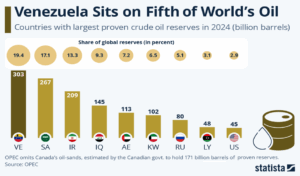
By the beginning of the twentieth century, the country had emerged as one of the world’s largest oil exporters, drawing upon proven reserves larger than any others in the entire world.

With all that oil, it is no surprise that military leadership figured prominently in the political picture, despite the presence of democratically elected governments. The enormous value of oil became both an economic blessing – and a political curse.

Still today, Venezuela has one-fifth of the world’s oil reserves.

In the 1990s, military strongman Hugo Chavez twice attempted government coups before finally succeeding in being elected president in 1998.

Chavez capitalized on widespread public economic frustrations, much of it generated by years of corruption, and lack of economic development benefiting anybody but the elite. In response, he began an aggressive program of greater government control and management of key economic sectors, including food. A small ruling elite – not the marketplace, or sound economics – became the ruling master of the national economy.

Price controls on basic goods – such as food – disrupted markets and led to supply shortages. Land reform in the name of equality took a serious toll on long-standing, successful private farms and ranches. Nationalization of private enterprise spread across not just the food sector but also banking, communications, and especially the oil industry.

Double- and triple-digit inflation spiraled ever-upward. Market forces were non-existent and government control squeezed capitalism into nothing.
More and more oil dollars were used to fund numerous social programs designed to appease an unhappy public. Sadly, investment in new and better infrastructure wasn’t high on the list of government priorities.

That decision had long-term economic consequences – none of them good.  Old, outdated, and inefficient infrastructure across major sectors of the economy would require huge expenditures over a protracted period of time to modernize.

Decades of economic mismanagement and political agendas have created a nightmare environment of inflation and massive price increases, shortages of food and other staples, and significant decline into widespread poverty and despair.

In the early Chavez years, price controls on chicken, beef, pork, grains, sugar, coffee, sugar and other commodities ignored the actual costs of production and fell well below actual market prices.  Subsidies from oil income were intended to negate this economic unreality and appease frustrated and angry citizens. Important trade was restricted, shut off, or rendered economically impossible.

Chavez intended his aggressive land-distribution scheme to encourage greater production among smaller landholders. However, his plan failed to appreciate the counter-productive effects of limited access to credit, essential farm inputs and supporting infrastructure. Once again, good intentions (and perhaps a touch of political expediency) ran into the brick wall of economic reality.

When Chavez at last went to his eternal reward in 2013, Nicolas Maduro stepped into power to continue a decidedly socialist approach to economic management.  International relations continued to flounder.  Election fraud and intimidation ran rampant.  Economic sanctions increasingly complicate foreign trade.

And then came perhaps the worst blow of all – a global collapse in oil prices from 2014-2016, falling from $108 a barrel to $57 a barrel.  The economic spigot didn’t run completely dry – but a once-torrential flow of petrodollars slowed to a comparative trickle. Barter of oil for services and goods expanded, notably with Cuba.

The money simply was no longer there to try to appease discontented – and often hungry – citizens.

Now with our history mini-lesson complete, let’s deal with the real-world issues the different missteps in political leadership have created for everyday Venezuelans – and all the people who play a role in contributing to their food security.

Surprise! The American farmer and rancher are very high on that list.

What does this mean for Venezuelans?

To appreciate just how dire life had become for the average Venezuelan, consider this simple statement from the Human Rights Watch:

Over 20 million Venezuelans live in multidimensional poverty with inadequate access to rights – essential goods and services, including food and essential medicines.

Many are forced to adopt extreme survival strategies, including fleeing the country.

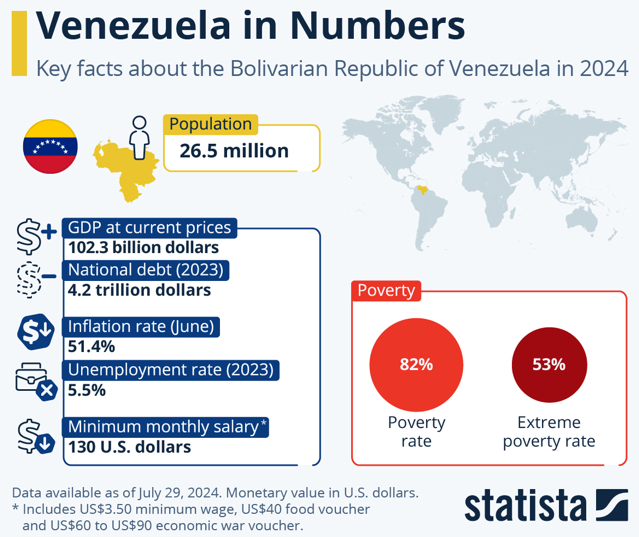
Today’s population is about 30 million but there has been significant exodus over the past 10 years.

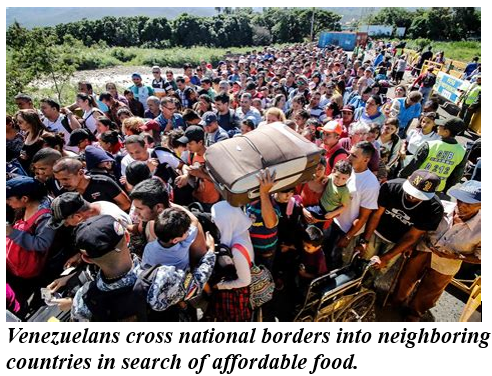
Almost one-quarter of Venezuelans have chosen simply to leave the country since 2014.  The United Nations estimates the exodus at 7.9 million people, with an average of 2,000 individuals leaving every day.

Think of it this way… imagine the street you live on. Now think of it with every fourth house suddenly vacant. Imagine the entire population of my small hometown gone – disappeared into thin air – in just eight days.

The availability of food – or more accurately, its unavailability or inflated price – has been one of the most significant adverse manifestations of misguided economic policy.

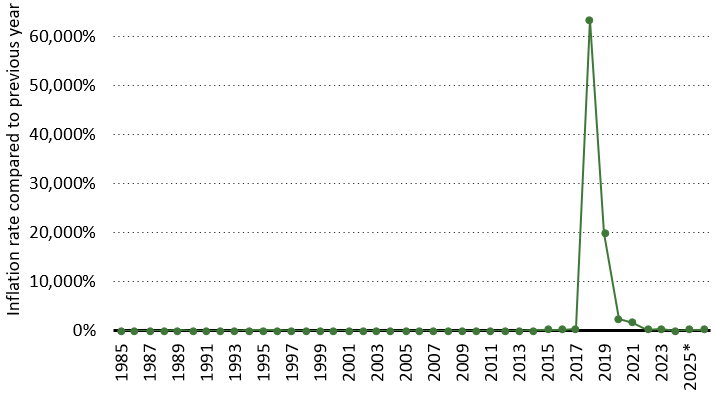
YoY Inflation Rates: Venezuela

Inflation makes it impossible to purchase goods and save money.  Inflation today is around 225%.  Terrible, but not as bad as it was in 2018.

Shortages run rampant, and prices soar beyond the capacity of average citizens to pay. And to add icing to the cake, the drug trade flourishes, with all the corruption, violence, and social unrest that it brings with it.

Why can’t they just feed themselves?

Historically, Venezuela is not self-sufficient in food. The country has been highly productive and largely self-sufficient in tropical commodities such as coffee, fruits, vegetables, and rice. But vast areas of the country remain undeveloped for modern farming, with only about 3 percent of its total land area used for farming.

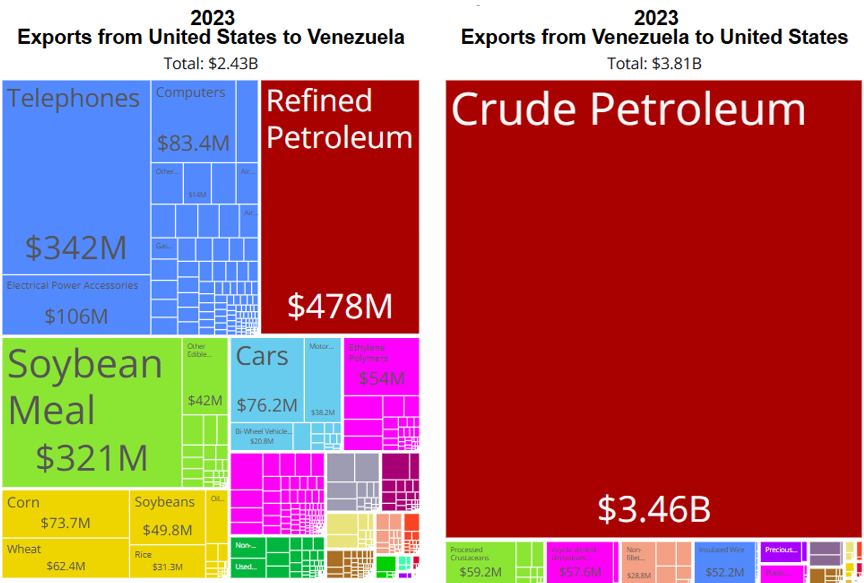
Agriculture accounts for only 5 percent of the country’s entire Gross Domestic Product (GDP). About 70 percent of its cereals and 98 percent of its needed oilseeds are imported.  In September 2025, the top exports from the U.S. to Venezuela were soybean meal, wheat, and cars.
Price manipulations by the government have been a strong disincentive to many producers. Economic instability has scared off serious investment in developing productive capacity. The government’s blatant seizure of private enterprise only exacerbated the fears. In such an environment, imports have played an important role – arguably a critical role — in helping feed the population of almost 30 million.

What about the poor Venezuelan food consumer?

Failed government policies created shortages and hugely inflated food prices, which have only begun to moderate slightly and begin the tough task of rebuilding food production and consumption.

The economic mess in Venezuela has hit food consumers hard. The United Nations estimates that 82 percent of its citizens live in poverty and 40 percent experience moderate to severe food insecurity.

The main culprit in this sad situation is not the Venezuelan farmer as much as the bad decision-makers dominating the Venezuelan political and economic scene for almost four decades. The country’s animal protein sector provides a good example of how well-intentioned but economically disastrous governmental policies and actions filter down to create an average empty dinner table.

Globally, pork and poultry traditionally provide the most popular sources of animal protein, at roughly one-third each of personal meat consumption. The National Institute of Health Library of Medicine reports that animal protein makes up 70 percent of total daily protein intake for Venezuelans (similar to the percentage for Argentina, and above the roughly 60 percent levels in Peru and Chile).

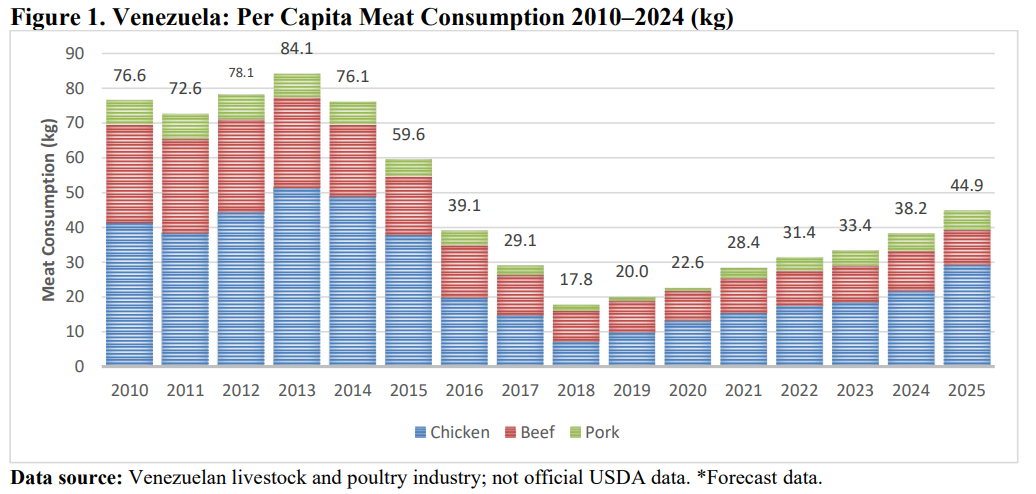
In the period roughly 2017 to 2019, the full negative effects of attempts to control the food system had become readily apparent. Production and consumption levels for proteins reached a nadir, from which the country is trying to slowly claw its way back to normalcy by allowing the animal protein sector to operate with comparatively fewer governmental controls and dictates.

Reductions in price controls have been a major factor in the rosier sector outlook. The ability of poultry producers to adapt, innovate and invest amid price and control gyrations also has been very important.

Misguided economic policies have severely compromised their ability to fully develop their productive capacity.

The U.S. Department of Agriculture estimates total Venezuelan per-capita meat consumption at 45 kilos (roughly 100 pounds ), up significantly from its 2018 record low.  Pork production is projected to rise by about 12 percent, and poultry meat consumption is growing even more quickly — by 40 percent.  In contrast, beef consumption is projected to continue its slow decline.

Venezuela boasts a modern, efficient poultry industry, with the potential to meet the needs of the country’s citizens, if allowed to do so.

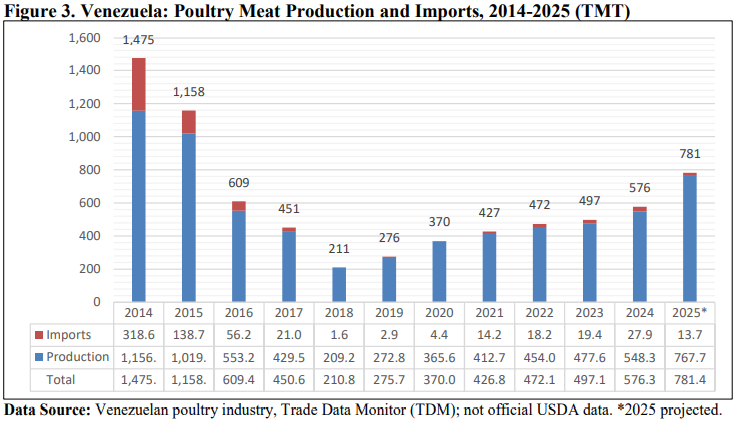
Poultry meat production in 2014 – the year of Maduro’s ascension to power – reached almost 1.5 million metric tons.

By 2018, that figure had declined to 211,000 tons. Poultry meat imports fell from the mid-2000’s levels (318,000 tons at its peak) to virtually zero.

Imports this year are forecast to reach only 14,000 tons. (Historically, most poultry imports come in as processed chicken from Turkey and various forms of poultry from Brazil, Colombia and the European Union.)  Industry investment suffered, and more and more people went hungry.

Mark Twain popularized the common quote on the existence of “lies, damn lies, and statistics.” 

Venezuelan protein consumption data may well reflect the truth behind the comment.

On a global basis, Venezuela ranks near the bottom quartile in global per-capita consumption of chicken — with at least 111 countries boasting a higher per-capita consumption figure. While we in the U.S. consume almost 120 pounds a year of chicken, Venezuelans are lucky to eat 35 pounds a year.

As positive as the most recent market outlook for animal protein in Venezuela may seem to some, the country faces a long, tough road to joining the front ranks of countries providing consumers with this critical element of a healthful diet.

Where does the U.S. farmer figure into this?

Venezuela relies on the United States for many of its important food and commodity needs. USDA’s Foreign Agricultural Service notes that U.S. farmers and ranchers in 2024 had a 39 percent share of the country’s market, worth $800 million.

Venezuela remains an important market for U.S. agriculture, most notably providing many of the grains and oilseeds on which the Venezuelan animal protein sector depends.

Thanks to special exemptions from key trade sanctions, soybean meal, corn, wheat, and rice are top imports – and major factors in the ability of the animal protein industry to recover and expand protein availability for a hungry populace. U.S. trade officials and farm interest all express optimism that the elimination of the Maduro regime will open the door for further growth in Venezuelan market opportunities.

It could well be yet another example of the happy marriage of improved food security (for Venezuelans, in this case) and greater financial opportunity for U.S. farmers.

Why Isn’t Cultivated Meat on Our Dinner Plates?

Click Play to listen to our generated podcast. Click on links for transcript and our full podcast library


In 2016, we wrote about the excitement consumers and investors had for a new type of protein. By 2013, investors enthusiastically poured $3 billion into this new technology hoping for traction with consumers and lower production costs. This led many of us to assume we would be eating burgers, fish and chicken grown in bioreactors by 2025. But that has not materialized.

While some companies are making slow progress, the technology is not leaping forward as planned due to consumer perception, state regulatory blockades, and cost of production compared to regular meat.

A large impediment is the regulatory dichotomy between the U.S. government and individual states. While the FDA and the USDA have approved cultivated meat from UPSIDE Foods, some states have banned cultured meat for human consumption.

First, let’s ask: “Is it safe to eat?”

Learning how cultivated meat is made is the first step in understanding this process.

A biopsy is taken from an animal or bird. These cells are put in bioreactors, along with nutrients to help them grow. The ‘vitamins’ used to proliferate the cells consist of amino acids, glucose, vitamins, inorganic salts, along with protein growth factors. This recipe is very similar to what is produced by an animal’s metabolism to make them grow.

The objective is to have the same, or better, nutritional value as cattle, chickens, pork or fish. After the cells have grown into muscle fibers, they are considered meat…  just like the kind from a cow or chicken.

The FDA and the USDA worked closely with various cultivated meat companies to ensure that the processes used to produce meat are safe and lawful under the Federal Food, Drug and Cosmetic Act.  They have also held public meetings to ‘better understand the science of animal cell culture technology, discuss potential hazards and labeling considerations, and to listen to consumer concerns.”

Upside Foods was the first for federal approval with their chicken products. Focusing on cultivated chicken, they are one of the most well-funded and recognizable companies in the sector. They built one of the first U.S. large-scale cultivated meat facilities and are focused on regulatory pathways and premium chicken products, as well as beef and duck.

“We make the chicken chickens dream about! Our cultivated meat is grown in a controlled environment with no need to raise and slaughter billions of animals.”

– Upside Foods

Some advocates argue that cultivated meat may be considered safer and more sustainable — a selling point for health and environmentally-conscious consumers concerned about hormones, antibiotics, and effects on the earth.

But social media can cloud the landscape among consumers, too, with claims like “cultivated meat causes ‘Turbo Cancer’ because the cells are immortal.” Statements like this are false. To make cultivated meat without constantly running biopsies on animals, scientists use cells that can divide indefinitely. While cancer cells also do this, that’s where the similarity ends.

Furthermore, by the time the meat hits your plate, those cells are dead. And even if they weren’t, your stomach acid destroys them instantly. You cannot catch cancer from eating a cell.

Get ready for your pop quiz! Would you eat cultivated meat?

Continue reading and then answer a few questions at the end.

States banning Cultured Meat

Despite its safety, seven states are banning cultured meat, it seems, to protect their farmers and ranchers who are growing traditional meat.

Today, Florida is fighting back against the global elite’s plan to force the world to eat meat grown in a petri dish or bugs to achieve their authoritarian goals,” said Governor Ron DeSantis. “Our administration will continue to focus on investing in our local farmers and ranchers, and we will save our beef.”

The result is a patchwork of contradictory rules.  It is currently legal to serve cultivated chicken in a high-end restaurant in San Francisco but selling that same chicken in Miami could land you with significant fines.

Here is the current breakdown of the “meat map”:

Given that cultured meat is such a small player in the overall protein market today, it seems unlikely that it is about to put cattle ranchers and poultry producers out of business.  In discussing this with Uma Valeti, CEO of Upside Foods, he equates this technology to similarities to the energy sector.

 “The world needs to meet its energy needs both reliably and sustainably. That is why wind and solar power have been introduced into the energy markets.

This concept is like cultivated meat as part of the global protein market. The difference is that not one state is shutting down wind and solar to protect the energy companies.”

– Uma Valeti, CEO of Upside Foods

He has a point. Well-known energy companies like Chevron, Shell, and BP have embraced wind and solar as part of their energy strategy.

The same applies to the meat industry.

In fact, these companies are some of its biggest supporters and investors.

More people mean more protein. By 2034, the global population will grow an extra 600 million people to 8.8 billion, with protein needs projected to grow to 406 million metric tons from 351 million in 2024.

Who are the players?

As of today, there are at least 10 companies that believe the future innovation of meat belongs in the lab.

Whether it is chicken, beef, shrimp, or bluefin tuna, they all look at cultivated meat with an eye toward the planet.  The science is proven—we can grow meat in a lab, sustainably.

“Rather than raising whole chickens, pigs, or cows, we grow only the meat we want to eat—directly from real animal cells.

At scale, it will be a more humane and future-friendly way to grow high-quality food for meat lovers everywhere.”

– Upside Foods

Good Meat also focuses on plant, human, and animal well-being, stating that “any choice we make affects families across the globe. Our health and our planet’s health are deeply connected.”

But it is not just the solely-focused companies that are interested in alternative protein.  The large beef and chicken companies are, as well.

  • Believer Meats, an Israeli cultivated meat company back by Tyson Foods, recently filed for bankruptcy due to funding and operational issues, despite having been close to success with a safety confirmation from the FDA.
  • JBS, the world’s largest meat processor, bought a majority stake in a Spanish company, Biotech Foods
  • Cargill invested in UPSIDE and is backing Aleph Farms, which is focused on growing complex beef steaks.

Granted, this market is small.

Cultivated meat is only 0.002% of the global protein market cap. And if we were to look at sales, it is 0.000003%.

However, research firms find the market ripe for significant growth.

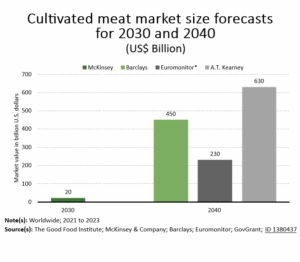
McKinsey projects a positive 2030 forecast for cultivated meat demand, while Barclays, Euromonitor, and A.T. Kearney see a much larger market for these products by 2040.

What does the consumer say?

Here is where it gets interesting.

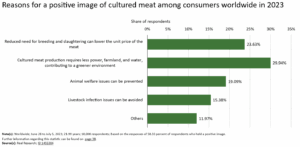
Statista carried out a global survey in 2023 asking consumers whether they were willing to try cultured meat. 62% said yes, 38% said no.

The 62% who were willing to try it have various environmental and animal welfare reasons.

However, Mintel’s report was a little less optimistic.

They noted that consumers were concerned about how cultivated meat fit into their country’s culture, especially in Europe.  About 45% of French and Spanish participants were concerned about traditions and culture. The rest were undecided.

The UK was a little more in line with the global survey of Statista where 63% of the younger generations were willing to try it.

Transcript: Why Isn’t Cultivated Meat on Our Dinner Plates?

Click Play to listen to our generated podcast. 
Click here to read the original post and click on this link to visit our full podcast library


Okay, so imagine this for a second. You’ve got a revolutionary technology, right? And something like $3 billion gets poured into it. And not only that, but the federal government gives it the absolute highest safety deal of approval, the whole green light.

So, you’d logically assume that product, whatever it is, would be on store shelves everywhere.

You absolutely would. We are talking, of course, about cultivated meat.

And back around what 2016, the excitement for this lab grown protein was, I mean, it was explosive.
Everyone was talking. And investors just put massive capital into it. All based on the idea that by 2025, we’d all be, you know, picking up chicken breasts or ground beef grown in a bioreactor. Here we are. It’s past that deadline.

And if you go look in your local grocery store, that cultivated chicken is nowhere to be found.  Conspicuously absent. It’s barely even present in the U.S. market…at all. 

And that absence is exactly why we’re doing this deep dive.

It’s just so fascinating. The journey from the lab bench to your dinner plate is just well, it’s stalled in this perplexing limbo.

And it’s not just a technology problem.

Not at all. It’s a collision of intense political blockades, surprisingly tricky financial hurdles, and yeah, that everpresent challenge of what consumers actually think.

Okay, let’s unpack this. Our mission today is to figure out what is stopping a technology that scientifically and federally has been given the go-ahead. We’re looking past the hype, way past it.

We want to analyze this bizarre contradiction between the political talk and the cold, hard investment facts we pulled from the sources.

And before we get into the politics, we really have to be crystal clear on what this stuff even is. Because that term lab grown, it’s been, let’s just say…it’s been weaponized on social media.

That’s a great place to start. And just to be clear for everyone, we are not talking about a plant-based substitute. That’s a whole different thing you can already buy.

Totally different. Cultivated meat is actual animal protein. It comes from animal cells. It has the exact same biological structure as the meat you’d buy from a butcher. And that’s the key point.

The process is kind of elegant in its simplicity. But it’s really complex to execute. It starts with a completely harmless biopsy from a high-quality animal or bird. So you’re just taking a few cells, just a few building blocks, and those cells are then put into these big vessels called bioreactors.

And I think for a lot of people, that’s where the image gets a little weird. Big steel tanks, right? But you should think of them more like the fermentation tanks used to make beer or yogurt. Just super clean, high-tech versions optimized for muscle cells.

So that leads to the question. What are you feeding these cells inside the tanks? What’s the ingredient list for my dinner?

Well, they need a very specific growth medium. It’s basically a nutrient-rich broth.

A cocktail of sorts.

Exactly. It has essential nutrients like amino acids, glucose for energy, vitamins, inorganic salts, and some specific protein growth factors. The whole goal is to get the cells to multiply and then turn into actual muscle fibers.

So, you’re basically mimicking what happens inside an animal’s body.

The recipe is designed to copy the metabolic processes that happen naturally.

So the goal, the end product is something that’s nutritionally identical or maybe even better than traditional meat because you can control every single input.

And that control is exactly why the federal government got on board.

Both the FDA and the USDA, right? The FDA handles safety. The USDA does labeling and inspection and they have both approved cultivated meat. Companies like Upside foods, they were the first to get that full federal green light for their chicken.

Legally, it’s meat. And its advocates will point to some huge benefits. They say it’s safer, more sustainable, less need for antibiotics, no e. coli scares, a much smaller environmental footprint.

But we can’t talk about safety without hitting on the biggest piece of misinformation the sources point out. The whole “turbo cancer” claim because the cells are supposedly immortal.

I’m glad you brought that up. That sounds absolutely terrifying. If you’re just scrolling on social media,
it does. So, let’s unpack that phrase, immortal cells. What does that actually mean scientifically?

So, this is a really crucial distinction. To start the process, scientists need cells that can divide over and over again. So they don’t have to keep doing biopsies on animals.

To do that, they use what are called immortalized cell lines. And yes, that functional ability dividing endlessly is something cancer cells also do.

So, that’s the connection people are making. What’s the difference then?

This is the aha moment. The difference is control and environment. Cancer cells divide uncontrollably inside a living body, ignoring all the signals to stop. These cells are dividing outside a body in a sterile, precisely controlled bioreactor to build a specific product. And more importantly, by the time that meat is harvested and cooked, the cells are dead.

Completely dead. And even if by some miracle one survived the cooking process, the sources are definitive: stomach acid would destroy it instantly. You cannot get cancer from eating a cell. Federally, from a science perspective, the safety question is settled.

Okay, here’s where it gets really interesting. Because despite that clear green light from the FDA and the USDA, the political ground is just well, it’s completely shifting. We’re seeing this wild regulatory split across the country.

We’ve gone from a science hurdle to a political one. Right now, you have several states moving to outright ban uncultured meat for human consumption.

And this isn’t a debate about safety anymore.

No, not at all. It’s explicitly about protecting local economies and you could say cultural identity. The stated motivation is to protect local farmers and ranchers. And the sources have some really pointed quotes on this.

Oh, the rhetoric is very high profile. We saw that quote from Florida Governor, Ron DeSantis. He framed his state’s ban as fighting back against, and I’m quoting here, the global elites’ plan to force the world to eat meat grown in a petri dish. He made it really clear the focus was on protecting traditional agriculture, specifically to save our beef.

So that language, it really elevates this whole thing. It’s not about cell division anymore. It’s about a culture war. It frames this innovation as a threat to like a way of life.

And when the rhetoric is that charged, the science just doesn’t seem to matter as much to the voters or lawmakers in those states. The focus is on cultural resistance, not safety data, which leads to this immediate and frankly absurd result that the sources highlight.

It’s a logistical and legal nightmare for anyone trying to scale this. It really is the core barrier right now.

Okay, let’s make this concrete for everyone. Give us an example of this logistical nightmare.

All right, think about it from a supply chain perspective. Right now, it is perfectly legal to serve that FDA and USDA approved cultivated chicken in a fancy restaurant in San Francisco.

Okay, it’s passed every federal test. But now imagine a distribution company tries to ship a pallet of that exact same approved chicken across state lines and they try to deliver it to a restaurant in say Miami, Florida. A state where a ban has been enacted, that distributor or the restaurant that serves it could face huge fines or other penalties in Miami.

Even though the product itself is federally legal and recognized as safe, that’s the contradiction. The barrier isn’t a lack of bioreactors. It’s the regulatory risk of just moving your product across an internal market that’s just riddled with these legal holes.

So, how do you plan for anything? Labeling, storage, financing, and distribution network when half your potential market is legally closed off?

You can’t, or not easily. It adds incredible complexity, cost, and legal exposure. This friction alone is a massive anchor holding back commercialization, way more than the science or even the cost. Which leads us right into the market paradox, because you have this intense political fight to ban it. But when you look at the actual numbers, the traditional meat industry isn’t exactly shaking in its boots right now.

Cultivated meat is an infinitesimal player. I mean, we’re talking 0.002% of the global protein market cap. And if you look at actual sales, it’s even smaller.00003%. It’s a rounding error.

So given that, why is so much political capital being spent on these bands? What are they really afraid of? What’s the future they’re looking at?

They’re looking at the global horizon and that’s all about demographics. The demand for protein is not going to stay flat. It’s only going up.

By 2034, the global population is projected to grow by another 600 million people. That pushes the world total past 8.8 billion. And that kind of growth guarantees a massive increase in the demand for food.

Global protein needs are projected to climb from about 351 million metric tons this year to over 406 million by 2034. And traditional methods are already under pressure. Land use, water, climate change.

Exactly. They might struggle to bridge that gap sustainably.

And this brings us to what I think is the most shocking part of this whole deep dive.

The surprising alliances.

Yes. You’d think the world’s biggest meat companies would be funding the opposition, but the sources show they are heavily invested in the very technology their political allies are trying to kill. It’s like the big energy giants, like Chevron, Shell, and BP, who are now pouring money into wind and solar.

JBS, the world’s largest meat processor. They didn’t just invest. They bought a majority stake in a Spanish cultivated meat company called Biotech Foods.

That’s basically vertical integration for the future.

And Cargill is too. They’re invested in Aleph Farms, which is focused on making complex things like actual beef steaks. They’re trying to integrate this into their massive existing supply chains. But it’s not a guaranteed financial win just yet.

There are still major technical hurdles, right? We saw that with Believer Meats recently.

That’s right. A really high-profile cautionary tale. Believer Meats, an Israeli company backed by Tyson Foods, recently had to file for bankruptcy and they were close to getting full FDA approval.

And their setback really highlights that immense cost challenge. The money isn’t just for building the labs. It’s for optimizing that growth medium, the nutrient broth. That’s the really expensive part.

So the biggest financial hurdle, it’s the sheer operational cost of feeding billions of cells efficiently and at scale.

Precisely. that capital required for massive bioreactor operations is still a huge limiting factor. It just shows there’s still inherent financial risk even with a big name like Tyson backing you.

So in the end, the final decision isn’t with the investors or the state legislators. It comes down to the person holding the fork. What does the consumer actually think about all this?

Well, a 2023 Statista survey on global willingness looks pretty positive actually. 62% of people said they were willing to try cultivated meat, mostly driven by environmental and animal welfare concerns.
But the sources also show this deep cultural fault line, especially in Europe. I mean, how do you even begin to penetrate markets where food is basically sacred?

That is a real challenge. Mintel found that about 45% of French and Spanish participants were seriously concerned about how this would fit into their country’s food traditions. Food history is a powerful thing.
It’s a much harder barrier to overcome than just a high price.

It is, though it’s not a uniform feeling. The UK showed much higher willingness especially among younger people. About 63% there said they’d try it. So you see this generational and cultural split happening. So what does this all mean?

It means cultivated meat is just stuck. It’s caught in this extraordinary political and economic tension. The science is proven. The major global food companies are investing in it because they know we need to scale protein production for the future. But that technological momentum is getting kneecapped completely. It’s getting stopped by state level political fights that are all about protecting the agricultural status quo and by some really powerful cultural rhetoric is forcing companies to spend money on lawyers instead of production.

I think the key takeaway here is just how strange the whole situation is. But the immediate pushback isn’t coming from the market. It’s coming from a political desire to maintain this traditional power structure in agriculture. It’s a battle being fought in state houses, not in labs.

It leads to a pretty interesting final thought that the sources bring up. If the biggest players like JBS and Cargill are betting on this, maybe the biggest disruption won’t be to agriculture, but within it.

What do you mean?

Well, who knows? Maybe someday traditional ranchers will just have a bioreactor facility right there on their ranch.

So, they’d be controlling multiple protein streams themselves.

Why not? So, will cultivated meat be on your grill by next summer? Maybe. But the path to get there is going to be way more about navigating laws and culture than it is about dividing cells.

We want to know what you think. Does the federal safety approval sway you or do the cultural concerns give you pause? Scroll down to the bottom of this post and let us know your thoughts.