Inspiring Stories
FFA Spotlight: Cultivating Demand for Specialty Crops
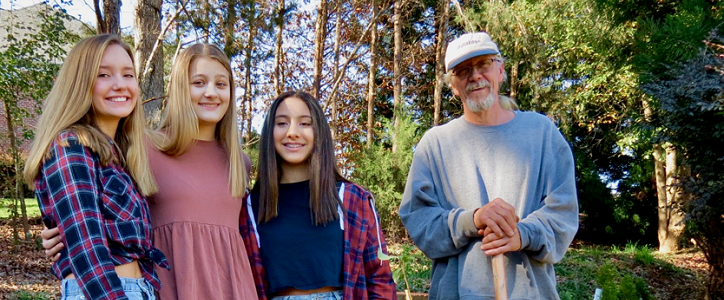
FFA's Gunner Claybrook is part of a new generation of specialty agriculturists helping diversify America’s food system.
Home > Inspiring Stories
Helping global food producers tell their stories by showcasing various types of farmers, ranchers, processors, and other industry professionals
Filter by:
Reset all filters
Sort by:
Results
Ethan, member of Wisconsin's FFA chapter, has worked in a meat processing facility since he was 15. The skills he learned on the job helped him to become a national proficiency winner. Let's hear what he has to say about his experience thus far!
Sit down with a glass of wine and listen to Lucy's conversation with Cynthia and Lauren, a mother-daughter team that purchased land to start their own vineyard.
Listen in as we talk with Brennan about his involvement in the Future Farmers of America program and his award-winning research on plant and soil sciences.
Steve McMenamin, manager of Versailles Farms in Connecticut, operates at the forefront of regenerative agriculture. His farm's mission? To grow food for the community with an emphasis on nutrient density, flavor, and good digestion.
The Nature Conservancy's Global Regenerative Food Systems Director, Saswati Bora, provides a new way of thinking about solving humanitarian, climate and biodiversity crises with the introduction of Foodscapes.
This Digging In episode explores finding a sustainable way to provide all the food we need and while protecting our environment. Listen in as Newtrient's founders provide an upbeat overview of the ag world’s efforts to combat climate change.
Supporting ag's future is paramount to feeding a growing population. This requires advancements from our farmers and scientists. FFA's Kayla Rossi contributes to this endeavor with her family's responsibly managed livestock operation.
Will Lorentzen and Adrian White of Jupiter Ridge Farm detail their experience with regeneratively-grown farming practices in Iowa. Their long-term objectives can shape our understanding of what regenerative ag really looks like.
In partnership with the Future Farmers of America, we will be highlighting a series of finalists from 2020 and 2021 to share their stories and passions. Today, read about Nicholas Mello of California and his hybrid corn seed experimentation.
Mark Toigo had to pivot his multi-generational farm when low-cost tomatoes flooded the organic market. Converting his tomato crops to cannabis saved his struggling farm, and perhaps a few lives along the way...
This article was written by Keith Mears, who farms with his family near Delphi, Indiana, and is a Conservation Steward with America’s Conservation Ag Movement.
To an expanding array of people from the inner city to suburbia and beyond, the ideas behind the regenerative ag movement are changing our thinking about the role we play in sustaining our food system...and the health of our environment.
Farmers like Bob Foster of Foster Brothers Farms in Vermont, increase their soil's health by implementing cover crops and no-till farming into their cultivation practices. But these strategies go on to improve global health, too...
Future Farmers of America member, Tyler Gardner, is one hard-working college student. His work at his family’s cranberry marsh has evolved his mission to produce healthy and sustainable food for generations to come.
Dave and Holly Albert, owners of Misty Mountain Farms, raise cattle for their local Pennsylvanian market. Their operation runs on a strong value system, adherence to conservation, continued profitability, and consumer relationships.
FarmLink, a student-run organization connecting food banks to food producers, is stepping in to manage food waste spawning from COVID to provide fresh food to those who need it most.
These women farmers in Africa not only challenge the status quo, but have dramatically improved their local economies...and beyond.
Farmers, ranchers, and the industry at large depend on an immigrant workforce to help with food production every year. But how can we continue to fortify an agricultural workforce while protecting farmers at the border?
We have a bunch of questions about changes in product demand, managing supplier channels, and maintaining employee safety during this fragile time. So we turned to a local Midwest grocer for their insights...
Nyasha Mudukuti of Cornell's Alliance for Science reveals the challenges facing her family's farm in Zimbabwe, and how her plight to save African smallholder farms hangs on educating farmers about ag biotechnology.
As we celebrate International Women's Day this week, we would like to introduce FFA member, Emily Matzke. Emily is developing a business plan to tie her love of ag and local food products together to create a unique dairy product!
Michael Doane of The Nature Conservancy returns to Kenya to witness the Northern Rangelands Trust program's success in restoring wildlife while preparing tribal pastoralists and their cattle for a fruitful livelihood.
Lauren LaGrande, an exemplary member of Future Farmers of America, is on a mission to educate future generations about something that connects all of us – where our food comes from. Here is her story from her point of view...
Tillage in croplands is one of the primary drivers of land degradation, but it doesn’t need to be. Join The Nature Conservancy's Michael Doane as he experiences zero-tillage cropping systems with farmers in India, and beyond.
Our morning brew is so much more than just another beverage! Each cup connects us with farmers in the rainforests and mountains, highlighting the importance of sustainable farming. To bring our cup of joe to life, we introduce sustainability-rated Colombian coffee producer, Finca El Ocaso.
Our agricultural extension services program is designed to teach people not just how to farm productively, but how we all can benefit, from gardening to food safety practices. And just in time for a few tips before Thanksgiving!
On the contrary. In fact, here's a different way to spell the word green: GE – Genetic Engineering. GE technology includes genetically modified organisms, which some critics claim harm the environment. But in reality, GMOs help farmers use pesticides responsibly, conserve water and increase soil health while increasing their crop yield.
We’ve heard of animal-based, plant-based and cell-based proteins, but how about air-based proteins? Solar Foods is reversing carbon emissions by pioneering a protein with carbon dioxide and renewable electricity, a feat with potential to address sustainability and world hunger. But how feasible is this protein?
Katherine Smith, a Future Farmers of America member, strives to help smallholder farmers achieve profitability through financial stability and process improvement, and her mission is to make that happen. Here's her story...
Fair Oaks Farms has come under scrutiny for inhumane treatment to its calves. Find out how the farm's CEO has taken responsibility to better the operations of the farm, as well as the industry as a whole.
This is the story of the agricultural advocate, Michelle Miller, or better known as "The Farm Babe". D2D learns first-hand about Michelle's journey from the big city to a rural farm in Iowa, and how it completely changed her views on our food system.
Every day, consumers are unwittingly caught in a catch-22. Palm oil, an ingredient in many of the foods we eat and products we use daily, has a reputation for deforestation and habitat destruction. But there is a solution: growing it sustainably.
The ongoing flooding in Nebraska and Iowa has pushed many over the edge, making the next harvest an impossibility for some. Many have lost their homes, their farms, and their livelihood. Here is how you can help.
Hungry citizens, lost jobs, violence, and a mass exodus of millions. It’s the story of a society melting down before our very eyes. How are Venezuelans managing to eat?
As consumers crave locally grown fruits, vegetables, eggs, and meat, local farms answer the call. But maintaining a farm and being profitable is a challenge. D2D visits with 4th generation Hindinger Farm in Hamden, Connecticut.
HAPPY VALENTINE'S DAY! As you enjoy sweet chocolate confections today, consider this – the cacao tree is under threat from deforestation, pests and diseases, and climate change. Can it be saved by scientific intervention? Ethos Chocolate has come up with a clever promotion to help consumers embrace the possibility.
Consumers love buying locally grown produce. But these days, it seems consumers are also dictating how farmers should grow their crops. This is influencing how farmers do their job and keeps them from using beneficial farming technologies that can provide healthy food, be kind to the environment, and help them make a living.
When was the last time you sat down and looked at your salad and wondered where the produce came from or how it was grown? Did you know that 80% of the leafy greens and berries grown in the U.S. during the spring, summer, and fall come from the same region? Join D2D as we explore the farms of Salinas Valley, CA!
Sign up for weekly Ag & Food news!
with Transcript: The Curious Comeback Of Beef Tallow