What is the Lymphatic System?

Click Play to listen to our generated podcast. Access our full podcast library here


Right now, social media is flooded with claims that lymphatic drainage is the missing link behind bloating, fatigue, and stubborn weight. Scroll long enough, and you will see wooden brushes, detox drinks, and elaborate routines promising to wake up a stalled system. The narrative is simple and seductive: if you feel puffy or tired, your lymph must be blocked, and the solution is something you can rub, sip, or massage your way into fixing.

But here’s the reality social media leaves out: the lymphatic system isn’t a drain that gets clogged like a kitchen sink. It’s a living transportation network that flushes excess fluid, waste and toxins out of your body. It houses white blood cells that attack bacteria and viruses. Finally, it absorbs fats and fat-soluble vitamins from your digestive system and delivers them to your cells.  How well this transportation system works depends on what’s on your plate.

Foods that cause inflammation clog the lymphatic system, making you feel bloated, sluggish, and have brain fog and stiff joints. A strained lymph system is responding to the metabolic environment created by modern diets high in sodium, refined carbohydrates, and often low in fiber and balanced fats. Supporting this system is about foundational eating patterns that we already know support long-term health.

Lymph System: A Fluid Exchange Network

If your bloodstream is the interstate highway system powered by your heart, the lymphatic system is the network of service roads and shipping ports running alongside it. It moves more slowly. It relies on muscle movement, breathing, and pressure changes instead of a central pump. And instead of transporting oxygen-like blood does, lymph carries fluid, immune signals, and dietary fats.
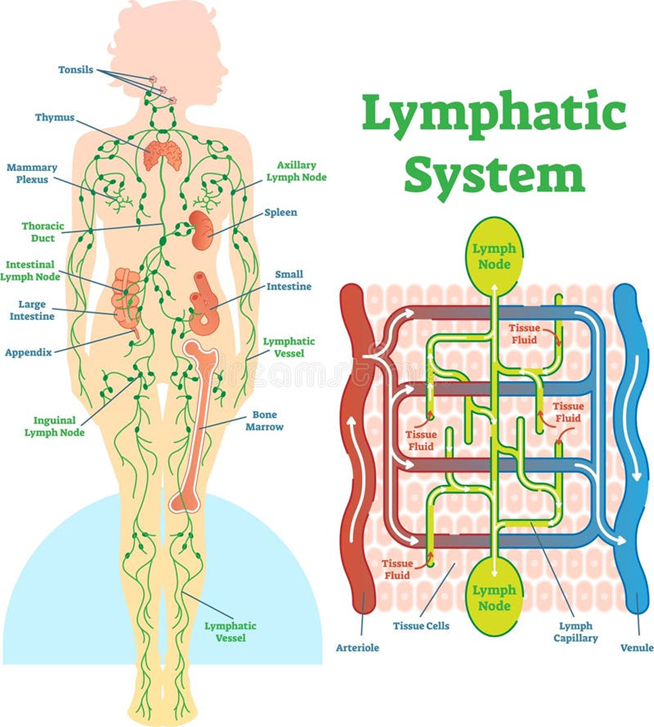
Fluid naturally moves out of tiny blood vessels and into surrounding tissues to transport oxygen, nutrients, and signaling molecules to reach cells. Scientists call this process filtration, and it happens constantly as part of healthy circulation.

Most of that fluid is reabsorbed back into the bloodstream, and the rest is collected by lymphatic vessels, which act like one-way drainage channels that catch and regulate how certain nutrients and fats are absorbed.

Without this system working in tandem, swelling would be constant, not because something is wrong, but because fluid movement is a normal part of life and needs to be regulated.

What changes with inflammation, metabolic stress, or certain diseases is how much fluid leaves the vessels and how efficiently the lymphatic system returns it. In healthy physiology, this balance is tightly regulated and usually invisible.

But, when inflammation rises or metabolism becomes dysregulated, muscle contractions weaken, and flow becomes less efficient. That is when people start noticing heaviness or puffiness. Not because their body needs a detox but because the environment inside the body has changed. So what can we do to fortify our lymph system?

The Moment Food Meets the Lymphatic System

Here is the part most people never hear: nearly all long-chain dietary fats take a detour through the lymphatic system before entering the bloodstream. Why the detour? Because fat is dense energy. Sending it directly into circulation all at once would overwhelm the system. Routing it through lymph allows the body to release fat more gradually while immune and metabolic signals adjust along the way. In other words, the lymphatic system is not separate from diet, it is part of digestion itself.

Every meal that contains fat activates the lymphatic system’s transport network.

Other nutrients play a role in a healthy lymphatic system, as well.  Fiber intake influences the inflammatory signals that determine how efficiently lymph vessels contract. Protein levels affect albumin, a blood protein that helps keep fluid where it belongs instead of leaking into tissues. Even fat-soluble vitamins A, D, E, and K rely on lymphatic transport to move through the body: vitamin A helps regulate immune responses, vitamin D supports immune signaling, vitamin E protects tissues from oxidative stress, and vitamin K contributes to vascular health.

When Diet Changes Lymph Flow

One of the clearest connections between food and lymphatic health comes from obesity research. Scientists have found that excess body fat alters how lymphatic vessels function. They pump less efficiently and become more prone to leakage, allowing fluid and inflammatory molecules to spill into surrounding tissues.

Think of it like a delivery truck with worn tires. It still moves, but not as smoothly, and sometimes cargo slips out along the way. Why does leakage matter? Because fluid that lingers where it should not can show up as swelling, heaviness, or that persistent “puffy” feeling many people blame on hydration alone. Often, it reflects inflammation changing how lymphatic vessels behave. And inflammation is deeply influenced by what we eat.

An inflammatory dietary pattern, one high in refined carbohydrates, excess sodium, added sugars, and heavily processed fats, shifts immune signals in ways that stress lymphatic vessels. Over time, chronic metabolic strain weakens the rhythmic contractions that keep lymph moving. The opposite is also true. Dietary patterns that support metabolic stability tend to support lymphatic function as well.

Research Points to Everyday Foods, Not Detox Fixes

Studies examining inflammation, metabolism, and lymphatic vessel function consistently point to familiar dietary patterns, the same ones linked to long-term cardiometabolic health. In other words, supporting the lymphatic system looks remarkably similar to balanced eating patterns most nutrition guidelines already recommend.
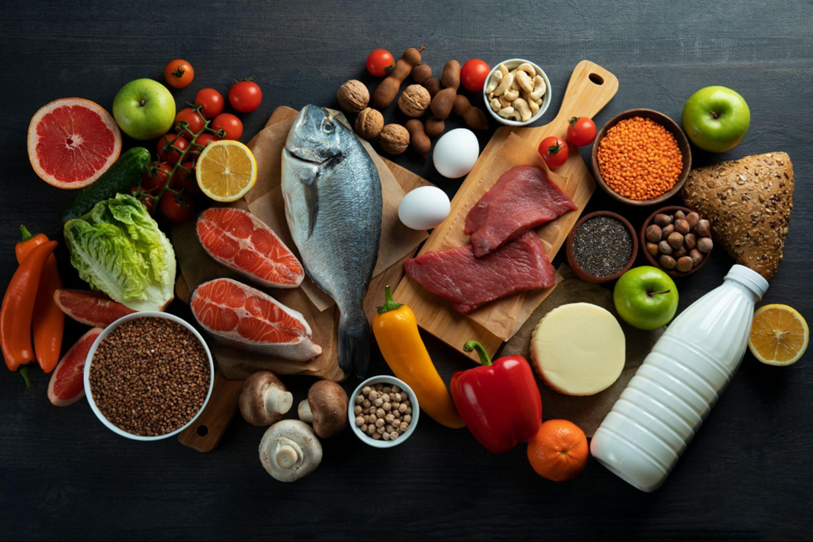
Let’s dive into the specific nutrients that science tells us supports a healthy lymph system.

Water

If you are dehydrated your lymph becomes thick and sluggish. Drink at least half, if not more, of your body weight in ounces. This is especially important in the morning. Add a bit of sea salt or fresh lemon, or electrolytes to conduct the electrical signals that move fluid into your cells which will hydrate your lymph much faster than plain tap water.  But how much water you need depends on your environment, your exercise, and your overall lifestyle.

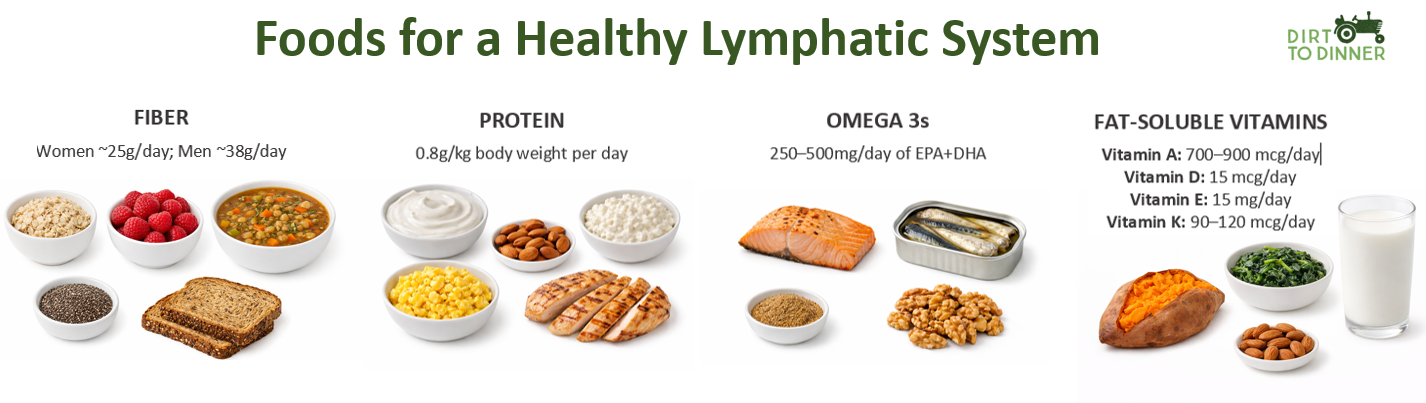
Fiber

Research consistently links higher fiber intake with lower systemic inflammation and improved metabolic signaling — two factors that influence how efficiently lymphatic vessels contract and move fluid. Yet fewer than 10 percent of Americans reach recommended fiber levels.

Recommended intake:

  • Women: about 25 grams per day
  • Men: about 38 grams per day
    (roughly 14 grams per 1,000 calories)

What that looks like on a plate:

  • ½ cup cooked oats: ~4 g fiber
  • 1 cup raspberries: ~8 g
  • 1 cup lentil soup: ~10–12 g
  • 1 tablespoon chia seeds: ~5 g
  • 2 slices whole-grain bread: ~6–8 g

A breakfast of oatmeal with berries and chia seeds can provide nearly half a day’s fiber needs, while a lentil-based lunch or bean-forward dinner helps close the gap. The research does not suggest fiber directly “moves lymph,” but it does show that lower inflammatory stress creates a healthier environment for lymphatic function.

Protein

Clinical nutrition research highlights protein’s role in maintaining albumin, a blood protein that helps keep fluid inside blood vessels. When albumin levels drop, whether from inadequate intake or illness, fluid shifts into tissues, increasing the workload placed on lymphatic circulation.

Recommended intake:

  • At least 0.8 grams per kilogram of body weight per day as a baseline
  • Needs often increase during growth, pregnancy, aging, or higher activity levels

What that might look like across a day:

  • ¾ cup plain Greek yogurt at breakfast: ~17 g protein
  • 3–4 ounces grilled chicken or salmon at lunch: ~25–30 g
  • 1 cup cooked lentils or 2 eggs at dinner: ~18–20 g
  • A handful of almonds or cottage cheese as a snack: ~6–12 g

Research suggests that spreading protein across meals may support metabolic stability more effectively than consuming most of it in one sitting.

Omega-3 Fatty Acids 

Studies examining inflammation and vascular health show that omega-3 fatty acids help regulate immune signaling and support vessel integrity — including the delicate structure of lymphatic vessels. They do not directly “speed up” lymph flow, but they appear to improve the environment those vessels operate in.

General intake guidance:

  • About 250–500 mg per day of EPA + DHA

What that looks like in real foods:

  • 3 ounces cooked salmon: ~1,000–1,500 mg EPA+DHA
  • 1 small tin sardines: ~1,000 mg
  • 1 tablespoon ground flaxseed: ~1.5 g ALA (plant omega-3 precursor)
  • A small handful of walnuts: ~2.5 g ALA

Research suggests eating fatty fish twice per week can easily meet average omega-3 needs, while plant sources add additional support.

Fat-Soluble Vitamins (A, D, E, and K)

One of the most direct links between diet and lymphatic function involves fat-soluble vitamins. These nutrients actually travel through the lymphatic system alongside dietary fat, highlighting how closely digestion and lymph transport are connected.

General intake guidance:

  • Vitamin A: about 700–900 mcg RAE/day
  • Vitamin D: about 600 IU (15 mcg)/day
  • Vitamin E: about 15 mg/day
  • Vitamin K: about 90–120 mcg/day

What that might look like in a typical day:

  • 1 medium baked sweet potato: over 100% of daily vitamin A needs
  • 1 cup sautéed spinach with olive oil: high in vitamins K and E
  • 1 ounce almonds: ~7 mg vitamin E (nearly half the daily target)
  • 2 eggs or a serving of fortified milk: meaningful vitamin D contribution

Research shows that pairing vegetables with a small amount of fat, like olive oil on greens or nuts in a salad, improves absorption because these vitamins enter circulation through lymphatic transport pathways.
Is Your Lymphatic System Working?

Of course, after this research, I now need to know if my lymph system is functioning properly, but there is no routine blood test that tells you your lymph is “flowing well,” which is why online advice can feel confusing.

Clinicians look for persistent swelling, heaviness, skin thickening, or recurrent infections as signals that further evaluation may be needed. Advanced imaging techniques can visualize lymph movement directly when necessary.

Temporary puffiness after travel or a salty meal, however, is usually normal physiology not dysfunction. Healthy lymphatic function is mostly invisible. Pay attention to your diet to know if you are supporting your lymph or hindering it from its critical functions.

If wellness culture portrays the lymphatic system as a stagnant drain that needs constant detoxing, the science tells a very different story. The lymphatic network is a living transportation system — one that balances fluid, coordinates immunity, and carries the fats and vitamins you eat every day.

The strongest support for lymphatic health comes not from trending rituals but from metabolic stability: fiber-rich foods, adequate protein, balanced fats, and dietary patterns that reduce chronic inflammation.


From Florida Fields to Custom Cuts

At just 17, Gabe Mitchell is building a vertically integrated beef business, raising cattle from birth to butcher, and selling safe, USDA-inspected custom beef directly to families in his community.

His story is a masterclass in resilience, stewardship, and agricultural grit.

“I was lucky to be born into the agriculture industry,” Gabe tells us. Raised on his family’s Trenton, Florida cattle farm, agriculture wasn’t just a job—it was a way of life.

His earliest memories are of feeding hay, checking water troughs, and helping with fence repairs alongside his parents, both multigenerational farmers themselves.

But his interest didn’t stop at tradition. Over time, Gabe found his own rhythm in the industry. “I can’t imagine not having cattle,” he says. “It’s just part of who I am.”

From County Fair to Custom Beef Sales

Gabe’s FFA supervised agricultural experience (SAE) began in 2017 with daily chores and gradually evolved into a full-fledged business.

What started as a local show steer project at the county fair has since morphed into a custom beef enterprise—offering USDA-inspected, traceable beef directly to Florida families who want to know where their food comes from.

“The turning point came when I realized buyers at the fair couldn’t actually take home the meat from the steers they supported,” Gabe recalls. “Once the fair allowed us to buy back our own animals, I saw a real opportunity. I started feeding out steers from my herd specifically for custom beef.”

As a young entrepreneur, one of Gabe’s biggest challenges was earning credibility.

“I had to prove to experienced ranchers that my bulls and heifers had solid genetics and longevity,” he explains. “At first, I was nervous talking to buyers. But after a few years and some strong production records, I gained their trust.”

He also faced the usual hurdles of weather, feed costs, and market unpredictability—but leaned on what he calls his “SAE mindset” to adapt and stay focused.

Once Gabe found his footing, word of mouth spread fast. Within a year, he no longer struggled to find buyers. Today, Gabe manages every step—from breeding and artificial insemination to feed, health, and final USDA harvest.

Safe, Wholesome Beef, from Start to Finish

One of Gabe’s greatest assets? His meticulous attention to detail.

“I’ve learned how critical recordkeeping is in evaluating animals for breeding readiness,” he explains. “You have to track ages, maturity rates, and structural soundness—especially if you want bulls to last in the field and keep your calving window tight.”

He’s also adopted cutting-edge tools like Expected Progeny Differences to track and improve herd genetics. He regularly uses artificial insemination with sexed semen to strategically increase the number of bull calves he can raise for beef sales.

In a market saturated with labels and claims, Gabe knows trust is everything.

“I make sure my customers are confident in the beef I raise,” he says. Gabe is Beef Quality Assurance (BQA) certified and has renewed the training multiple times to stay current. “It covers everything from administering vaccines correctly to biosecurity protocols.”

When asked what a typical day looks like, Gabe laughs: “There isn’t one.”

His calendar revolves around the rhythm of the seasons:
  • Fall: Calving season begins; newborns are tagged and tracked.
  • Winter: Hay and molasses supplement feed; cows are prepped for breeding.
  • Spring: Vaccinations, fly control, and weaning; some calves begin creep-feeding.
  • Summer: Hay baling, equipment maintenance, and prepping the next herd for market.

But no matter the season, his steers are fed twice daily and closely monitored for health, feed efficiency, and weight gain. All steers are finished on-farm and processed under full USDA inspection, ensuring both safety and traceability.

Family, Mentorship, and the Next Generation

Behind Gabe’s success stands a strong network of mentors—starting with his parents.

“They gave me land, equipment, and access to transportation before I could even drive,” he says. “I worked for it, but I never would’ve had the opportunity without them.”

Gabe also credits his FFA advisors. His middle school advisor, Mrs. Rucker, “made FFA fun,” while his high school advisor—his mom—encouraged him to pursue awards, team competitions, and officer roles that built his confidence and sharpened his business skills.

“Do something you love or are interested in. Don’t be afraid to make mistakes, to ask for help, or to change your SAE. You’ll grow along the way—but the support of your family or ag teacher is key.”

A Welded Future: From Cattle to Custom Fabrication

Gabe’s hands-on experience has sparked another entrepreneurial passion: welding and fabrication. He’s currently working full-time with Lee Mechanical to hone his craft and plans to enroll in a technical college this spring to earn welding certifications and a CDL license.

“My goal is to open my own welding and fabrication business,” he says, “especially focused on designing livestock equipment for local farms.”

But his ties to beef production aren’t going anywhere. “I’ll always keep a small herd and continue raising custom beef.”

Gabe Mitchell is more than a rancher—he’s a rising force in American agriculture. By blending old-school work ethic with modern business savvy, Gabe is proving that the future of food is local, transparent, and proudly youth-led. Whether he’s raising a steer or welding a custom cattle chute, he’s helping build a food system rooted in trust, skill, and stewardship.

And for Florida families who want beef with a story behind it—he’s got them covered.

Stalled Trade Deal Threatens U.S. Food System Gains

Click Play to listen to our generated podcast. Access our full podcast library here.


As the old saying goes, one hand washes the other.

That familiar bromide might be the best starting point in trying to understand what’s going on with the trade talks between the United States and the European Union. Trade between two of the largest and most significant economic entities in the world added up to 1.5 trillion euros in 2024. That is one-third of all global trade, worth about 43 percent of global domestic product.

Trade Deal Brings Everyone to the Table

This dynamic represents the largest bilateral trade and investment relationship on the planet – and a critical pillar of both entities overall economic health. The United States is the EU’s top export market and trails only China as its largest import source.

The trade and investment relationship is far from some kind of abstract, egg-head issue. Virtually every segment of our economy has a stake in that bilateral trade – including the full spectrum of American food and agricultural system.

Whether we recognize it or not, consumers depend on healthy trade as a cornerstone of our abundance and diversity of food.

Trade also provides the markets that keep the American farmer and rancher alive, thriving and capable of meeting ever-expanding consumer food needs.  In simple terms, healthy trade equals greater overall food security.

Trade Imbalance Sources

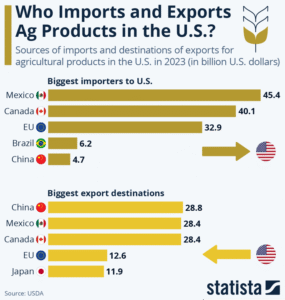
The EU is the third-largest agricultural exporter to the U.S., averaging $32.9 billion in sales annually over the past five years. Meanwhile, the U.S. exported about $13 billion in agricultural products to the EU in 2024.

The crux of the trade negotiations: the U.S imports nearly three times more agricultural products from Europe than Europe imports from the U.S.

The EU boasts a trade surplus of about $185 billion in goods but posts a trade deficit of $129 billion in services. The European Commission cites its own figures that place the EU’s advantage in the trade relationship at $57 billion in 2023, or roughly 3 percent of the overall value of bilateral trade.

From the U.S. perspective, as expressed by President Donald Trump, the “big idea” behind the trade initiative is to bring better balance to the overall trade relationship.  The U.S. deficit in agricultural trade was among the most commonly cited targets for U.S. negotiators.

The top five U.S. agricultural exports to the EU by value are soybeans, almonds, pistachios, whiskies, and food preparation products, totalling $521 million. The U.S. imports European wine, cheese, olive oil, pasta, chocolate, and spirits at a much larger clip.

Think of it this way: the wine aisle at your local grocery store tells much of the story. Those bottles of French Bordeaux, Italian Chianti, and Spanish Rioja flow freely into the U.S. market, while American pork, beef, and dairy face significant barriers getting into Europe.

U.S.-EU TRADE FACTS & FIGURES

  • Trade in agricultural and ag-related products between the U.S. and the EU reached $44 billion in 2023, making the EU the fourth largest export market for U.S. agriculture.
  • Soybeans top the list of U.S. products exported to the EU, worth roughly $2.6 billion.  The American Soybean Association notes that the EU is our second largest soybean export market, taking about 11 percent of our shipments abroad. (China remains the runaway top market, taking 54 percent.)
  • Other top exports to the EU include nuts, whiskies and food preparations.
  • Overall, the United States runs an agricultural trade deficit with the EU. The International Trade Administration placed the 2022 deficit at $17.6 billion — and notes that it has been in deficit for “more than 20 years.”

For greater insights into the numbers for U.S.-EU trade and the details of the trade agreement framework, click on these links from the European American Chamber of Commerce, U.S. International Trade Administration, European Council, USDA’s Economic Research Service, and U.S. Congress Tariffs & Trade Framework Agreement

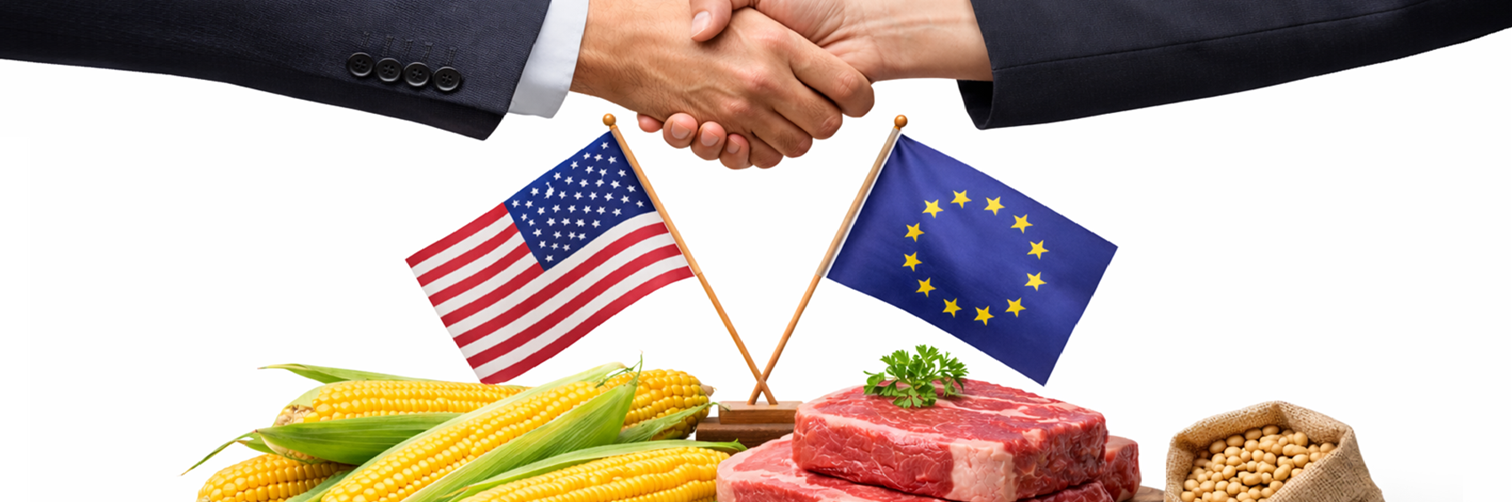
So when the United States and the European Union last summer announced significant progress on a major trade agreement designed to spur future growth in the relationship, people paid attention. The proposed pact is a massive piece of negotiating achievement, with huge potential gains for both sides in the deal – but especially for the United States.

Defining Framework Components

The “framework” for The Cooperation Agreement on Reciprocal, Fair and Balanced Trade announced on July 27, 2025, promises to expand market access in the EU for U.S. goods and services.

Here is where they ended up:

  1. 15% tariff ceiling on EU goods entering the U.S.
  2. Industries exempt include airplane and airplane parts; pharmaceuticals and ingredients; semiconductors; and critical natural resources
  3. Steel and aluminum have a 50% tariff, but still being negotiated
  4. EU auto exports to the US will be 15%
  5. EU will eliminate or reduce tariffs on many US industrial goods; it will also suspend retaliatory tariffs for six months
  6. EU will purchase $600b in American energy and defense products; aircraft and aircraft parts

While many EU political leaders have voiced concerns about an increased cost of doing business with the United States, the majority have preferred to view the potential agreement as a sign of increasing stability and predictability in overall bilateral relations.

The framework announcement clearly represents a first step in a much larger process of trade liberalization. Lofty ambitions and imprecise goals don’t make up hard agreements. But optimists on both sides of the Atlantic rushed to sing the praises of an historic first step in achieving a more normal relationship between the U.S. and the EU.

What The U.S. Farmer Stands to Gain

Predictably, political figures weren’t the only ones using optimistic language. U.S agricultural interests have been at the forefront of that expression of hope.

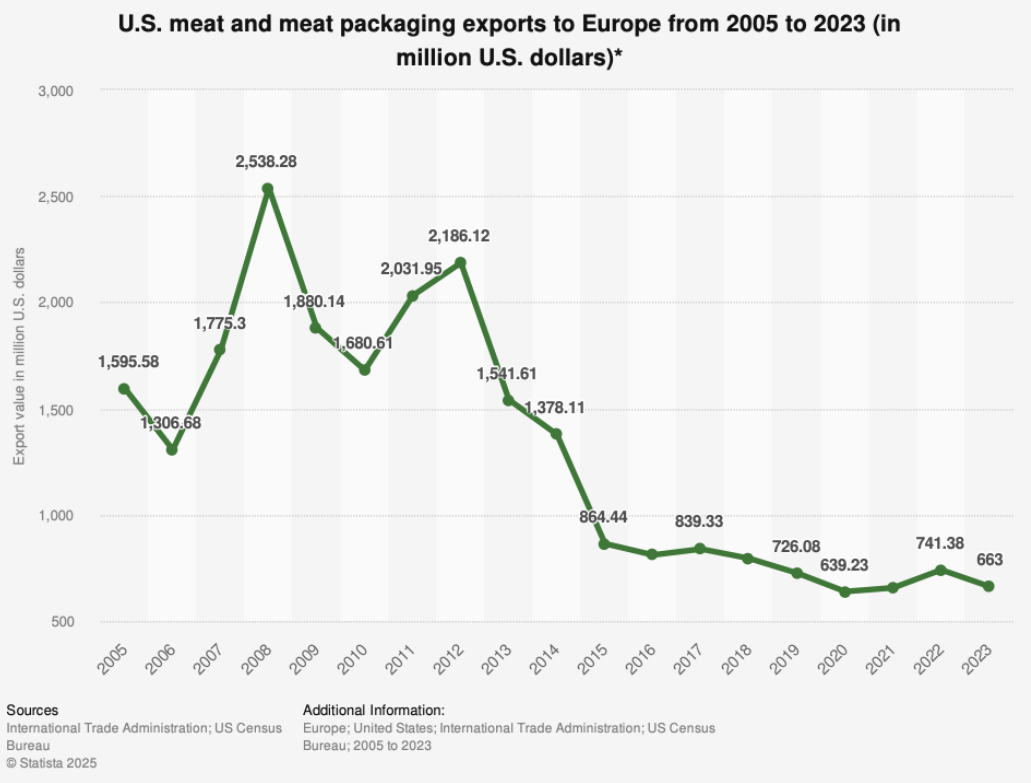
Meat and meat packaging exports from the United States to Europe peaked in 2008 at about $2.8 billion.

But increasing restrictions on use of antibiotics and growth hormones, coupled with increasingly stringent animal welfare standards across Europe have fueled a steady decline in U.S. meat sales into the EU.

U.S. Meat Export Federation’s president and CEO Dan Halstrom explained what’s at stake for his members.

Existing EU barriers have made the United States a net importer of EU meat, he noted.  U.S. beef exports reached about $245 million in 2024, with imports of EU red meat (notably pork) came in at just under $700 million. “Addressing the EU’s tariff and nontariff barriers is essential to enabling U.S. export growth.”

Halstrom’s comments underplay the potential for gain in the U.S. share of EU imported beef. 

New EU regulations set strict standards and limits on imports from countries that  practice deforestation. Brazil provides about one-quarter of EU beef imports. Combined with other South American providers such as Argentina and Uruguay, the EU imports over half its beef from this area.

EU purchases of U.S. energy – including ethanol – would total $750 billion by 2028, with an additional $600 billion of EU investment in the United States. Such talk helped create optimism for a further expansion of demand for corn and other source material for the renewable fuel industry.  The Renewable Fuels Association (RFA) points out that the EU has been a major market in recent years, ranking third with 197 million gallons imported last year and up 54% over 2023.

The National Corn Growers Association echoed the importance of any sign of an increase in corn demand.  With a record corn crop just announced and surplus stocks of corn growing, corn farmers have a huge stake in any agreement that could boost corn demand.

“Corn growers are already marketing their corn for extremely low corn prices, and this massive projected corn supply without market-based solutions to increasing corn demand is already causing corn prices to fall further.”

Kenneth Hartman Jr., NCGA President and Illinois farmer

Where Does the Agreement Stand Today? (But before we cut the cake…)

The initial EU reaction could be best described as “cautiously optimistic,” as national leaders from the 27 EU member countries weighed in the differing degrees of enthusiasm and support for the deal.

Comments such as “positive” and “good, if not perfect” were typical.  “The best we could get under very difficult circumstances,” said EU Trade Commissioner Maros Sefcovic.
Both the European Parliament and the Council of the European Union must give approval, and the U.S. Congress is expected to weigh in as the deal moves closer to actual implementation.

Unfortunately, the promise of sunny skies in the U.S.-EU trade relationship have darkened in recent weeks.

No one is yet willing to say the deal is dead. But the recent tension between the United States and the EU over President Trump’s plans to acquire Greenland has slowed the march to movement beyond a trade ”framework.”

Suspicion turned to outright anger in some European quarters when President Trump ramped up his claims to Greenland as a critical element of U.S national security.  Combined with threats from Washington of higher tariffs, the issue exploded on the global political stage.

European Parliament members immediately reacted by cancelling any further consideration of the trade deal, effectively putting the agreement in limbo.  But after President Trump met with European leaders representing the North Atlantic Treaty Organization (NATO) and announced a framework for resolving the Greenland dispute, cooler heads began to resurface – even if this latest “framework” was decidedly lacking in detail.

Few European politicians are inclined to predict what comes next, or when deliberations on the deal may resume.  However, Bloomberg has reported comments from European Parliament President Roberta Metsola indicating that Trump’s reversal in Greenland was sufficient to justify resuming the ratification process.

Politicians on both sides of the Atlantic recognize the enormous value of a balanced, healthy trade relationship. The United States and the EU need each other, as both providers and customers for some of the staples of our modern diets. One hand does indeed wash the other – even if we occasionally forget just how important clean hands are.

Transcript: Raw Milk – Science vs. Wellness Culture

Read the original post here and access our full podcast library here


Today we are wading into some very milky waters. And I mean that quite literally.

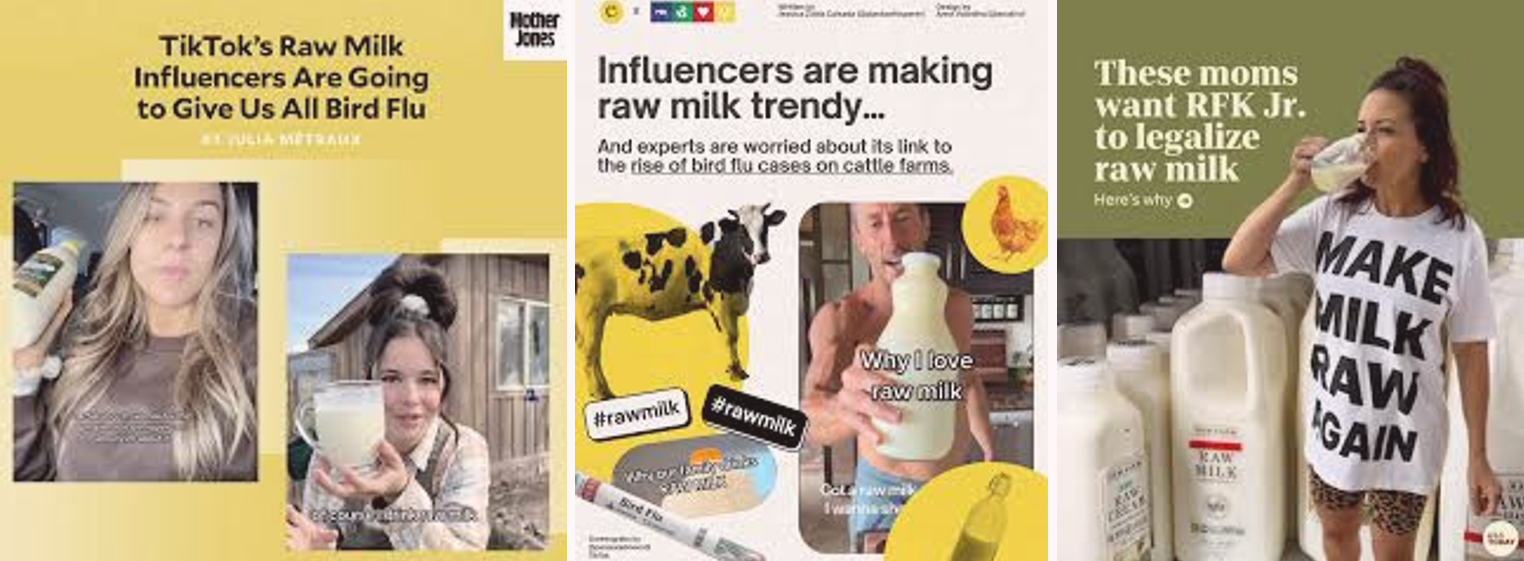
If you’ve been scrolling through Instagram reels or listening to certain wellness podcasts, you’ve probably noticed it: milk is having a moment, but not the plastic gallon jug of 2% you buy at the store. We are talking about raw milk.

It really is everywhere. It’s having this incredibly powerful almost cultural comeback. It’s gone from this, you know, niche farm product to a full-blown wellness status symbol.

Exactly. It’s being framed as this like ancestral superfood. People call it clean, immune boosting. Liquid gold. There’s this whole narrative that it’s more real or alive than what we grew up with. But then you flip the coin and you have public health officials waving these massive red flags talking about bacteria, kidney failure, hospitalizations.

It’s a total polarization of the dairy aisle. And just to ground this in some reality, we’re not talking about a tiny fringe group anymore. The numbers are actually pretty surprising. About 4.4% of US adults report drinking raw milk at least once a year.

That sounds small until you think about the size of the country. Right? You do the math and that is roughly 11 million people.

That’s 11 million people stepping outside the conventional food safety system for something the FDA and CDC have warned against for decades.

So that’s our mission for this deep dive. We’re not here to shame anyone’s grocery list. We are going to look at what the science actually says. We’ve pulled CDC data, nutritional studies, consumer surveys. We want to answer the big question. Is raw milk a wellness shortcut or is it a legitimate health risk.

And to do that, we have to peel back the layers. We need to look at the nutritional myths, you know, what’s actually in the glass, right? We need to look at the reality of even the cleanest farms, the microbiology of the barn, and we also need to clear up the confusion around homogenization because that gets lumped in here, too.

Okay, let’s unpack this. I want to start with the why because trends like this don’t just happen in a vacuum. Why now?

Well, psychologically, it makes perfect sense. We are living in an era with a profound and frankly earned distrust of overprocessing.

People look at the industrial food system and they feel skeptical. They want transparency. They want to know the farmer’s name. It’s a nostalgia for simpler systems.

I get that. I totally get the appeal of holding a heavy glass bottle with the cream on top and feeling like it came from a cow, not a factory. It feels more honest.

Precisely. It taps into that desire for autonomy. But the problem starts when that emotional connection overrides the uh biological reality. And the argument usually starts with nutrition. The claim is that pasteurization creates dead food.

I hear this all the time. The idea is that heating the milk just destroys all the good stuff, the vitamins, the enzymes, and you’re just left with white water.

It sounds convincing, I know. But when researchers actually look at raw versus pasteurized milk side by side, the differences are, well, they’re minimal.

Really? So, the heat doesn’t just nuke all the nutrients..not the ones you’re drinking milk for.

Let’s talk protein and calcium. The main reasons we consume dairy. Both are incredibly heat stable. Pasteurization does not dene the proteins in a way that affects their value and it certainly doesn’t destroy calcium.

Okay, so the building blocks are safe. What about the more delicate stuff like vitamins?

So there is a tiny grain of truth here which is how these myths survive. Pasteurization does cause a small loss in heat sensitive vitamins, specifically vitamin C.

Vitamin C. But wait, do we even drink milk for vitamin C? Definitely do not. I mean, milk is not a major source of it at all. You’d have to drink gallons of raw milk to get the vitamin C in one orange.

Ah, it’s a great way to put it. So, the nutritional upside is tiny and I guess uncertain.

Exactly. The nutritional profile is nearly the same. You are not missing out on a treasure trove of nutrients.

But what about enzymes? That’s the other big buzzword. Raw milk has enzymes like lactase to help you digest it.

Ah, yes. This is a classic piece of pseudocience. It sounds logical. But it fails the biology test. Cows produce enzymes for calves, not for humans. And specifically on lactase, the enzyme you need for lactose cows do not secrete lactase into their milk.

Wait, really? So there’s no lactase in raw milk to begin with.

None to speak of. It’s produced in the gut of the mammal drinking the milk.

So if you’re lactose intolerant, raw milk does not magically fix the problem. The lactose is still there.

So if I’m drinking raw milk for extra protein or calcium or these magic enzymes, I’m not really getting a leg up.

The nutrition is nearly identical, but the risk profile that is entirely different. And this is where we have to shift from wellness preferences to, you know, biological hazards.

Let’s transition to that risk because this is where the debate gets heated. But first, a quick refresher. What exactly is pasteurization?

Well, it was introduced in the 1860s, and it’s important to remember why. Back then, milk was a leading cause of illness and death, especially in children.

It was called white poison, right?

In some cities, yes. It was a vector for tuberculosis, typhoid, diphtheria…a huge public health crisis. Pasteurization was a survival mechanism.

So what is it?

It is simply heating milk briefly to a specific temperature to kill the bad bacteria. That’s it. No chemicals, no additives, just heat.

Okay. So if it’s just heat, what’s the push back? I hear the clean farm argument a lot. You know, my farmer is careful, their cows are grass-fed and happy. There’s no risk.

This is probably the most dangerous myth because it assumes that because something looks beautiful and ethical, it must be sterile.

But it’s not.

Biologically, it can’t be. Even the healthiest, happiest cow on the planet can shed harmful bacteria in its manure.

And I guess milking happens right near, well, the back end of the cow.

Exactly. We’re talking salmonella, listeria. Contamination can happen despite the absolute best practices. You cannot sanitize a barn into an operating room.

So, a cow can look totally healthy.

Absolutely. Many of these pathogens live in the cow’s gut. But when they get into a human, it’s a very different story.

So, the clean farm might lower the risk, but it doesn’t get rid of it.

It’s like playing Russian roulette with fewer bullets. The consequence is still the same if you lose.

Let’s hit the numbers. What does the CDC data actually say?

Okay, so from 1998 through 2021, there were 228 confirmed outbreaks from raw milk. That’s almost 3,000 illnesses, 287 hospitalizations, and five deaths.

Okay, devil’s advocate here. Someone might hear 3,000 illnesses over 20 years and think that sounds rare.

And that’s a common thought, but you have to look at the risk ratio. Remember, raw milk is consumed by a very small part of the population, maybe 4 or 5%. Yet unpasteurized products cause about 95% of all milk related illnesses.

Whoa, 95% of the illnesses come from the 4% of the milk that’s raw?

Correct. That’s the stat that matters. Per serving, raw dairy products pose an over 800-fold greater risk of illness than pasteurized dairy.

And this is happening right now. In 2025, there was a big outbreak in Florida. At least 21 people got sick with E.coli and Campilobacter.

And I remember reading about that. It wasn’t just a stomach ache.

No, several people were hospitalized. And heartbreakingly, six of them were children. When a child gets E.coli, it can lead to a syndrome that causes kidney failure, which can be fatal.

This is why the American Academy of Pediatrics is so strict on this. It’s scary because so many people just don’t know this. They see the aesthetic farm videos and assume natural means harmless.

There’s a massive knowledge gap. A 2025 University of Pennsylvania survey showed only 47% of U.S. adults know that unpasteurized milk is less safe.

So over half the country is either unsure or thinks it’s totally safe.

We’ve covered nutrition and safety, but we have to talk about the gut. The claim is that raw milk is a probiotic, that it’s full of good bacteria. This is another instance of a kernel of truth getting distorted. Yes, raw milk has bacteria.

But are they probiotics?

Not in a controlled sense. Probiotics like in yogurt or kefir are specific standardized cultures chosen for their benefits. Raw milk is a wild ecosystem. It’s uncontrolled.

Bacterial roulette. You might get some harmless bacteria, sure, but you are just as likely to get the pathogens we talked about. It is not a reliable probiotic delivery system. What about the farm effect? The idea that farm kids have fewer allergies and people link it to raw milk.

This is a fascinating area of science, but it’s a classic case of correlation versus causation. Studies show farm kids often have fewer allergies. But is it the milk or is it the whole lifestyle? These kids are rolling in the dirt, breathing in barn dust. They’re exposed to a huge diversity of microbes.

So, it’s the environment, not just what they’re drinking.

Most researchers believe that’s the case. In fact, when they’ve tried to just give raw milk to kids in cities, they haven’t been able to duplicate the results. The milk alone doesn’t seem to be the magic bullet.

You can’t just bottle the farm lifestyle. Okay, one more term we have to tackle. Homogenization. It gets whispered in the same breath as pasteurization. And it sounds kind of intense.

It does sound a bit scary, homogenized. But it’s purely a mechanical process. It’s not a safety step like pasteurization.

So, what’s actually happening to the milk? Well, milk is fat floating in water. Left alone, the cream rises to the top. Homogenization is just pushing the milk through tiny holes at high speed to break down the fat droplets so they stay suspended.

So, it’s about texture. You don’t have to shake the bottle.

Exactly. It’s about consistency. So, the first glass tastes the same as the last.

Are there health implications? I’ve heard rumors linking it to heart disease.

Those are myths. They’re based on some very old theories from the ’70s. When we look at the high-quality evidence, the verdict is clear. Homogenization does not cause heart disease, diabetes, or allergies.

So, it’s not a health benefit to drink non-homogenized milk. It’s just a different mouth feel.

Correct. It’s purely sensory. Some people love that cream top, and that’s a perfectly valid culinary preference, but is not a health intervention.

Okay, so let’s bring this all together. We have listeners who might be at a farm stand feeling torn. They want that natural experience, maybe the cream top, but they don’t want to end up in the hospital. What’s the middle ground?

The good news is there is a perfect solution. You can look for pasteurized, non-homogenized milk. It’s been heated enough to kill the dangerous pathogens. It’s safe, but it has been homogenized. So, you still get that cream layer on top, that rich traditional texture.

It’s the best of both worlds, the taste and the aesthetic, but with the safety cap on. You get the sensory experience without gambling with your health.

And gambling seems to be the key word. The benefit of raw milk seem speculative or minimal, but the risks are very real and documented.

That’s the bottom line. Treating raw milk as a wellness shortcut ignores over a century of public health data. The risk/reward ratio just doesn’t make sense.

It seems like we can respect the desire for food that’s closer to its source while also respecting the science that keeps it safe.

Absolutely. We don’t have to choose between natural and safe. We just have to be smart about what those words actually mean.

Well, this has definitely cleared things up for me. And if I could leave the listener with one final thought: pasteurization is a public health success. It works so well that we’ve forgotten why we needed it. We don’t see children dying of milk tuberculosis anymore, right?

And because that danger has faded from our memory, we have the luxury of debating if raw is better. So the question is, are we confusing natural with safe just because we’ve forgotten what the risks used to look like?

That is a powerful question. Thank you for walking us through the science. And thank you for diving deep with us today. We hope this helps you make the most informed choice. Until next time, stay curious and stay safe.

Raw Milk: Wellness Culture vs. Food Safety

Click Play to listen to our generated podcast. Access our full podcast library here


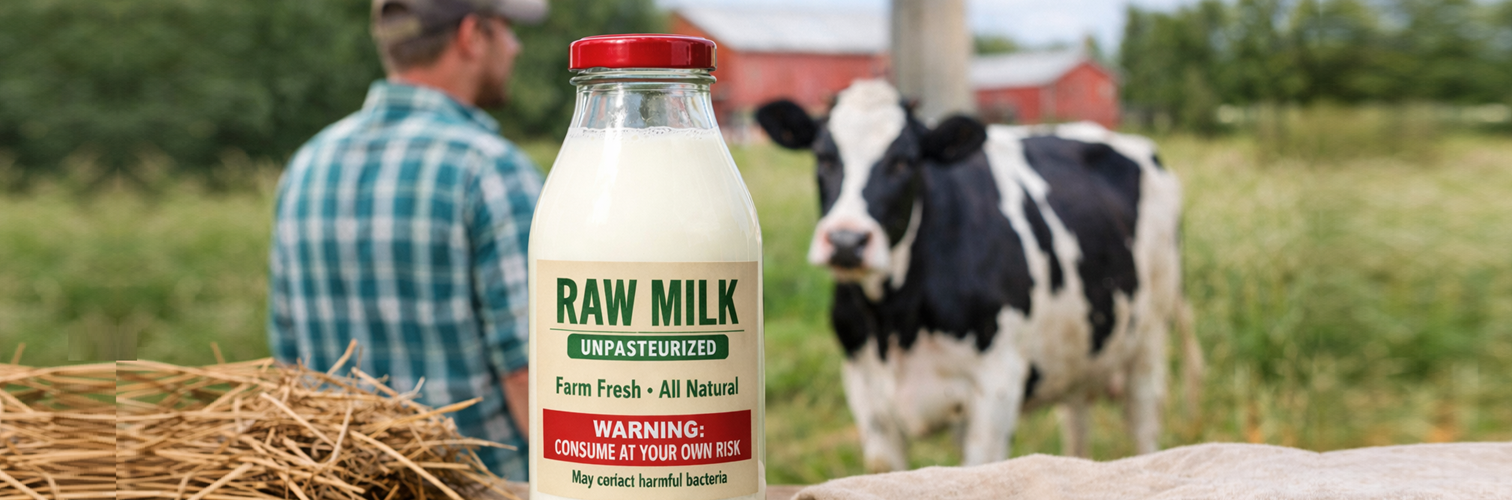
Once again, raw milk is everywhere: in Instagram reels, wellness podcasts, farmer-to-consumer marketplaces, and even policy debates. It’s being framed as ancestral, clean, immune-boosting, and somehow more “real” than the milk most of us grew up drinking. With about 4.4% of U.S. adults, or about 11 million people, have reported drinking raw milk at least once a year, despite repeated safety warnings; that’s why we’re revisiting this topic now.

Quick Take: Myth vs. Science 

Myth #1: Raw milk is more nutritious than pasteurized

Claim: Pasteurization destroys vitamins, enzymes, and nutrients.
Science: Pasteurization causes minimal nutrient loss. Protein, calcium, and most vitamins remain intact, and there is no evidence raw milk provides meaningful nutritional benefits over pasteurized milk.
Bottom line: Nutrition is nearly the same, the risk is not.

Myth #2: Raw milk supports gut health and immunity way more than pasteurized milk

Claim: Raw milk contains beneficial bacteria that improve digestion and immunity.
Science: Raw milk bacteria are uncontrolled and unpredictable and may include harmful pathogens. No clinical trials show safe, consistent gut or immune benefits from raw milk.
Bottom line: Benefits are speculative; risks are proven.

Myth #3: Raw milk from clean, local farms is safe

Claim: Careful farming eliminates any risk.
Science: Even healthy cows can shed harmful bacteria, and contamination can occur despite best practices. Raw milk causes the vast majority of dairy-related foodborne illnesses.
Bottom line: Clean farms reduce risk, they don’t eliminate it.

Picture this…

You’re visiting a local farm. A cow is milked by hand. A rag wipes down the udder; not sterile, just “clean enough.” The ground beneath is dirt, manure, and straw. The farmer pours the milk into what you hope is a sanitized glass jar. Hands touch the rim. The lid goes on.

In the process, something microscopic, bacteria from manure, soil, or the cow’s hide, slips in. You don’t see it. You can’t smell it. You taste the milk anyway.

That’s not a horror story, it’s basic microbiology. Cows don’t produce sterile milk, and pathogens like E. coli, Salmonella, and Listeria don’t announce themselves. Pasteurization exists because even careful, well-intentioned farms cannot control what the human eye can’t see. When people assume raw milk is “safe because it’s local,” they’re confusing trust with protection.

I understand why raw milk is appealing. It taps into something real: a distrust of over-processing, a desire for food transparency, and nostalgia for simpler systems. But the science is unambiguous on one point: The nutritional upside of raw milk is small and uncertain. The safety downside is large and well-documented. Treating raw milk as a wellness shortcut, or worse, as a health intervention, ignores decades of public-health data.

But when a food trend resurfaces with this much confidence and this much misinformation, it deserves a fresh look grounded in current science, not nostalgia or fear. Especially when the stakes include hospitalization, pregnancy complications, and children’s health.

So, let’s review what pasteurization actually does, the health risks of ingesting raw milk, and how people who want more “natural” dairy can make safer, evidence-based choices.

Why Pasteurization Exists

Pasteurization was introduced in the 1860s because milk was one of the leading causes of foodborne illness and death, especially in children.

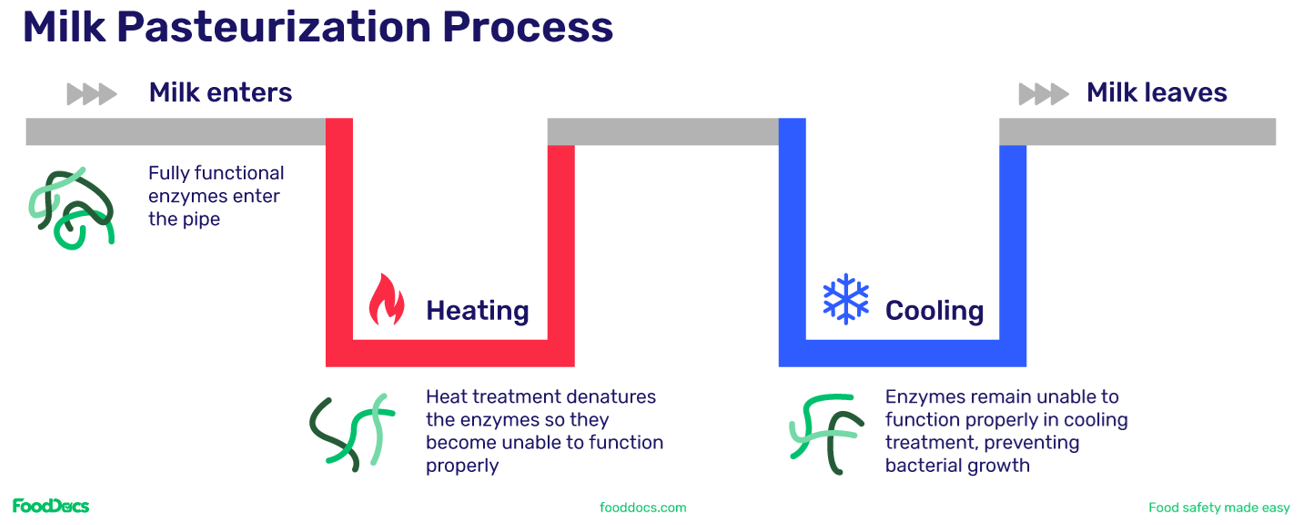
Pasteurization works by briefly heating milk to kill disease-causing bacteria. That’s it. No chemicals. No additives. Just heat and time. And the nutritional tradeoff? Extremely small.

Multiple reviews show that pasteurization:

  • Does not meaningfully alter protein, calcium, or fat
  • Causes minimal losses of a few heat-sensitive vitamins (like vitamin C, which milk isn’t a major source of anyway)
  • Preserves the nutrients most people drink milk for in the first place

Raw milk poses a legitimate health risk

Public health authorities universally emphasize that pasteurization is a critical safety step for milk because raw milk can carry dangerous disease-causing microbes such as Salmonella, E. coli, Campylobacter, Listeria, and Brucella. These pathogens can cause serious foodborne illness in anyone, but especially in young children, pregnant people, older adults, and immunocompromised individuals.

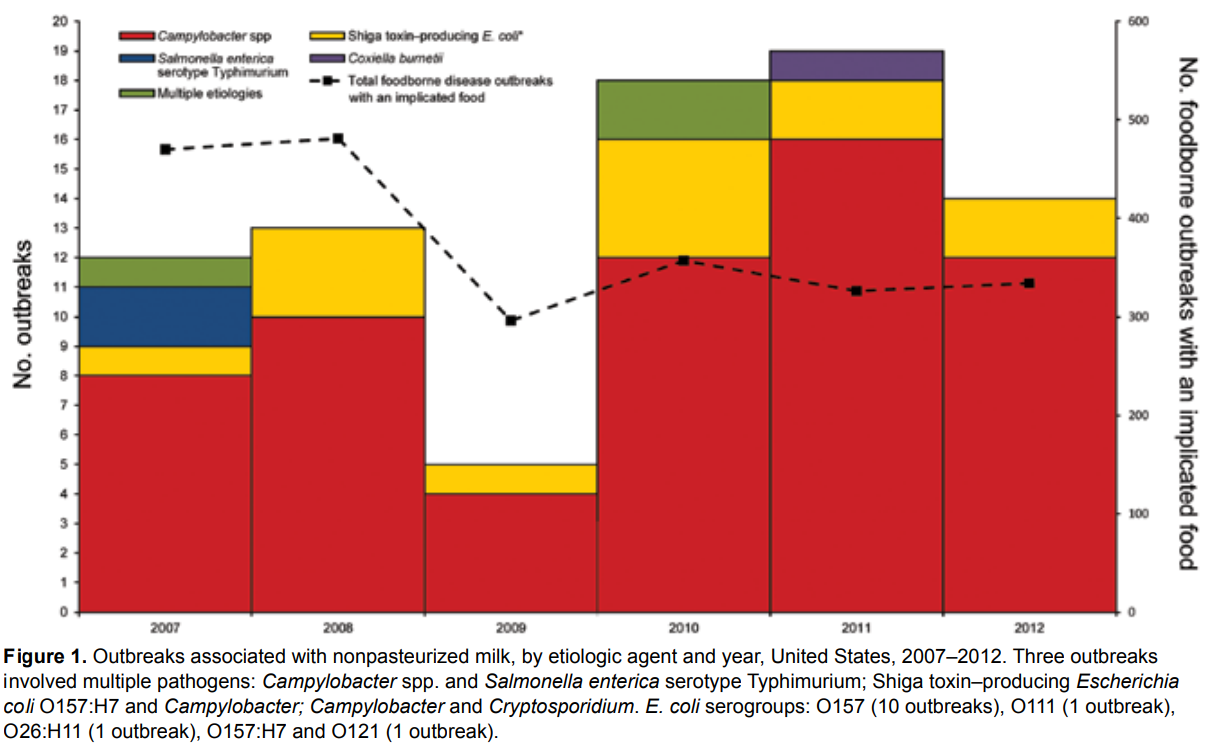
The CDC reports that from 1998 through 2021, there were 228 outbreaks linked to raw milk or raw milk products, resulting in 2,946 illnesses, about 287 hospitalizations, and 5 deaths in the United States.

A 2017 analysis of milk-associated foodborne disease estimated that unpasteurized dairy products, though consumed by a small portion of U.S. dairy consumers, are responsible for about 95% of milk-related illnesses, with raw products posing an >800-fold greater risk of illness than pasteurized dairy.

Recent disease clusters continue this pattern: in 2025, at least 21 people in Florida, including six children, were ill with E. coli and Campylobacter infections after consuming raw milk, and several were hospitalized.

National health agencies like the CDC, FDA, and the American Academy of Pediatrics all strongly advise against drinking raw milk because good safety practices can’t eliminate the risk completely. Healthy  animals harbor these pathogens, and harmful bacteria can still get into milk through environmental contamination, even among routinely-cleaned processing facilities.

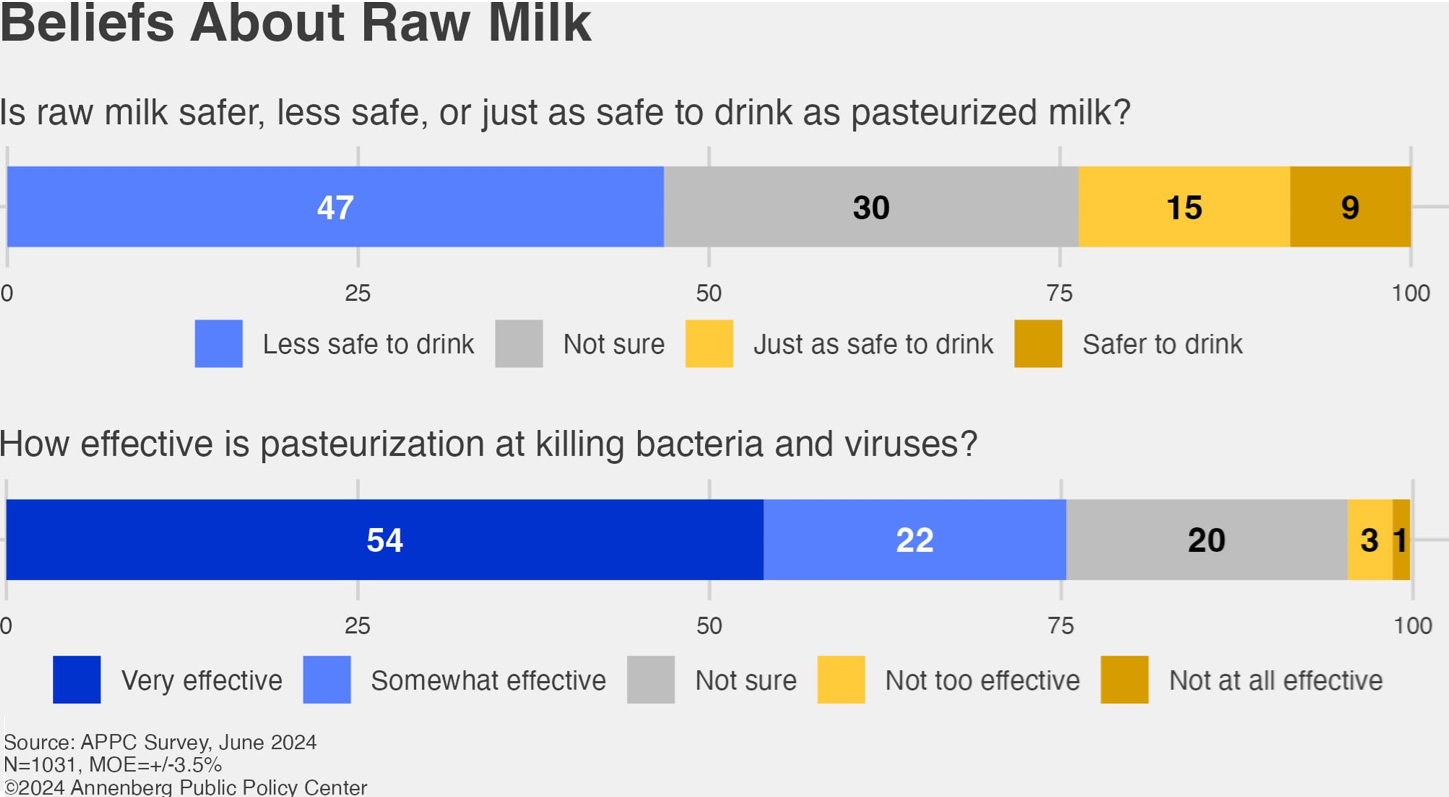
But it appears there is a knowledge gap, as a 2025 survey from researchers at the University of Pennsylvania’s Annenberg Public Policy Center found that only 47 % of U.S. adults recognize that unpasteurized milk is less safe than pasteurized milk, indicating persistent confusion about safety.

Conflicting information can further complicate our beliefs surrounding raw milk. For instance, several observational studies have suggested children raised on farms who consume “farm milk” may have lower rates of allergies or asthma.

However, these studies don’t prove causation of raw milk as the protective factor. Furthermore, researchers were unable to duplicate results among children raised outside of farm environments. Most researchers acknowledge these outcomes are likely tied to broader farm exposures (microbial diversity, animal contact, outdoor environments), not raw milk alone.

Another health-related misconception is that raw milk has beneficial probiotics. Raw milk does not function like a probiotic food because any bacteria present in the unpasteurized milk are not the standardized, beneficial cultures found in yogurt or kefir.

Homogenized Milk: What the Science Really Says

Now let’s clear up another bit of confusion: homogenization.

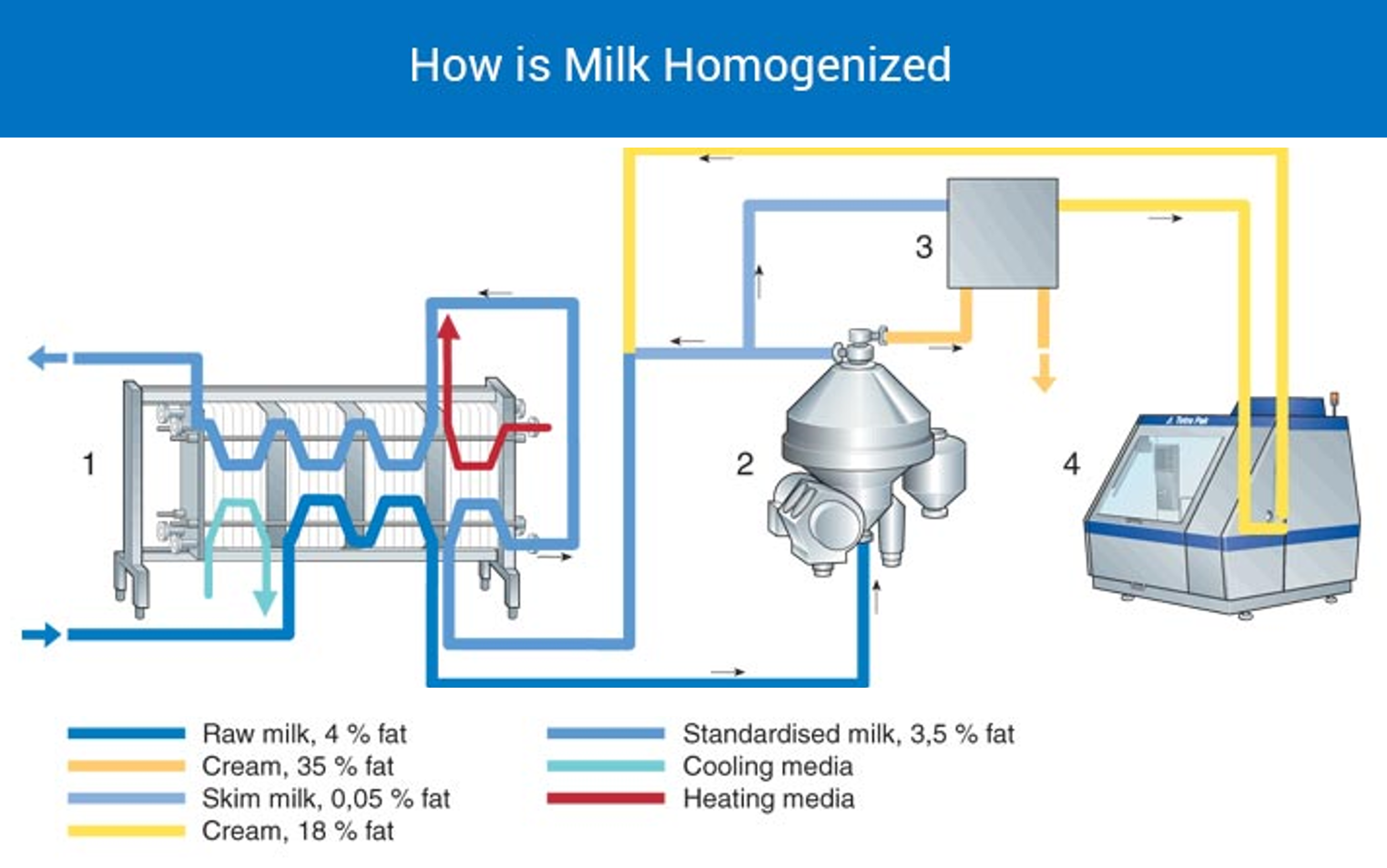
Homogenization is not a safety process like pasteurization. It’s a mechanical process that forces milk through tiny gaps under pressure so the fat droplets are broken down into much smaller sizes and stay evenly distributed. That’s why homogenized milk looks and tastes creamier and doesn’t separate with a layer of cream on top. But does that make it healthier or better for your body?

Here’s what peer-reviewed research shows:

  • No evidence that homogenized milk is healthier — most scientific reviews conclude that homogenization does not change the nutritional value or safety of milk. It doesn’t improve or diminish the fat, protein, calcium, or micronutrient content in any clinically significant way.
  • Does not affect allergies or intolerance, a study by Michalski in 2007 and related work indicate that homogenized milk does not influence milk allergy or lactose intolerance in children or adults compared with non-homogenized milk.
  • Digestibility differences are minimal or unclear some in vitro/animal research suggests that breaking milk fat into smaller globules might make it slightly easier for digestive enzymes to access fats, but human clinical evidence is limited and does not show meaningful health outcomes.
  • No strong links to major diseases, research on long-held theories that homogenization could increase risk for heart disease, diabetes, or allergy has not found consistent evidence supporting those claims. Reviews from the USDA’s raw milk debate literature show that available studies do not support meaningful effects of homogenization on these outcomes.

There are no high-quality, peer-reviewed studies showing that homogenized milk is healthier for you than non-homogenized milk. Any differences appear to be about texture and sensory experience, not nutrient quality or health impact.

That means if someone tells you homogenized milk is nutritionally superior, that’s not supported by current science. And if you hear claims that homogenization causes disease, such as promoting heart disease or atherosclerosis, those were early hypotheses from decades ago that later research hasn’t substantiated.

What That Means for You

If you’re looking for a more “natural” milk experience without the heightened risks that come with raw milk, a good option is to try pasteurized, non-homogenized milk. While it is not nutritionally superior, it retains the cream layer and texture some people prefer while still providing the safety protection of pasteurization.

As a parent to two littles, I am always in search of the healthiest, most nutrient-dense options for my own children, but I prioritize safety first. That balance is what makes pasteurized, non-homogenized milk appealing: you get a sensory experience closer to traditional milk without sacrificing safety or relying on unsupported health claims about homogenization itself.