What’s the Best Diet for Healthy Aging?
The Dirt
Could the way we eat affect how quickly our bodies age? New research looking at diet, DNA, and biological aging offers an intriguing clue and suggests we may have more flexibility than we think in how we age.
Nutrition
What’s the Best Diet for Healthy Aging?
The Dirt
Could the way we eat affect how quickly our bodies age? New research looking at diet, DNA, and biological aging offers an intriguing clue and suggests we may have more flexibility than we think in how we age.
Click Play to listen to our podcast. Click on link for our full podcast library.
*
Mediterranean. DASH. MIND. Nordic. Plant-based. The list goes on.
I spend a lot of time reading nutrition research on all these healthy diets. But underneath each of those diets, the same foods appear again and again: vegetables, fruits, whole grains, legumes, nuts, healthy fats, and high-quality sources of protein. So does it really matter which healthy diet we choose?
So does it really matter which healthy diet we choose? A new Nature Communications study approached that question in an unusual way. Instead of looking only at weight, blood pressure, cholesterol, or disease risk, researchers looked at something happening much deeper in the body: epigenetic changes associated with biological aging.
And they found that people who followed healthier dietary patterns generally showed more favorable markers of biological aging even though the diets themselves, and their molecular fingerprints, were not identical. That does not mean food can reverse your age or rewrite your genes. But it does add a fascinating new layer to what we already know about healthy eating…and that our genetics do not necessarily define our health.
What did the researchers actually find?
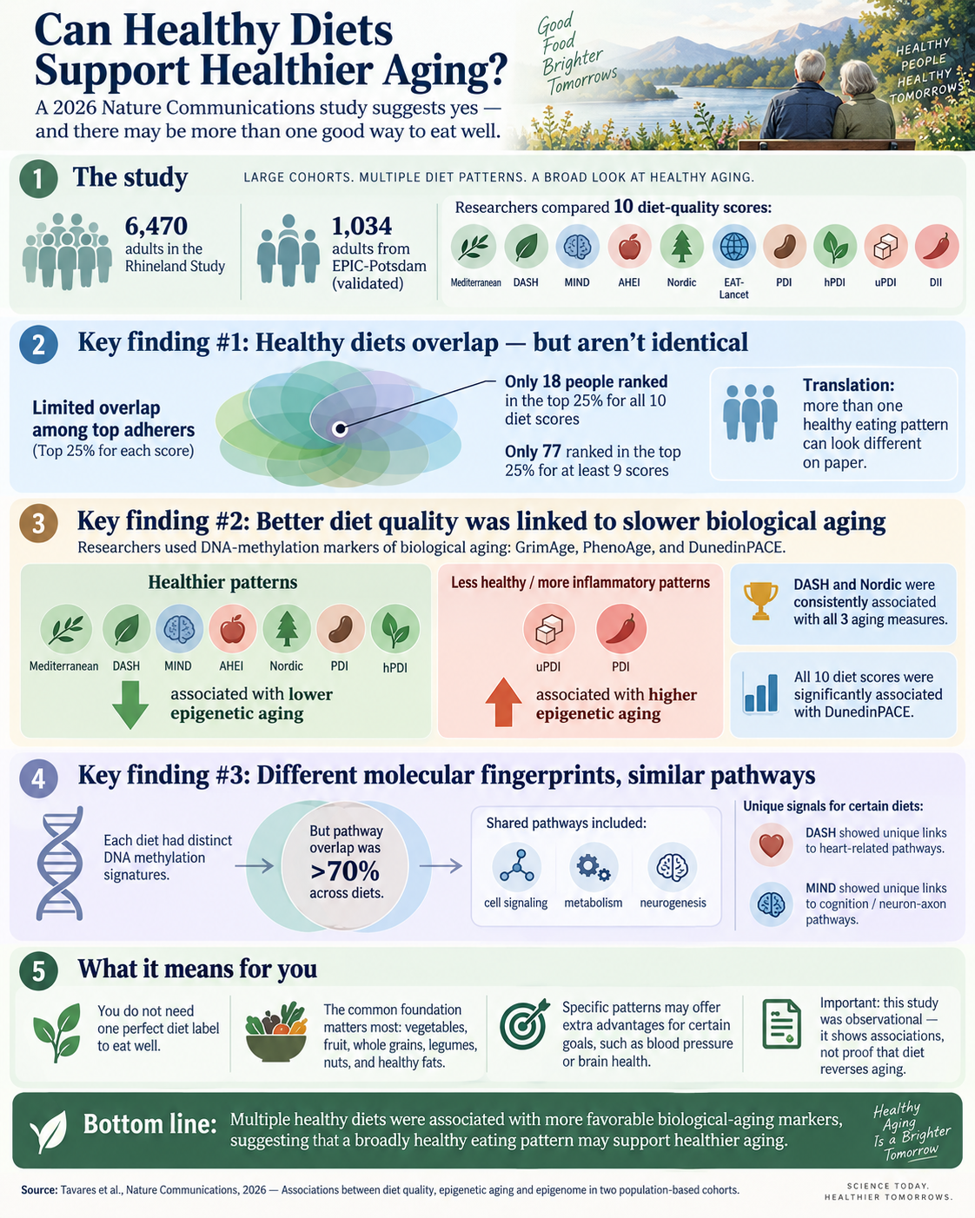
Researchers analyzed 6,470 adults in Germany’s Rhineland Study and then tested many of their findings in another group of 1,034 people from EPIC-Potsdam.
Rather than choosing one definition of a “good diet,” they scored participants according to 10 different dietary patterns, including Mediterranean, DASH, MIND, Nordic, EAT-Lancet, the Alternate Healthy Eating Index, several plant-based diet scores, and the Dietary Inflammatory Index.
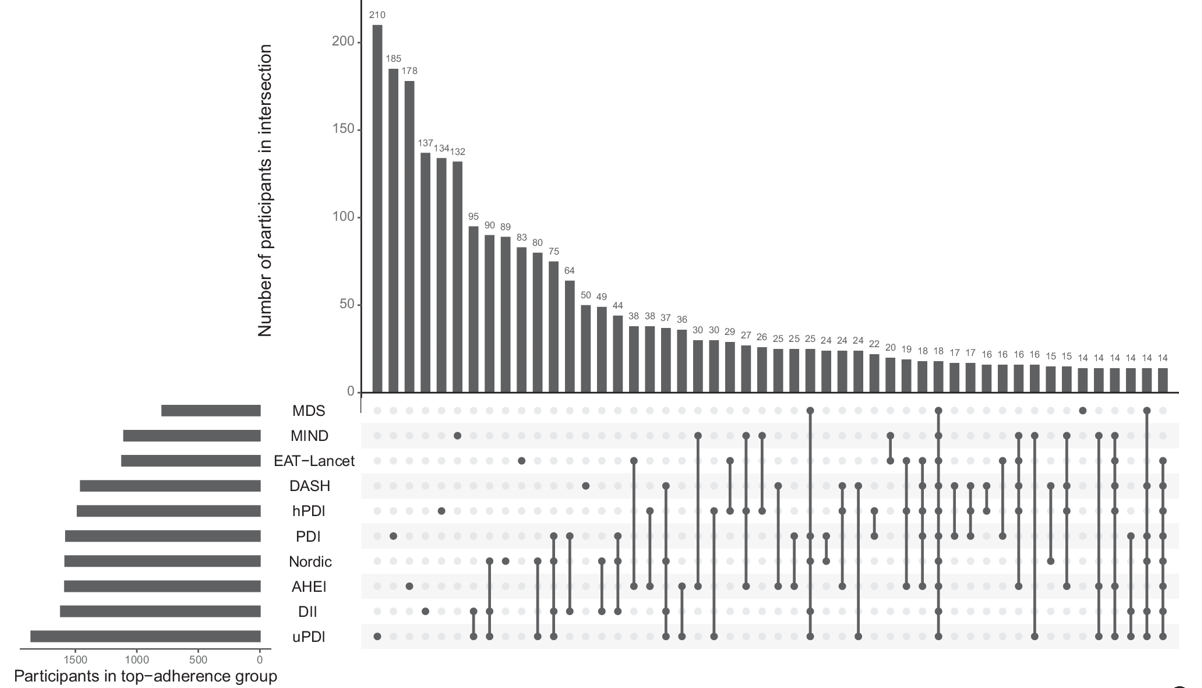
That matters because these diets overlap, but they are not identical.
In fact, only 18 of the 6,470 participants ranked in the healthiest quarter for all 10 diet scores. So someone could eat extremely well according to one dietary framework without looking quite as impressive according to another.
Across these different definitions of healthy eating, researchers found an important common thread: healthier dietary patterns were generally associated with more favorable measures of epigenetic aging.
DASH and Nordic diet scores, in particular, were consistently associated with all three of the aging measures researchers examined. That is where this study becomes much more interesting than another debate over Mediterranean versus DASH.
What does epigenetics have to do with aging?
First, what are epigenetics? Your DNA contains the genetic instructions you were born with. For the most part, eating broccoli or salmon does not change that underlying genetic code. But our bodies also have systems that help regulate how those genetic instructions are used or turned on and off, which is epigenetics.
One of those systems is called DNA methylation. Tiny chemical groups attach to particular locations along DNA and can influence gene activity without changing the DNA sequence itself. These methylation patterns can differ with age, health, environmental exposures, and behaviors. And because certain methylation changes occur somewhat predictably as we age, researchers have developed tools known as epigenetic clocks to study biological aging.
Think about two 60-year-olds. Chronologically, they are exactly the same age. But one may have healthier cardiovascular, metabolic, immune, and physical function than the other. That difference is what researchers are trying to capture when they talk about biological aging.
Why should I care?
Because most nutrition advice is ultimately about protecting your future health. We eat vegetables because of cardiovascular health. We choose whole grains because of metabolic health. We care about protein because of muscle. We watch blood pressure, cholesterol, glucose, inflammation, and body composition because all of those things contribute to how well we function as we get older.
Epigenetic-aging research is attempting to look at some of those effects from another angle: Can we detect differences associated with aging at the molecular level before they become a diagnosis? We are not yet at the point where your doctor can run an epigenetic clock and prescribe a particular dinner.
But the fact that diet quality is associated with these biological-aging markers strengthens a broader idea that decades of nutrition research already support: The way we eat over time may influence not only our risk of individual diseases, but the overall trajectory of healthy aging.
And this study is not standing alone.
We already have substantial evidence connecting multiple healthy dietary patterns with better long-term health.
A 2020 JAMA Internal Medicine study followed more than 200,000 men and women for as long as 32 years and compared four different healthy-eating scores. Greater adherence to each pattern was associated with lower cardiovascular-disease risk.
Then a 2025 Nature Medicine study followed more than 105,000 adults for up to 30 years and looked at a broader outcome: healthy aging. To qualify, participants had to reach older age while maintaining cognitive, physical, and mental health and remaining free of major chronic disease. Higher adherence to all eight healthy dietary patterns studied was associated with greater odds of healthy aging.
Across the patterns, many of the same foods kept appearing: fruits, vegetables, whole grains, nuts, legumes, unsaturated fats, and healthy sources of protein. The new Nature Communications study extends that story beneath the surface by showing associations between healthy eating and molecular markers related to aging.
A diet’s effect on molecular fingerprints
One of the more surprising findings was that the diets did not all correspond to exactly the same DNA-methylation changes. Each dietary pattern had somewhat different molecular associations.
For instance…
- The DASH diet was specifically designed to address high blood pressure, and randomized trials show it can significantly reduce both systolic and diastolic blood pressure.
- The MIND diet combines elements of Mediterranean and DASH eating but places particular emphasis on foods such as leafy greens and berries because of their potential relationship with cognitive health. Observational research has generally been promising, although randomized-trial results have been more mixed.
- The Nordic Diet emphasizes foods common in northern European food cultures, including berries, rye, oats, root vegetables, fish, nuts, and rapeseed oil, and research has linked greater adherence with improvements in several cardiometabolic outcomes.
But when researchers looked at the biological functions connected with those methylation sites, many of the signals converged around broader processes involving metabolism, cellular signaling, cell structure, and other fundamental cellular functions. That suggests healthy diets do not necessarily have to produce identical molecular changes in order to be associated with some of the same broader biological processes.
In practical terms, your body may not require you to adhere perfectly to one named dietary philosophy to benefit from eating well. That does not mean the differences between diets are meaningless. Different dietary patterns were created with different priorities.
 So the details can matter when you have a particular goal:
- If lowering blood pressure is your priority, DASH provides useful additional structure.
- If cognitive aging is your concern, MIND gives more emphasis to foods being investigated for brain health.
- If Mediterranean or Nordic foods better fit your culture and preferences, those patterns offer their own ways to build a high-quality diet.
The key is that specialization comes after the fundamentals.
So what should we actually eat?
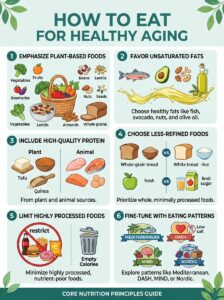
The useful message from all of this research is surprisingly straightforward. You probably do not need to decide whether you are officially “Mediterranean,” “DASH,” “MIND,” or “Nordic.”
Instead, focus on consuming produce, legumes, nuts, seeds, and whole grains, as well as choosing unsaturated fats and proteins derived from high-quality, whole foods. And choose less-refined foods over highly processed, nutrient-poor products.
And perhaps most importantly, choose a way of eating that you can actually maintain. The health effects researchers are studying develop over years and decades, not over one perfect meal.
What this study does not tell us
Epigenetic aging is an exciting field, but it is easy to oversell. An epigenetic clock is not a lifespan calculator. This study also cannot prove that changing your diet will slow your biological clock. It was observational, meaning researchers identified relationships between diet quality, DNA methylation, and aging markers rather than proving that diet caused those differences.
A review of 21 nutrition-intervention trials has found some encouraging evidence that dietary changes may influence epigenetic-aging measures, but the results are not yet consistent enough to say that a particular diet can reliably slow or reverse biological aging. So don’t come away thinking: Eat Mediterranean and become biologically younger.
The evidence strongly supports something more measured and arguably more useful: People who consistently eat higher-quality diets tend to have better long-term health, greater odds of healthy aging, and, according to this emerging research, more favorable molecular markers associated with biological aging.
The Bottom Line
The newest science does not crown one diet the winner. It gives us another reason to pay attention to the dietary fundamentals that keep emerging across decades of research. Healthy eating patterns may differ in their details and even in the molecular fingerprints associated with them. But many converge around the same basic foods — and healthier versions of these patterns are associated with better cardiovascular health, healthier aging, and now more favorable markers of epigenetic aging.
Share this article



Listen to the Dirt to Dinner Podcast