FFA
FFA Spotlight: Cultivating Demand for Specialty Crops
The Dirt
FFA's Gunner Claybrook is part of a new generation of specialty agriculturists helping diversify America’s food system. Through mushroom production, Gunner shows how young people can blend science, entrepreneurship, and community connection to create thriving local food businesses.
Inspiring Stories
FFA Spotlight: Cultivating Demand for Specialty Crops
The Dirt
FFA's Gunner Claybrook is part of a new generation of specialty agriculturists helping diversify America’s food system. Through mushroom production, Gunner shows how young people can blend science, entrepreneurship, and community connection to create thriving local food businesses.
What began as a way to help fund a swine and poultry project has evolved into a full specialty-crop enterprise—and a future career in agricultural education.
From Wolfforth Roots to Fungal Futures
Gunner grew up surrounded by agriculture, but his path into specialty crops wasn’t planned.
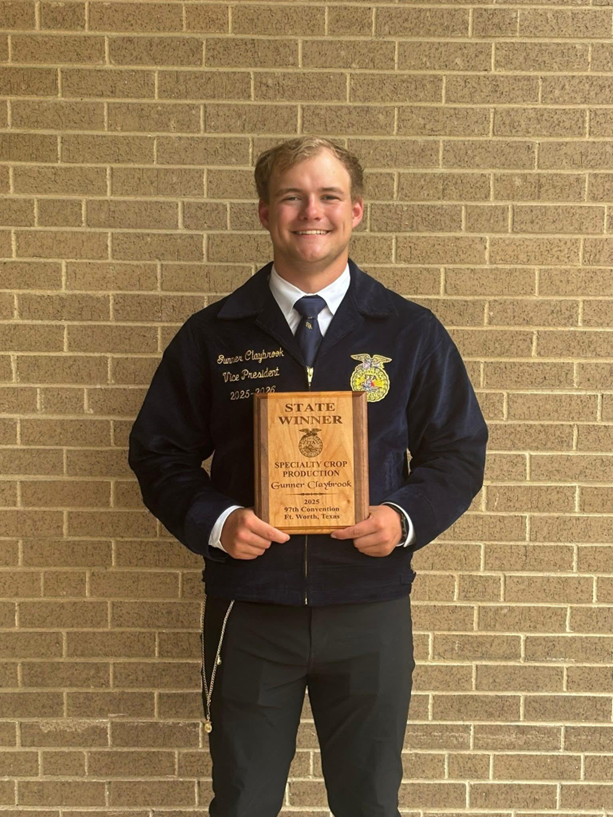 Gunner joined FFA in part because it was a family tradition. “My grandfather was in FFA,” he says. But the supervised agriculture experience, or SAE, became something more: a way to support his other agriculture projects.
One of Gunner’s SAEs took place at E3 Farms, a mushroom operation near his home. This experience opened his eyes to an entirely different segment of the farm-to-table world.
“I became interested in specialty crops when I started my placement SAE at E3 Farms,” Gunner explains. “That’s where it all started.”
The work was unlike anything he’d done before. And unlike traditional row crops or livestock production, mushroom cultivation requires precision, sanitation, and a deep understanding of biology—skills that immediately clicked for him.
“My mushroom SAE helped me pay for my poultry and swine SAEs,” he explains. It was a smart business move—one that ultimately revealed a new passion.
A Day in the Life
Specialty mushroom production is demanding, and Gunner quickly became an essential hand at the farm. His daily tasks include:
- Harvesting fully matured mushrooms
- Creating substrate blocks
- Inoculating blocks with mushroom cultures
- Maintaining environmental controls like humidity and airflow
What surprised him most? How different fungi are from plants. “I learned that fungi grow completely differently,” Gunner says. “Humidity is the only watering they require.”
This attention to microclimates—temperature, airflow, and sanitation—taught him how delicate and responsive specialty crops can be.
Because he already worked farmers’ markets for his poultry SAE, he combined forces with E3 Farms. Soon, he became the face of the mushroom operation on weekends.
What Consumers Really Want
The collaboration with E3 Farms allowed Gunner to build a new skillset—one many young agriculturists don’t learn until years later. “I’ve gained so many personal and communication skills,” he says. “Being at the booth taught me how to help customers find the right product.”
Talking with shoppers also gave him insights into consumer behavior —perhaps one of the most valuable agribusiness lessons of all.
After hundreds of customer conversations, one trend became clear: Lion’s Mane is the star of the show. “It’s the most commercially sold mushroom we produce,” Gunner says. “Most people ask for it first.”
But something interesting happens after the first purchase.
“Once they repeat their order, they start wanting to try new varieties,” he explains. That curiosity opens the door to oyster mushrooms, chestnut, pioppino, and other specialty types that benefit small farms like E3.
In other words: specialty crops don’t just serve niche consumers—they create them.
Looking Ahead: Teaching the Next Generation
Gunner credits much of his success to the people around him.
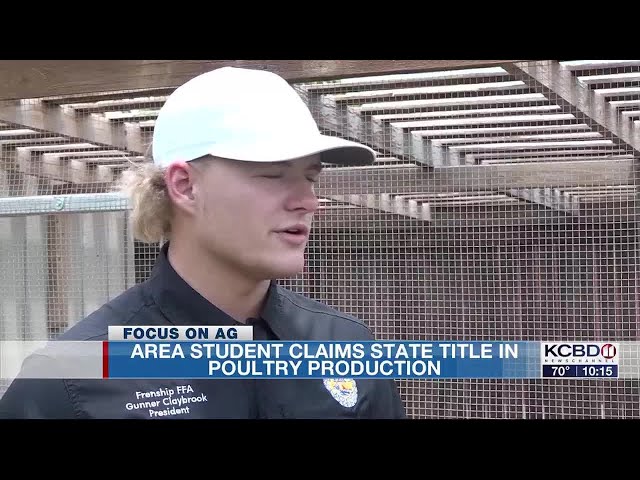 “My advisors and family have always been truly supportive,” he says. His FFA advisors even toured the mushroom farm to understand his SAE firsthand—an extra step that empowered them to guide him more effectively.
Gunner’s future plans speak volumes about the impact agricultural education can have. “I plan on attending Texas Tech University to earn a degree in Ag Education,” he says. His goal? To become an agriculture teacher.
And his long-term mission is equally grounded, stating “I hope to use my experience to guide and help others.”
Whether his future classroom includes livestock, crops, specialty agriculture, or entrepreneurship, he’ll bring firsthand experience that inspires.
And if there’s one thing Gunner wants new FFA members to know, it’s that “you have to jump all in and be committed.”
Specialty crops require precision, consistency, and a willingness to learn constantly—but for those who love the work, the rewards run deep.
Have an inspiring ag story of your own?
Or want to share one with us? Let us know! We love to celebrate the stories of those who serve up and down the value chain of the food that brings us all together. Shoot us an email at connect@dirt-to-dinner.com or click on the "Let's Connect" link below. Hope to hear from you!
Share this article



Listen to the Dirt to Dinner Podcast