Engineering Nutrition: The Crops Changing Public Health
The Dirt
CRISPR, a gene editing process, is now officially bridging the gap between agriculture and human health, transforming everyday crops like lettuce, tomatoes, and bananas into tools for better nutrition, sustainability, and food security. From soil microbes that feed corn to vitamin-rich produce that may soon appear in clinical trials, the future of food is no longer just about yield; it’s about measurable health outcomes.
Nutrition
Sustainable Agriculture
Engineering Nutrition: The Crops Changing Public Health
The Dirt
CRISPR, a gene editing process, is now officially bridging the gap between agriculture and human health, transforming everyday crops like lettuce, tomatoes, and bananas into tools for better nutrition, sustainability, and food security. From soil microbes that feed corn to vitamin-rich produce that may soon appear in clinical trials, the future of food is no longer just about yield; it’s about measurable health outcomes.
Hidden hunger, a diet full of calories but short on nutrients, remains one of the world’s most persistent health crises, affecting at least 20% of the global population.
Recent biomarker-based analyses estimate that hundreds of millions of children and over a billion adults are deficient in at least one essential micronutrient. The irony? We’re swimming in an abundance of calories.
Even if you eat five to seven fruits and vegetables per day, you still may have a hidden hunger for nutrients. Crops today are bred for higher yields and pest resistance, which can lead to less nutritional density. In addition, if they are overcooked, they can also lose their value – and their taste.
NIH published a report indicating the decline in the nutritional quality of foods:
“Important commercial high-yielding fruits such as apples, oranges, mango, guava, banana, and vegetables such as tomato and potato have lost their nutritional density by up to 25–50% or more during the last 50 to 70 years due to environmental, genetic, and field soil dilution factors.”
Despite the decline, eating your fruits and vegetables still has benefits! “Food as Medicine” programs, where doctors prescribe produce the way they once prescribed pills, have shown measurable benefits in blood pressure, blood sugar, and food security.
The lesson is clear: what grows in the soil can directly affect what circulates in our blood.
Now, biotechnology is putting that on steroids. In 2025, gene editing technologies, like CRISPR and bioengineered foods, moved from promise to practice. Lettuce engineered to act like a multivitamin. A vitamin-D tomato soup being tested in humans. Bananas that don’t brown before you eat them.
Innovation in Our Fields
Across labs, fields, and supermarkets, the boundary between agriculture and health care is dissolving. Take a look at these advances in some of the daily staples in our diet today:
When a Salad Becomes a Supplement
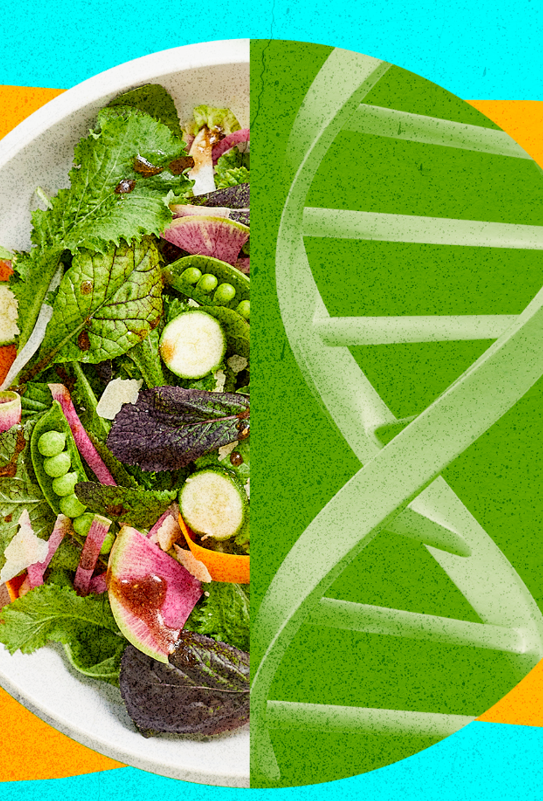
This March, researchers at Hebrew University published a Plant Biotechnology Journal on CRISPR-edited lettuce enriched with 2.7 times the beta-carotene, almost 7 times the vitamin C, and carotenoids, which provide eye protection, antioxidants, and cognitive function — without reducing yield.
Lead author Yarin Livneh and mentor Alexander Vainstein describe it as “stacking nutrition inside a plant that millions already eat.”
Why it matters: Lettuce is one of the most consumed vegetables in the world yet contributes little nutritionally. If this fortified lettuce scales commercially, it could help chip away at “hidden hunger,” improving micronutrient intake without changing behavior.
“Gene editing gives us an unprecedented ability to improve the nutritional quality of crops without affecting their productivity.”
— Prof. Alexander Vainstein, Hebrew University
Tomatoes Proving Food Is Medicine?
In September 2025, the John Innes Centre and Quadram Institute, in England, launched the ViTaL-D trial, the first human study of a gene-edited food designed specifically to improve nutrition.
 76 adults with low vitamin D consume tomato soup daily for three weeks, each serving made from tomatoes edited to accumulate provitamin D3, which converts in the body to vitamin D3.
If blood levels of D rise, it’s the first direct evidence that a crop can change a human biomarker.
Why it matters: this is the “soil-to-serum” moment, a test of whether biofortified foods can function as nutrition therapy. If successful, these tomatoes could integrate seamlessly into produce-prescription and Food-as-Medicine programs already shown to improve clinical outcomes.
“Food is health care. It’s exciting to see science enrich something as ordinary as tomato soup with the potential to improve health.”
— Prof. Cathie Martin FRS, John Innes Centre
Bananas Fighting Food Waste
Bananas are the world’s most popular fruit, and one of the most wasted. In 2025, UK biotech Tropic unveiled a gene-edited, non-browning banana that resists bruising and stays yellow hours longer after peeling, named one of TIME’s Best Inventions of 2025.
Food waste isn’t trivial: roughly one-third of food grown globally is lost or discarded, along with the nutrients it contains. When a banana stays edible longer, vitamins and calories reach people instead of landfills, while reducing greenhouse gases from decomposition.
Why it matters: waste reduction is nutrition policy in disguise. Every untossed banana delivers more potassium, fiber, and vitamin B6 to the human diet, and fewer emissions into the atmosphere.
When Innovation Meets the Consumer
More than their parents, today’s younger consumers are willing to try vegetables and fruit that are developed to be more nutritious and tastier. Yet, history has shown that the path from soil to the consumer is not as simple.
Florida’s citrus industry offers a cautionary tale. Since 2005, citrus greening has destroyed over 80% of state production, making orange juice a luxury item. Gene-edited and transgenic trees resistant to the bacterium exist, but regulatory hurdles and consumer resistance have slowed adoption.
As one biotechnology advisor put it, “When people see biotech as saving a fruit, they hesitate; when they see it as saving their health, they listen.”
We’ve seen this before: the Hawaiian papaya only survived when virus-resistant GM varieties were planted. However, while GMOs scare the consumer, CRISPR is altering the genes in the existing fruit or vegetable. It doesn’t seem as fearful.
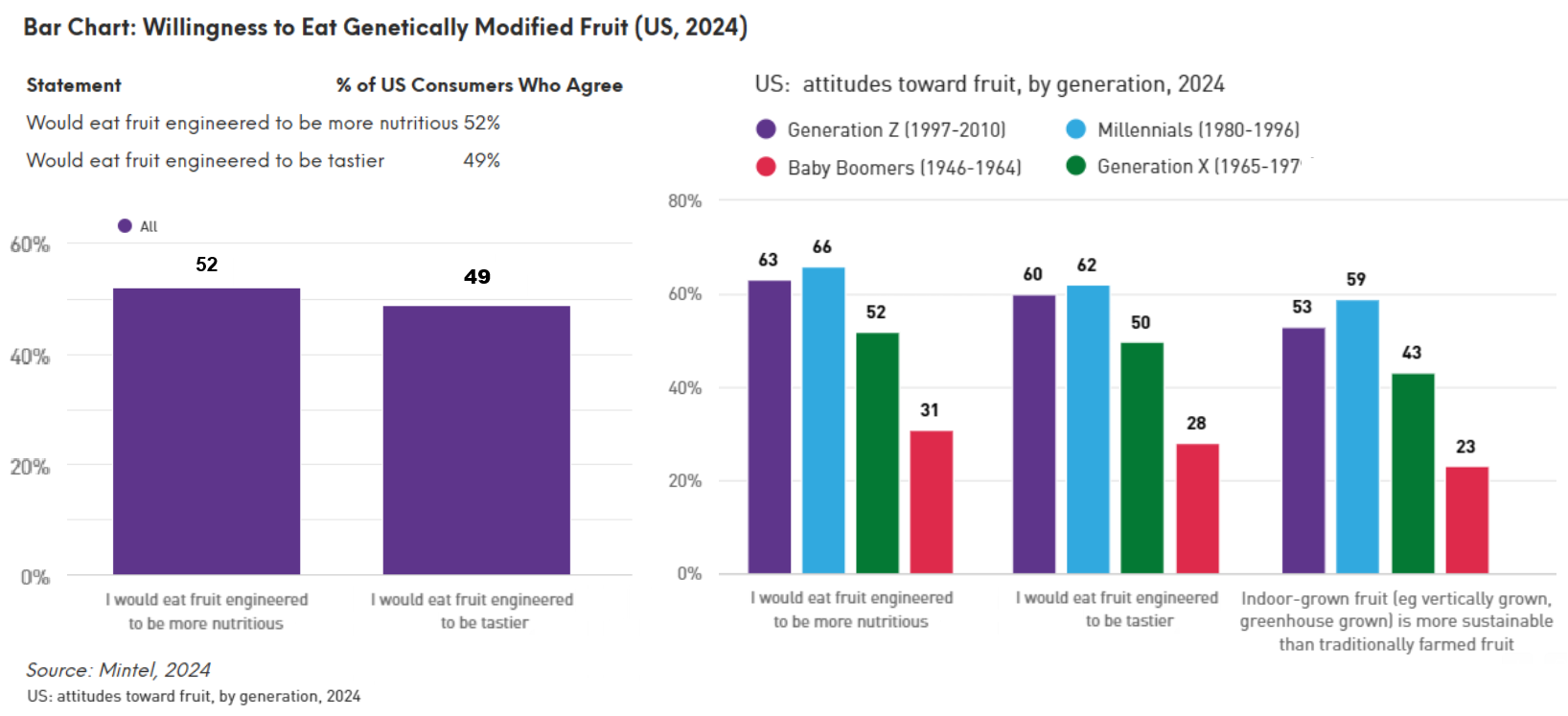
At least 50% of the consumers would try CRISPR foods that are more nutritious and taste better than their original cousins. Yet for those who want to stay clear of any sophisticated gene editing, there is a company called Row 7 that is on the market today.
Row 7 works with plant breeders, farmers, seed growers, and chefs to enhance the quality and taste of vegetables as well as healthier soil. Grown organically, they are sold in some Whole Foods, Freshdirect, Misfits Market, Sprouts Farmers Market, and SweetGreen as well as specialty grocers throughout the country.
If 2024 was the year of promise, 2025 is the year of practice. Peer-reviewed, nutrient-enhanced crops; a human feeding trial proving food can change blood chemistry; microbial fertilizers that could curb emissions; and policy frameworks that finally clear a path from lab to plate.
The question isn’t if “food as health tech” will scale — it’s how fast and who will lead. Because the next generation of superfoods won’t come from supplement aisles, but from the soil itself.
The Bottom Line
As gene-edited foods and plant breeders move from research plots to dinner plates, the question shifts from can we to will we embrace them. The answer may determine whether tomorrow’s food system simply feeds us—or truly nourishes us.
Share this article



Listen to the Dirt to Dinner Podcast