The SNAP Corner Store Overhaul
The Dirt
Many stores accepting SNAP must now stock far more whole foods, or forfeit processing food stamp transactions altogether. It is the biggest shake-up in years, shifting the focus from restricting what shoppers can buy to mandating what stores must keep on the shelves. The original November 4 deadline has now passed, and enforcement is paused until early February 2027, so the makeover is coming, just on a slower clock.
Nutrition
The SNAP Corner Store Overhaul
The Dirt
Many stores accepting SNAP must now stock far more whole foods, or forfeit processing food stamp transactions altogether. It is the biggest shake-up in years, shifting the focus from restricting what shoppers can buy to mandating what stores must keep on the shelves. The original November 4 deadline has now passed, and enforcement is paused until early February 2027, so the makeover is coming, just on a slower clock.
Key Takeaways:
- The USDA now requires SNAP-approved retailers to significantly increase their fresh food offerings while prohibiting snack foods from stocking requirements.
- Enforcement has been extended to February 2027, giving convenience stores time to adapt or risk a six-month ban from processing SNAP benefits.
- Research reveals that expanding access to fresh produce in corner stores rarely alters eating habits unless food is affordable and convenient.
Picture the corner store on your block or the one you pass on the way to work. The wall of chips. The soda cooler glowing like a jukebox. The candy rack at kid-eye level by the register. Now picture that same store with fresh apples by the door, milk in the cooler, and rotisserie chicken where the jerky used to be. That is the bet the USDA is making this fall.
What exactly is changing?
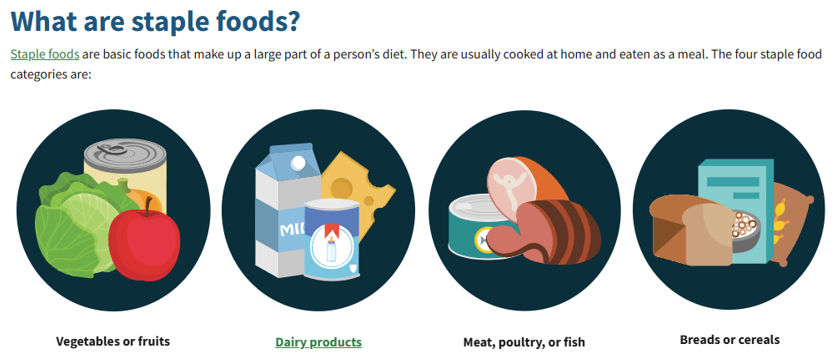
Every SNAP-authorized retailer has always had to stock “staple foods” but the old bar was low: just three varieties in each of four categories (dairy, fruits and vegetables, grains, and protein). And the definition of a “variety” was loose enough that snack foods could do the heavy lifting. Beef jerky counted as protein. Cheese dip counted as dairy. A granola bar could stand in for grains.
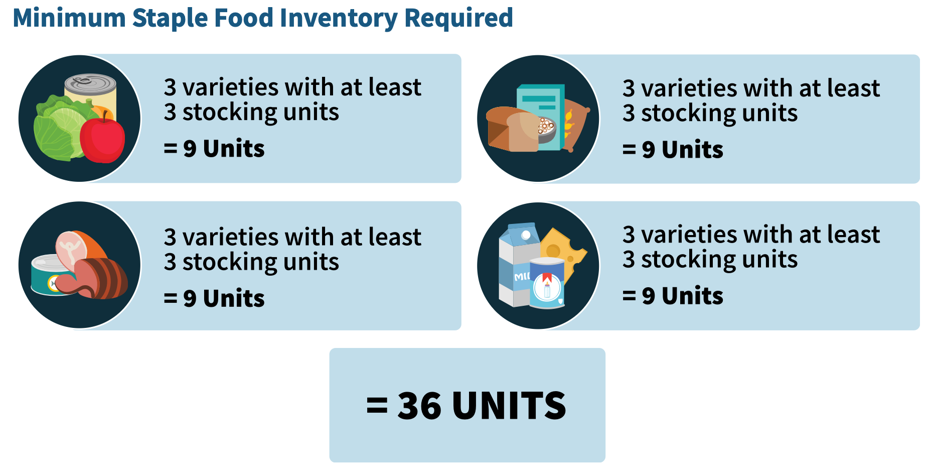
USDA’s final rule on updated staple food stocking standards, published May 8, 2026 in the Federal Register, more than doubles the previous requirement. Now, retailers must provide seven varieties in each of the four staple categories, for a minimum of 28 qualifying items.
It also requires a perishable item (think fresh produce, milk, meat) in at least three of the four categories, and it closes the snack loophole explicitly: butter, jerky, cheese dip, snack bars, and fruit spreads no longer count toward the total. The rule classifies butter and all jerky as accessory foods, and adds snack bars, cheese spreads, and fruit spreads to that list. (Shoppers can still buy them with SNAP; the rule changes what stores must stock, but not what customers can buy.)
When did this ruling take effect?
On November 4, 2026, roughly a quarter-million stores that accept SNAP benefits, the program most of us still call food stamps, were supposed to have a lot more real food on their shelves, or lose the ability to take SNAP at all. USDA put the number at nearly 266,000 retailers in its September 2025 announcement of the proposed rule.
However, enforcement of the new rule did not follow on schedule…and for understandable reasons. Hundreds of convenience stores and trade associations and a dozen senators asked USDA for a six-month delay, arguing that they have not received enough guidance on how to comply and need time to line up distributors, negotiate with suppliers, and reconfigure shelves for perishables. Without more time, thousands of stores could simply drop out of SNAP, which would reduce food access in exactly the neighborhoods the rule is trying to help.
On November 13, New York City Mayor Zohran Mamdani announced a nationwide delay of at least 90 days, after discussions with President Donald Trump and USDA Secretary Brooke Rollins. The USDA then told retailers they have until February 11, 2027 to comply. The requirements themselves have not changed, only the enforcement clock.
Now, if a store misses the new February date, the store may get withdrawn from SNAP and cannot reapply for six months.
Why does the corner store matter so much?
Here is the part most people miss: this rule is not really about supermarkets.
Supermarkets already stock hundreds of varieties. It is about the small-format stores that are a huge share of the program. More than 117,000 convenience stores accept SNAP, nearly half of all authorized retailers, according to the industry’s letter to USDA. For millions of shoppers, shift workers, people in neighborhoods without a full grocery store, rural towns where the gas station is the grocery store, the corner store is the food provider.
USDA is not starting enforcement from zero, either. The agency says it has already taken action on nearly 3,200 retailers since the beginning of the Trump Administration over the current stocking standards, denying applications or disqualifying stores that fell short. The message, as HHS Secretary Robert F. Kennedy, Jr. put it in that same USDA announcement, is that “this rule puts real food back at the center of SNAP.”
Does stocking it mean buying it?
Putting broccoli on the shelf and putting broccoli in the cart are two different things.
This is where the science gets humbling. Researchers have run the experiment repeatedly and the results should temper everyone’s expectations, supporters and skeptics alike.
In one of the most thorough tests, Drexel University researchers spent two years upgrading eight corner stores in East Los Angeles with produce displays, better shelving, fresh fruits and vegetables, and owner training. The result? No significant change in what nearby residents bought or ate.
“Given the financial and technical support that we were able to provide to stores, it is quite disheartening that we saw no real changes in food purchasing or diet at the community level.”
A landmark RAND study in Pittsburgh found something similar after a full-service supermarket opened in a food desert: residents reported eating fewer calories and less sugar but the changes were not related to shopping at the new store, and fruit and vegetable consumption actually declined. Access improved on paper, but behavior barely budged, as the researchers reported.
As food policy writer Marion Nestle put it: “Access, of course, is only the first step in eating healthier foods. Affordability and cultural preferences matter even more.”
What do we take away from this?
Here is the proportionate read: this rule fixes a real absurdity. It was strange that a store could qualify as a SNAP retailer while counting jerky as protein and cheese dip as dairy. Requiring whole foods on the shelves of stores that take public food dollars is common sense. For the shopper who wants the apples and just could not find them, the new shelves will be a genuine improvement, once they arrive.
But stocking standards are a supply-side lever, and diets are shaped by demand: prices, habits, culture, time, and marketing. The research says access alone rarely moves the needle. If the goal is not just fuller shelves but healthier carts, the stocking rule is necessary, but not sufficient.
The Bottom Line
Watch two things now that the delay is in place: whether stores use the extra 90 days to get to 28 varieties by February 11, 2027, and whether any stores drop out of SNAP rather than comply when enforcement resumes. The first tells you how serious the enforcement is; the second tells you the real cost of the rule. Either way, the corner store is about to look different. The question is whether the consumer will choose healthier foods over convenient snacks.
Share this article



Listen to the Dirt to Dinner Podcast