Processed Foods: Healthy or Harmful?
The Dirt
‘Ultra-processed’ foods are dominating nutrition headlines. While research links heavy consumption to health risks, not all processing is harmful. So what exactly is 'processed food'? And how can we tell if something is highly processed?
Global Food
Nutrition
Processed Foods: Healthy or Harmful?
The Dirt
‘Ultra-processed’ foods are dominating nutrition headlines. While research links heavy consumption to health risks, not all processing is harmful. So what exactly is 'processed food'? And how can we tell if something is highly processed?
Click Play to listen to our generated podcast. Access our full podcast library here.
If you’ve read nutrition headlines lately, you’ve probably seen “ultra-processed foods” thrown around with increasing urgency, most likely framed as the dietary villain of our era.
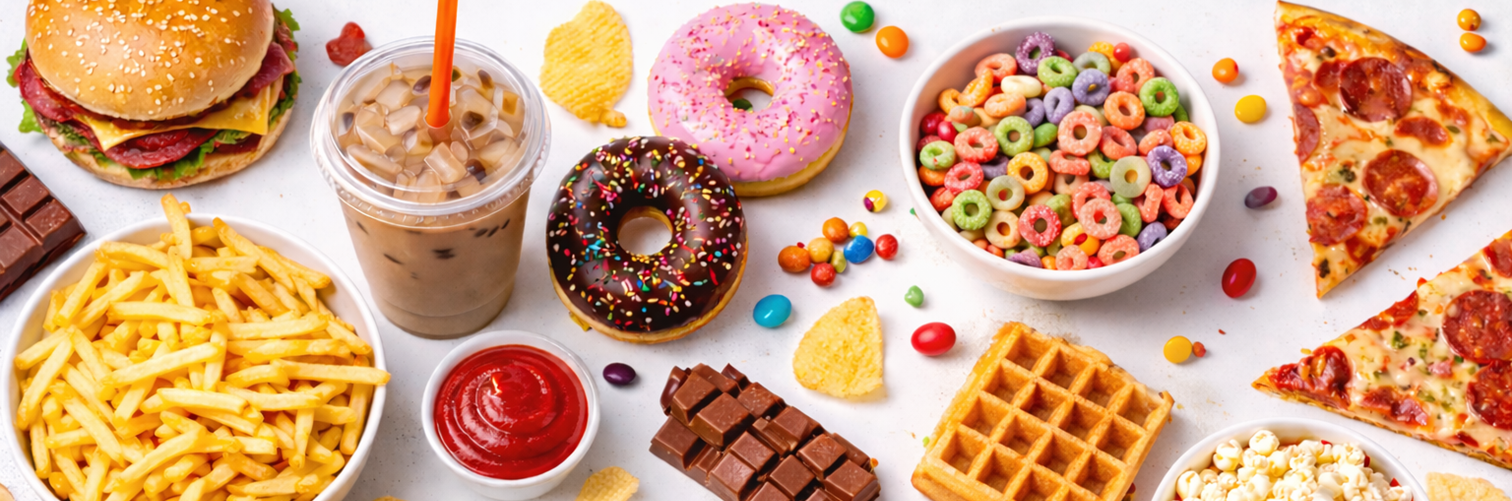
And it’s easy to point a finger at it: the CDC recently reported that more than 50% of calories consumed by Americans come from ultra-processed foods (UPFs). And making matters worse? Kids aged 18 and under consume even more, with almost 70% of their daily calories from UPFs.
But what does “UPF” really mean? How does it differ from regular or minimally processed foods? And more importantly, how do these varying levels of processed foods fit in a modern food system where convenience, safety, shelf life, and affordability matter so much to all of us?
Defining Food Processing
Let’s start with a quick reality check: almost all food is processed in some way.
Processing simply means altering a food from its original state. This includes freezing, drying, pasteurizing, fermenting, milling, cooking…even washing.
Whether it’s organic bagged spinach, canned tomatoes, or frozen blueberries from a supermarket or farmers’ market, these products are all indeed processed.
Before the advent of convenience foods, like potato chips and candy bars, food was processed to ensure safety and stability.
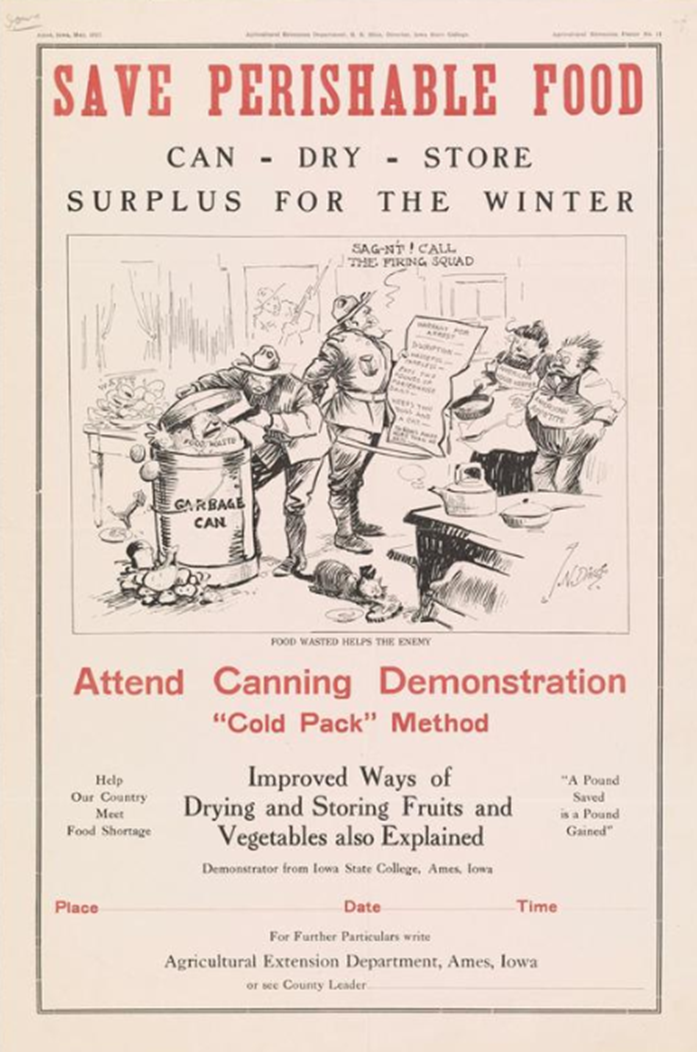 Specifically, processing helps reduce pathogens, extend shelf life, and enhance digestibility and nutrient absorption, making these practices a critical milestone for public health.
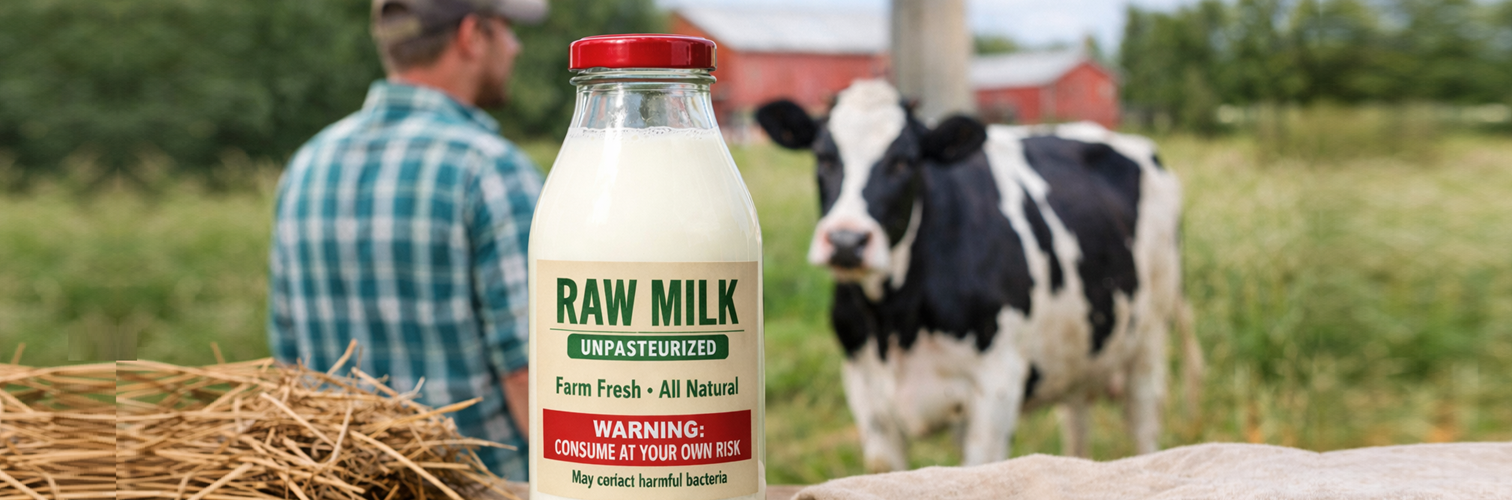
For instance, processing milk via pasteurization dramatically reduced milk-borne illness in the early 20th century and remains one of the most important food safety advances in public health. And canning expanded food access and strengthened global food security, especially during World War I.
And food processing isn’t a recent innovation…it’s been around for thousands of years.
We’ve ground grains into flour, fermented milk into cheese and yogurt, dried meats, pickled vegetables, and pressed olives into oil to provide a safe food supply, all without refrigeration or modern sanitation.
The Food Processing Continuum
Where the conversation becomes more nuanced is in the distinction between the various degrees of food processing. To dig into this further, we’re going to use the NOVA classification system, a research framework that groups foods based on how much industrial processing they undergo.
Developed by Brazilian nutrition scientist Carlos Monteiro and his colleagues at the University of São Paulo, the NOVA system sorts foods into four tiers: minimally processed, processed ingredients, processed foods, and ultra-processed products. It’s now widely used in public-health studies examining how heavily processed diets relate to chronic disease risk.
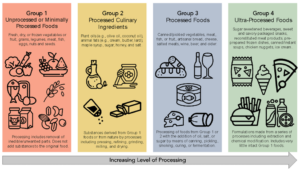
So, let’s go into each tier a little more:
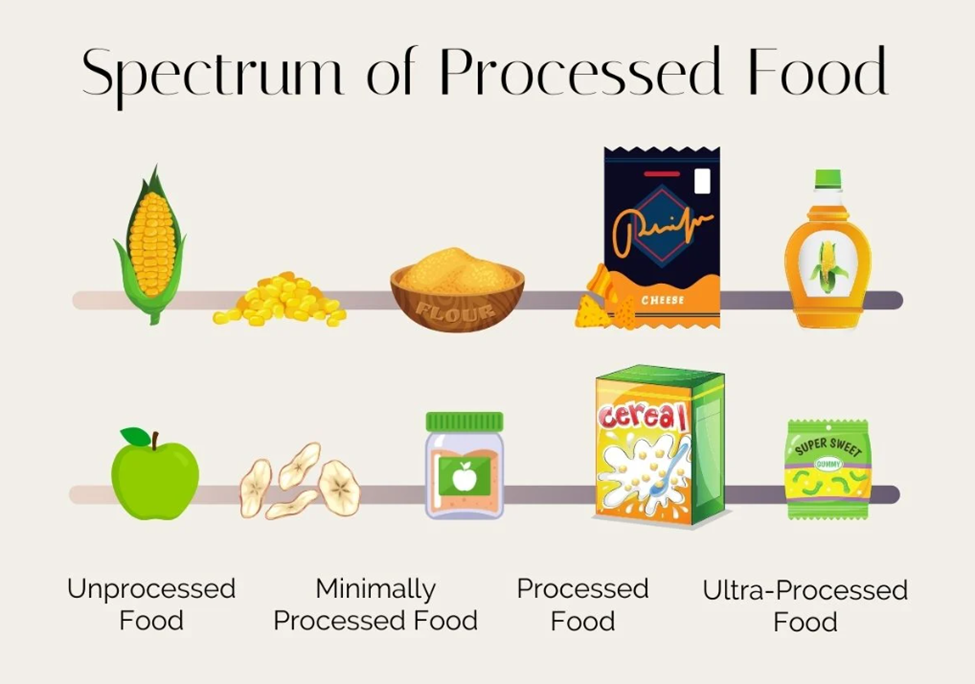
- Unprocessed and minimally processed foods are closest to their natural form: whole meats, washed produce, frozen vegetables, eggs, plain yogurt, and raw nuts. Processing here mainly preserves freshness and safety.
- Processed culinary ingredients are used in combination with other foods to improve flavor, shelf life or nutrient absorption: oils, butter, lard, sugar, and salt. When used carefully, these ingredients create nutritionally balanced meals.
- Processed foods move further along the spectrum but still look like the original food source: cheeses, freshly baked breads, tinned seafood, plain oatmeal, and unsweetened plant milks. These foods are combined with additional ingredients, additives, or refining steps for taste and convenience.
- Ultra-processed foods (UPFs), also known as highly processed foods, are foods created from a distinct formulation of ingredients, in which the end product does not naturally resemble its original food sources. UPFs include soda, shelf-stable treats, instant noodles, sweetened oatmeal, potato chips, and ready-to-eat meals. These products are typically made from refined substances extracted from foods (oils, starches and flours, protein isolates) plus additives like emulsifiers, stabilizers, colorings, and flavor enhancers and sweeteners (ingredients not commonly found in culinary settings) to make them more appealing.
Findings on UPFs & Dietary Habits
Though the bad-for-you food target seems to blur across all processed foods, the focal point of recent research is set on ultra-processed foods. These UPF products are optimized combinations of sugar, fat, salt, and texture that have been shown to drive overconsumption.
A growing body of epidemiological research links high intake of ultra-processed foods with chronic disease risk. A major review summarized by Stanford Medicine found convincing evidence that diets high in UPFs are associated with increased risk of cardiovascular mortality, obesity, Type 2 diabetes, anxiety, and depression.
Furthermore, the American Heart Association, the National Institute of Health, and other researchers have recently linked overconsumption of UPFs to cardiometabolic disease and all-cause mortality.
But can we pin these illnesses solely on UPFs? Or can we find a place for these products in our diets, if we choose?
Diets anchored in whole or minimally processed foods, complemented by strategically used processed items, consistently correlate with better long-term health outcomes.
Rather than framing the issue as ultra-processed vs. minimally processed, nutrition scientists have found that our overall dietary patterns drive long-term outcomes, not a single type of food. Even Stanford researchers stress that occasional consumption of ultra-processed foods isn’t what drives risk…chronic overreliance is.
Processing Food for Purpose
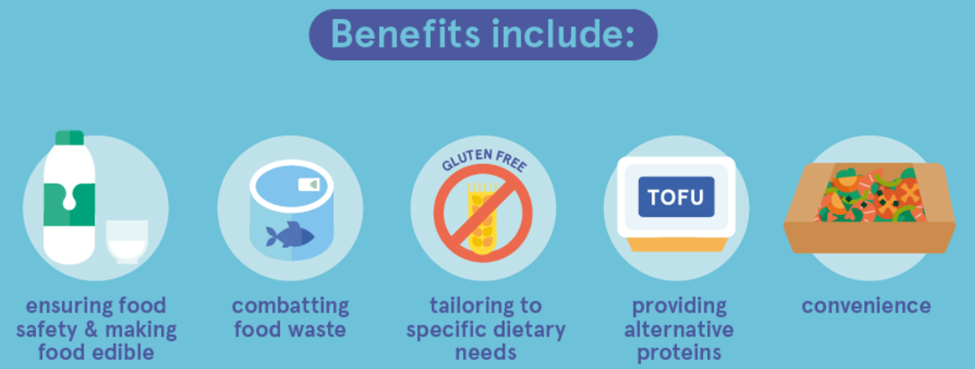
It’s easy to focus on the risks in today’s food headlines, but processing has also played a powerful role in protecting public health and expanding access to nutrition. In fact, many processed and highly processed foods provide real benefits, as emphasized by the FAO:
- Food safety: Pasteurization and sterilization prevent microbial illness.
- Food access: Shelf-stable foods improve food security and disaster readiness.
- Nutrition delivery: Fortified cereals and enriched grains address nutrient gaps.
- Medical nutrition: Meal replacements and protein formulas support patients and aging populations.
There are practical considerations, too. Beyond the science, there’s real life. Most of us are juggling work, school schedules, budgets, and limited time…these realities shape what ends up on the dinner table. And using processed food products to manage all these competing needs can be an effective way to create nutrient-dense meals for your family. For instance:
- Frozen vegetables can be more nutritious than fresh produce that spoils.
- Rinsed canned beans can make high-fiber and high-protein diets more accessible.
- Nutrient-dense packaged foods, like whole-grain pasta and tomato sauce, can reduce preparation barriers that might otherwise lead to skipped meals or reliance on fast food.
The Bigger Reset
The larger takeaway from the processed foods research is less about eliminating UPFs and more about recalibrating your current food choices. So rather than eliminating processed foods altogether, most experts recommend being aware of your consumption and making meaningful swaps over time, so your new dietary habits stick.
Like the new dietary food pyramid that encourages us to consume whole foods, experts advise us to choose veggies and fruits; processed whole grains; nuts, seeds, and legumes; and minimally processed proteins as the foundation for a healthy diet. UPFs like sugary drinks, packaged snacks and sweets, and processed meats should be reduced over time.
So, if UPFs currently comprise half of your caloric intake, strive to split those calories with lesser processed items. For instance, if you drink two sodas a day, consider substituting one of those sodas with seltzer and a splash of fresh fruit juice.
So instead of asking, “Is this ultra-processed?”
A more useful question might be, “What ingredients and nutrients are in this product? And how often is it on my plate?”
Processing itself is not the villain – it is a tool. Processing can preserve nutrients…or dilute them. It can improve safety…or introduce excess sugar, sodium, and additives. Its impact depends on how it’s used within our broader food system and our daily eating habits.
The Bottom Line
Ultra-processed foods deserve scrutiny, but not simplification. The modern food system relies on processing to feed populations safely, affordably, and efficiently. The more productive conversation isn’t about avoiding processed foods entirely, but about building dietary patterns in which real, nutrient-dense foods lead and processed foods play a supportive, practical role.
Share this article



Listen to the Dirt to Dinner Podcast