Raw Milk: Wellness Culture vs. Food Safety
The Dirt
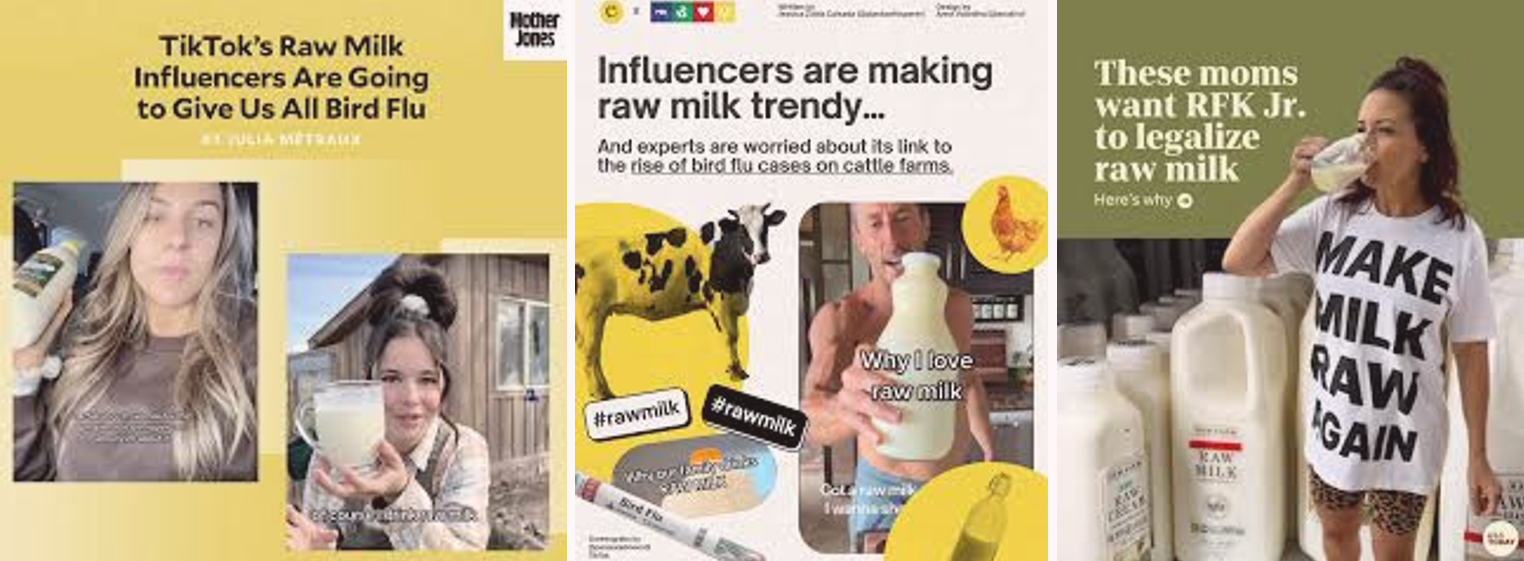
Raw milk is having a powerful comeback in wellness culture, fueled by nostalgia, social media, and claims of being more “natural,” despite decades of clear safety evidence. So what does the science say—and how risky is it, actually?
Global Food
Nutrition
Raw Milk: Wellness Culture vs. Food Safety
The Dirt
Raw milk is having a powerful comeback in wellness culture, fueled by nostalgia, social media, and claims of being more “natural,” despite decades of clear safety evidence. So what does the science say—and how risky is it, actually?
Click Play to listen to our generated podcast. Access our full podcast library here.
Once again, raw milk is everywhere: in Instagram reels, wellness podcasts, farmer-to-consumer marketplaces, and even policy debates. It’s being framed as ancestral, clean, immune-boosting, and somehow more “real” than the milk most of us grew up drinking. With about 4.4% of U.S. adults, or about 11 million people, have reported drinking raw milk at least once a year, despite repeated safety warnings; that’s why we’re revisiting this topic now.
Quick Take: Myth vs. Science
Myth #1: Raw milk is more nutritious than pasteurized
Claim: Pasteurization destroys vitamins, enzymes, and nutrients.
Science: Pasteurization causes minimal nutrient loss. Protein, calcium, and most vitamins remain intact, and there is no evidence raw milk provides meaningful nutritional benefits over pasteurized milk.
Bottom line: Nutrition is nearly the same, the risk is not.
Myth #2: Raw milk supports gut health and immunity way more than pasteurized milk
Claim: Raw milk contains beneficial bacteria that improve digestion and immunity.
Science: Raw milk bacteria are uncontrolled and unpredictable and may include harmful pathogens. No clinical trials show safe, consistent gut or immune benefits from raw milk.
Bottom line: Benefits are speculative; risks are proven.
Myth #3: Raw milk from clean, local farms is safe
Claim: Careful farming eliminates any risk.
Science: Even healthy cows can shed harmful bacteria, and contamination can occur despite best practices. Raw milk causes the vast majority of dairy-related foodborne illnesses.
Bottom line: Clean farms reduce risk, they don’t eliminate it.
Picture this…
You’re visiting a local farm. A cow is milked by hand. A rag wipes down the udder; not sterile, just “clean enough.” The ground beneath is dirt, manure, and straw. The farmer pours the milk into what you hope is a sanitized glass jar. Hands touch the rim. The lid goes on.
In the process, something microscopic, bacteria from manure, soil, or the cow’s hide, slips in. You don’t see it. You can’t smell it. You taste the milk anyway.
That’s not a horror story, it’s basic microbiology. Cows don’t produce sterile milk, and pathogens like E. coli, Salmonella, and Listeria don’t announce themselves. Pasteurization exists because even careful, well-intentioned farms cannot control what the human eye can’t see. When people assume raw milk is “safe because it’s local,” they’re confusing trust with protection.
I understand why raw milk is appealing. It taps into something real: a distrust of over-processing, a desire for food transparency, and nostalgia for simpler systems. But the science is unambiguous on one point: The nutritional upside of raw milk is small and uncertain. The safety downside is large and well-documented. Treating raw milk as a wellness shortcut, or worse, as a health intervention, ignores decades of public-health data.
But when a food trend resurfaces with this much confidence and this much misinformation, it deserves a fresh look grounded in current science, not nostalgia or fear. Especially when the stakes include hospitalization, pregnancy complications, and children’s health.
So, let’s review what pasteurization actually does, the health risks of ingesting raw milk, and how people who want more “natural” dairy can make safer, evidence-based choices.
Why Pasteurization Exists
Pasteurization was introduced in the 1860s because milk was one of the leading causes of foodborne illness and death, especially in children.
Pasteurization works by briefly heating milk to kill disease-causing bacteria. That’s it. No chemicals. No additives. Just heat and time. And the nutritional tradeoff? Extremely small.
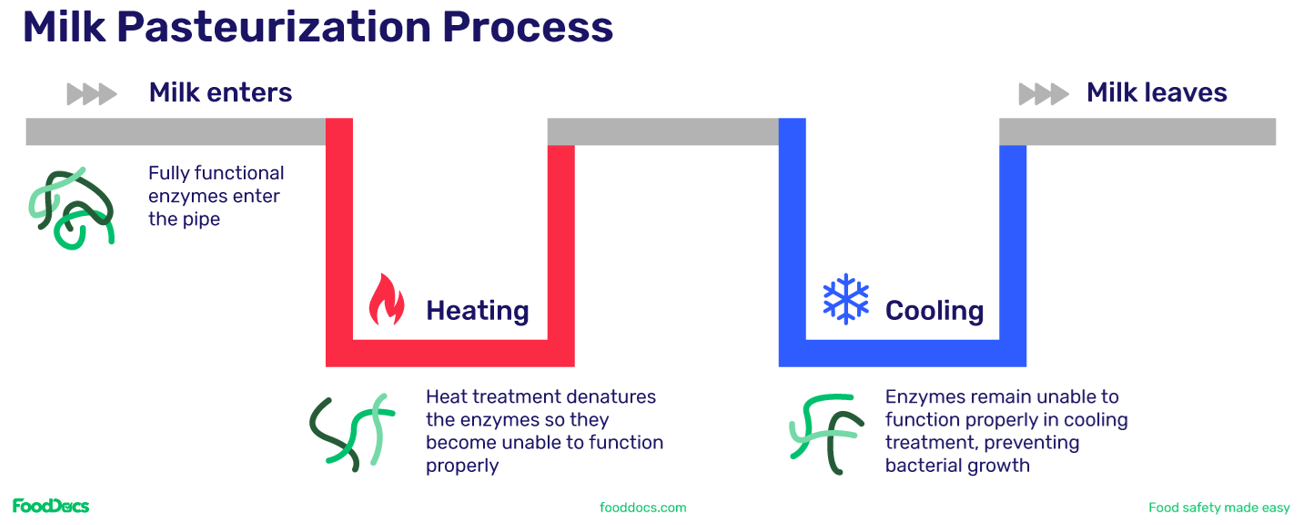
Multiple reviews show that pasteurization:
- Does not meaningfully alter protein, calcium, or fat
- Causes minimal losses of a few heat-sensitive vitamins (like vitamin C, which milk isn’t a major source of anyway)
- Preserves the nutrients most people drink milk for in the first place
Raw milk poses a legitimate health risk
Public health authorities universally emphasize that pasteurization is a critical safety step for milk because raw milk can carry dangerous disease-causing microbes such as Salmonella, E. coli, Campylobacter, Listeria, and Brucella. These pathogens can cause serious foodborne illness in anyone, but especially in young children, pregnant people, older adults, and immunocompromised individuals.
The CDC reports that from 1998 through 2021, there were 228 outbreaks linked to raw milk or raw milk products, resulting in 2,946 illnesses, about 287 hospitalizations, and 5 deaths in the United States.
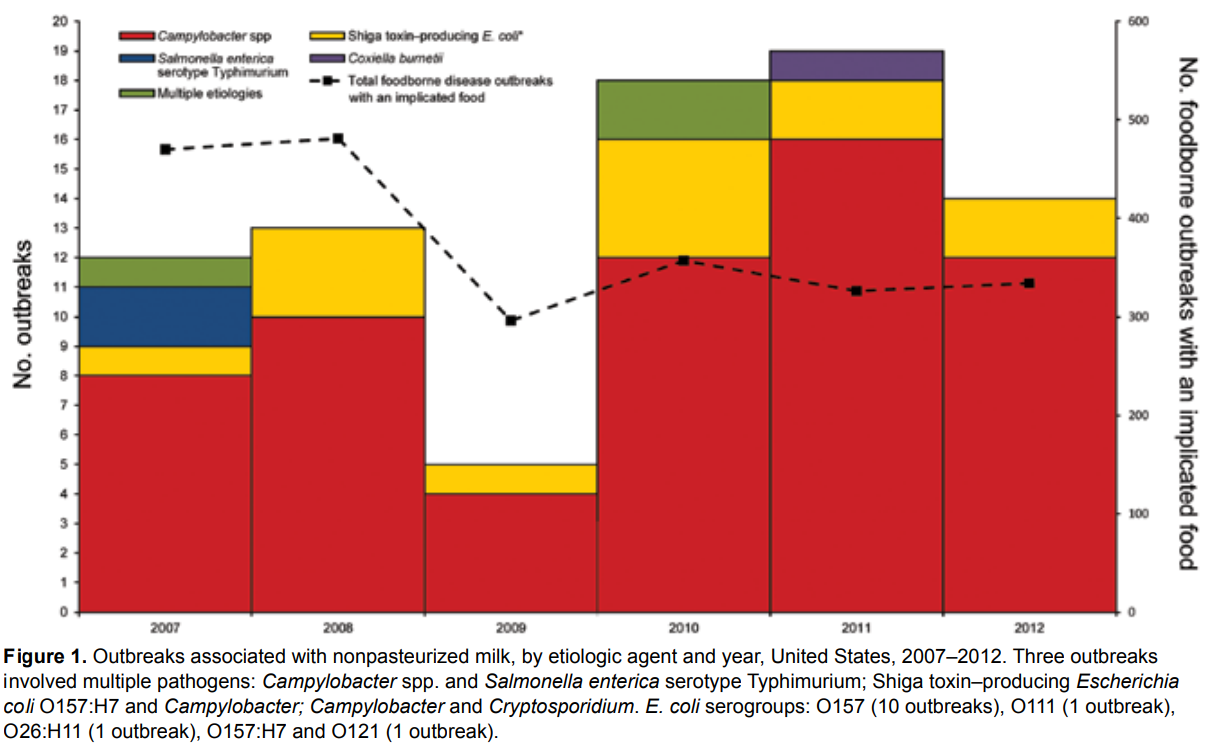
A 2017 analysis of milk-associated foodborne disease estimated that unpasteurized dairy products, though consumed by a small portion of U.S. dairy consumers, are responsible for about 95% of milk-related illnesses, with raw products posing an >800-fold greater risk of illness than pasteurized dairy.
Recent disease clusters continue this pattern: in 2025, at least 21 people in Florida, including six children, were ill with E. coli and Campylobacter infections after consuming raw milk, and several were hospitalized.
National health agencies like the CDC, FDA, and the American Academy of Pediatrics all strongly advise against drinking raw milk because good safety practices can’t eliminate the risk completely. Healthy animals harbor these pathogens, and harmful bacteria can still get into milk through environmental contamination, even among routinely-cleaned processing facilities.
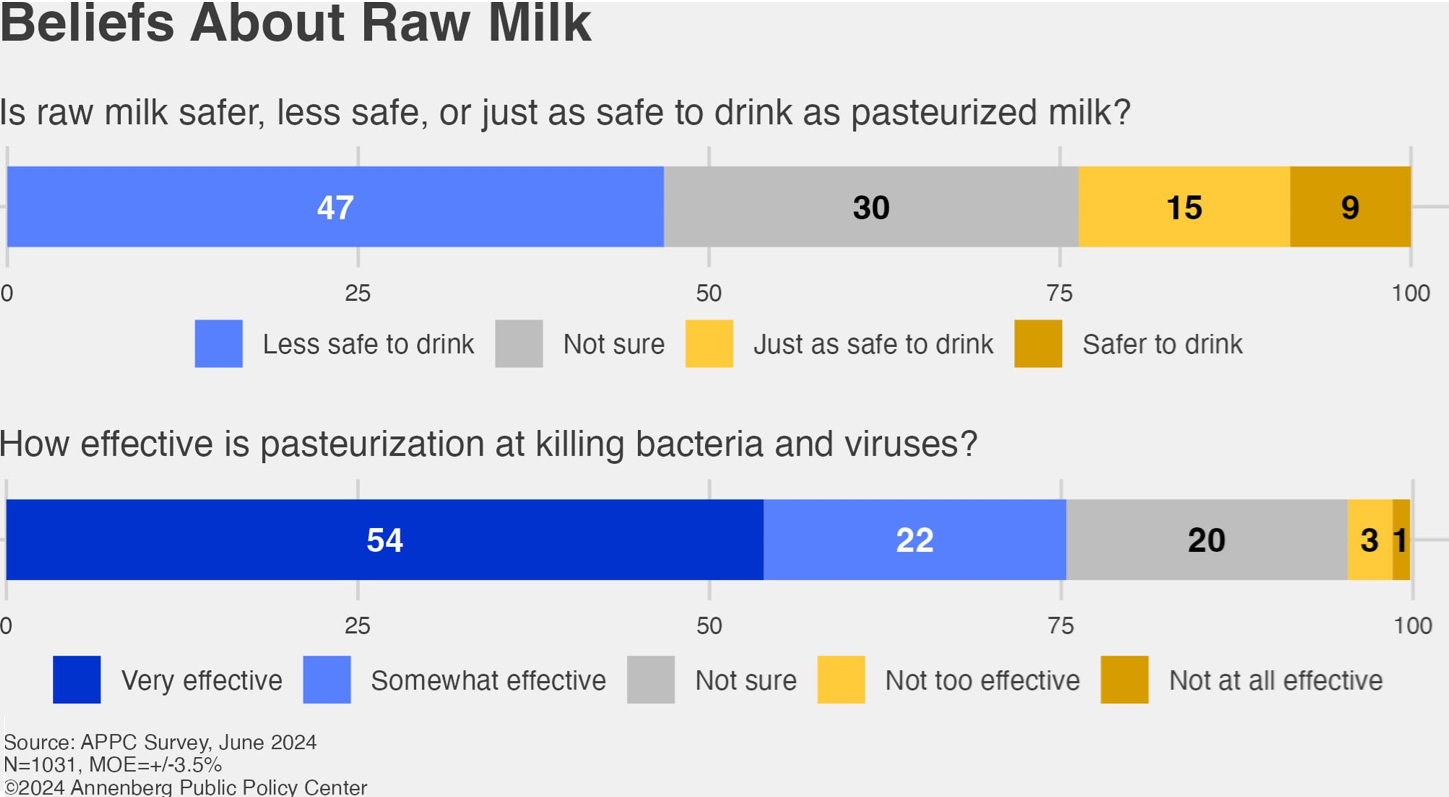
But it appears there is a knowledge gap, as a 2025 survey from researchers at the University of Pennsylvania’s Annenberg Public Policy Center found that only 47 % of U.S. adults recognize that unpasteurized milk is less safe than pasteurized milk, indicating persistent confusion about safety.
Conflicting information can further complicate our beliefs surrounding raw milk. For instance, several observational studies have suggested children raised on farms who consume “farm milk” may have lower rates of allergies or asthma.
However, these studies don’t prove causation of raw milk as the protective factor. Furthermore, researchers were unable to duplicate results among children raised outside of farm environments. Most researchers acknowledge these outcomes are likely tied to broader farm exposures (microbial diversity, animal contact, outdoor environments), not raw milk alone.
Another health-related misconception is that raw milk has beneficial probiotics. Raw milk does not function like a probiotic food because any bacteria present in the unpasteurized milk are not the standardized, beneficial cultures found in yogurt or kefir.
Homogenized Milk: What the Science Really Says
Now let’s clear up another bit of confusion: homogenization.
Homogenization is not a safety process like pasteurization. It’s a mechanical process that forces milk through tiny gaps under pressure so the fat droplets are broken down into much smaller sizes and stay evenly distributed. That’s why homogenized milk looks and tastes creamier and doesn’t separate with a layer of cream on top. But does that make it healthier or better for your body?
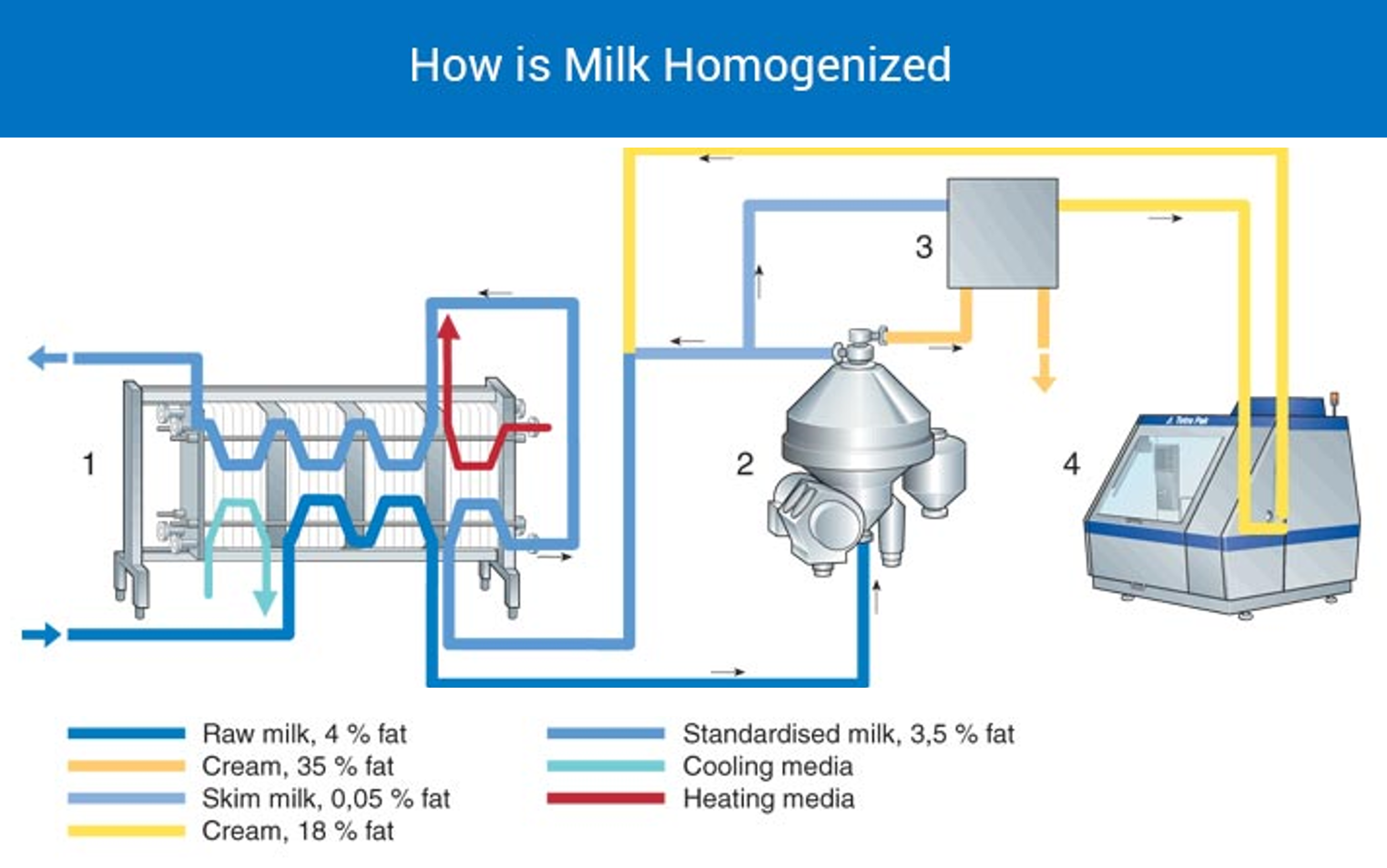
Here’s what peer-reviewed research shows:
- No evidence that homogenized milk is healthier — most scientific reviews conclude that homogenization does not change the nutritional value or safety of milk. It doesn’t improve or diminish the fat, protein, calcium, or micronutrient content in any clinically significant way.
- Does not affect allergies or intolerance, a study by Michalski in 2007 and related work indicate that homogenized milk does not influence milk allergy or lactose intolerance in children or adults compared with non-homogenized milk.
- Digestibility differences are minimal or unclear some in vitro/animal research suggests that breaking milk fat into smaller globules might make it slightly easier for digestive enzymes to access fats, but human clinical evidence is limited and does not show meaningful health outcomes.
- No strong links to major diseases, research on long-held theories that homogenization could increase risk for heart disease, diabetes, or allergy has not found consistent evidence supporting those claims. Reviews from the USDA’s raw milk debate literature show that available studies do not support meaningful effects of homogenization on these outcomes.
There are no high-quality, peer-reviewed studies showing that homogenized milk is healthier for you than non-homogenized milk. Any differences appear to be about texture and sensory experience, not nutrient quality or health impact.
That means if someone tells you homogenized milk is nutritionally superior, that’s not supported by current science. And if you hear claims that homogenization causes disease, such as promoting heart disease or atherosclerosis, those were early hypotheses from decades ago that later research hasn’t substantiated.
What That Means for You
If you’re looking for a more “natural” milk experience without the heightened risks that come with raw milk, a good option is to try pasteurized, non-homogenized milk. While it is not nutritionally superior, it retains the cream layer and texture some people prefer while still providing the safety protection of pasteurization.
As a parent to two littles, I am always in search of the healthiest, most nutrient-dense options for my own children, but I prioritize safety first. That balance is what makes pasteurized, non-homogenized milk appealing: you get a sensory experience closer to traditional milk without sacrificing safety or relying on unsupported health claims about homogenization itself.
The Bottom Line
With the return of raw milk, evidence still points in the same direction it has for over a century: pasteurization is one of the quiet public-health successes we take for granted. You can want food that’s closer to its source while respecting the science that keeps it safe.
Share this article



Listen to the Dirt to Dinner Podcast